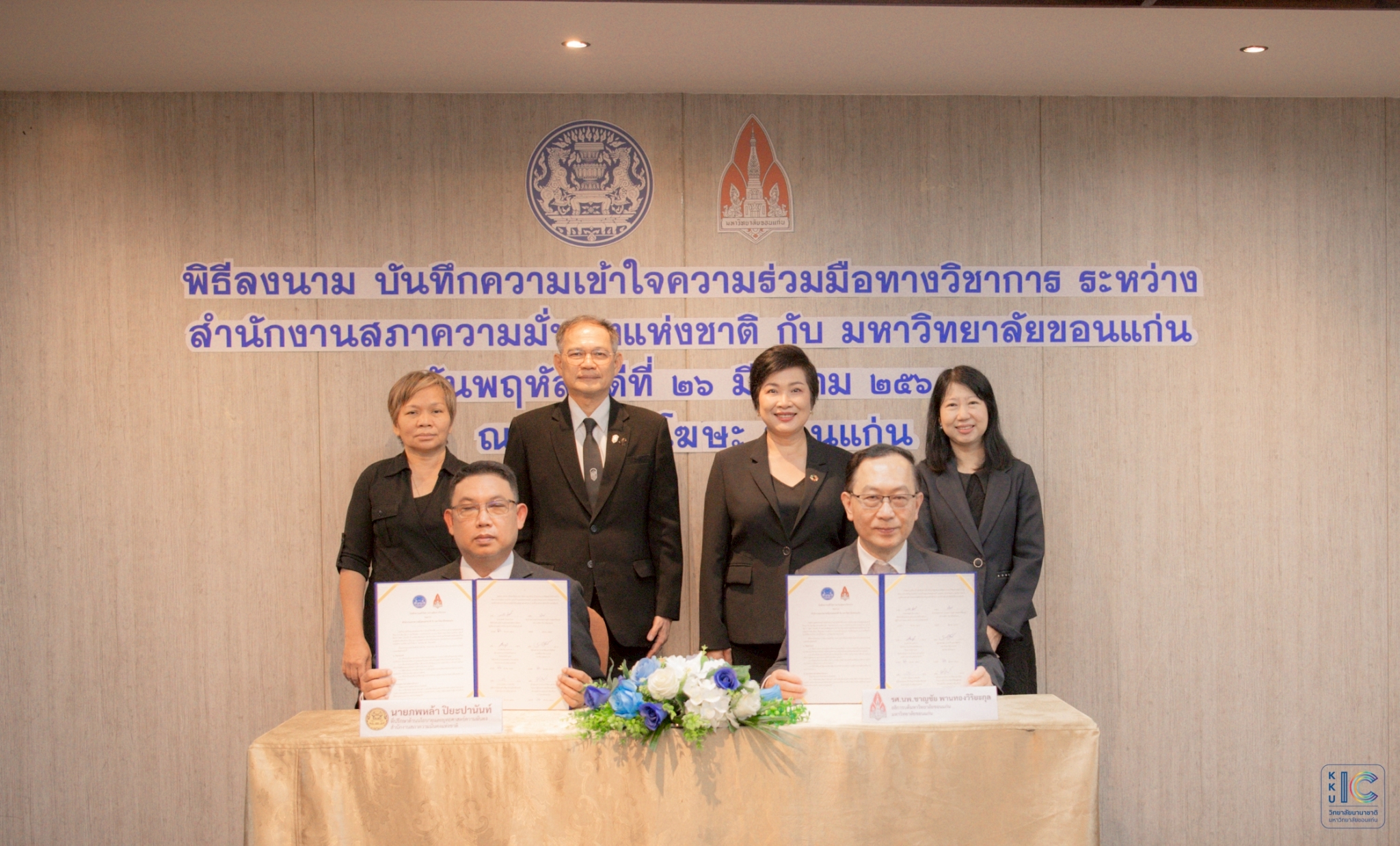
On Thursday, 26 March 2026, from 09:00 to 09:30 hrs at the Isan Terrace 1 meeting room, Kosa Hotel, Khon Kaen, Khon Kaen University (KKU) participated in a Memorandum of Understanding (MOU) signing ceremony for academic cooperation with the Office of the National Security Council (NSC).

The agreement was signed by Mr. Phopla Piyapanan, Advisor on National Security Policy and Strategy, acting on behalf of the Secretary-General of the National Security Council, and Associate Professor Charnchai Panthongviriyakul, M.D., President of Khon Kaen University.
The signing was witnessed by Assistant Professor Sirimonbhorn Thipsingh, Dean of the College of International Studies, and Assistant Professor Keerati-orn Juta-viriya, Ph.D., Acting Director of the Center for Research on Plurality in the Mekong Region and the ASEAN Studies Centre, representing KKU. Witnesses for the NSC were Miss Mantana Masmalai, an expert in transnational security issues, and Miss Sunisa Praepatprasit, Acting Director of the Institute of Security Studies.
Mr. Phopla Piyapanan stated that this signing marks a significant step towards establishing KKU as one of the NSC’s “strategic academic partners in security”. The scope of the cooperation includes the exchange of knowledge, organisation of academic activities, promotion of student and staff participation, and the initiation of joint research to advance security knowledge.
“Receiving perspectives from various sectors, especially from academia, is crucial for synthesising information to monitor and assess security trends, as well as to formulate policy recommendations for executives and the government,” said Mr. Piyapanan.
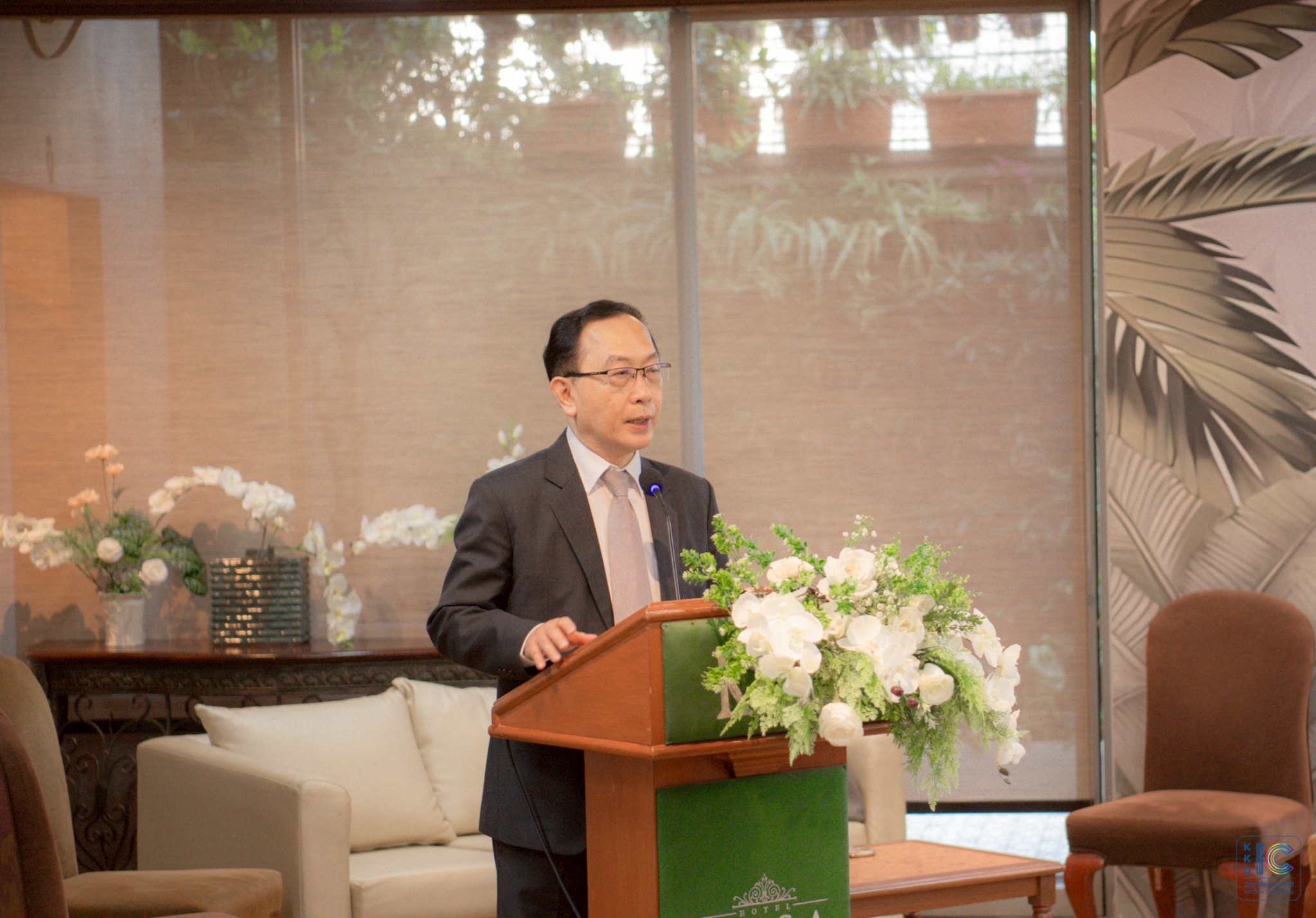
Associate Professor Charnchai Panthongviriyakul remarked that this cooperation reflects the shared objectives between the university’s mission and the state’s security agenda. As an educational institution located in the heart of the northeastern region, which shares borders with Laos, Cambodia, and Vietnam, Khon Kaen University serves as a vital knowledge hub for the region.
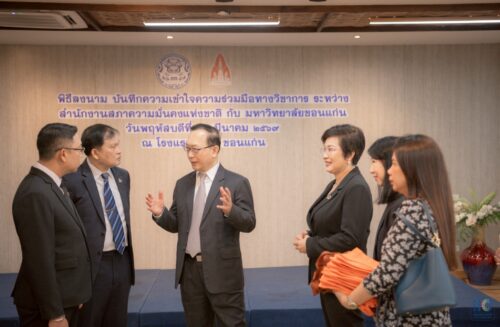
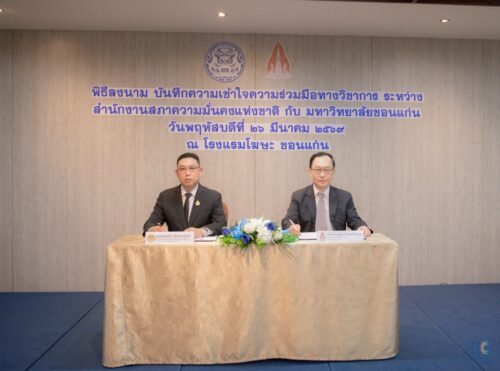
“In today’s world, security issues are increasingly complex and interconnected with social, economic, environmental, and cultural dimensions. Effective security policymaking therefore requires data from multiple levels, both national and community, as well as information from central and local areas,” said the President.
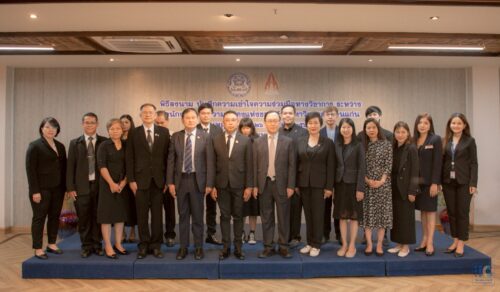
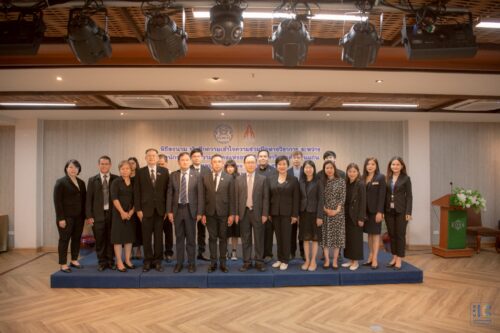
Under this MOU, both parties aim to produce research and exchange knowledge that addresses policy needs, develop a new generation of scholars with a comprehensive understanding of security, and formulate evidence-based policy recommendations derived from local contexts. This collaboration is intended to foster the sustainable security of the public and the nation.