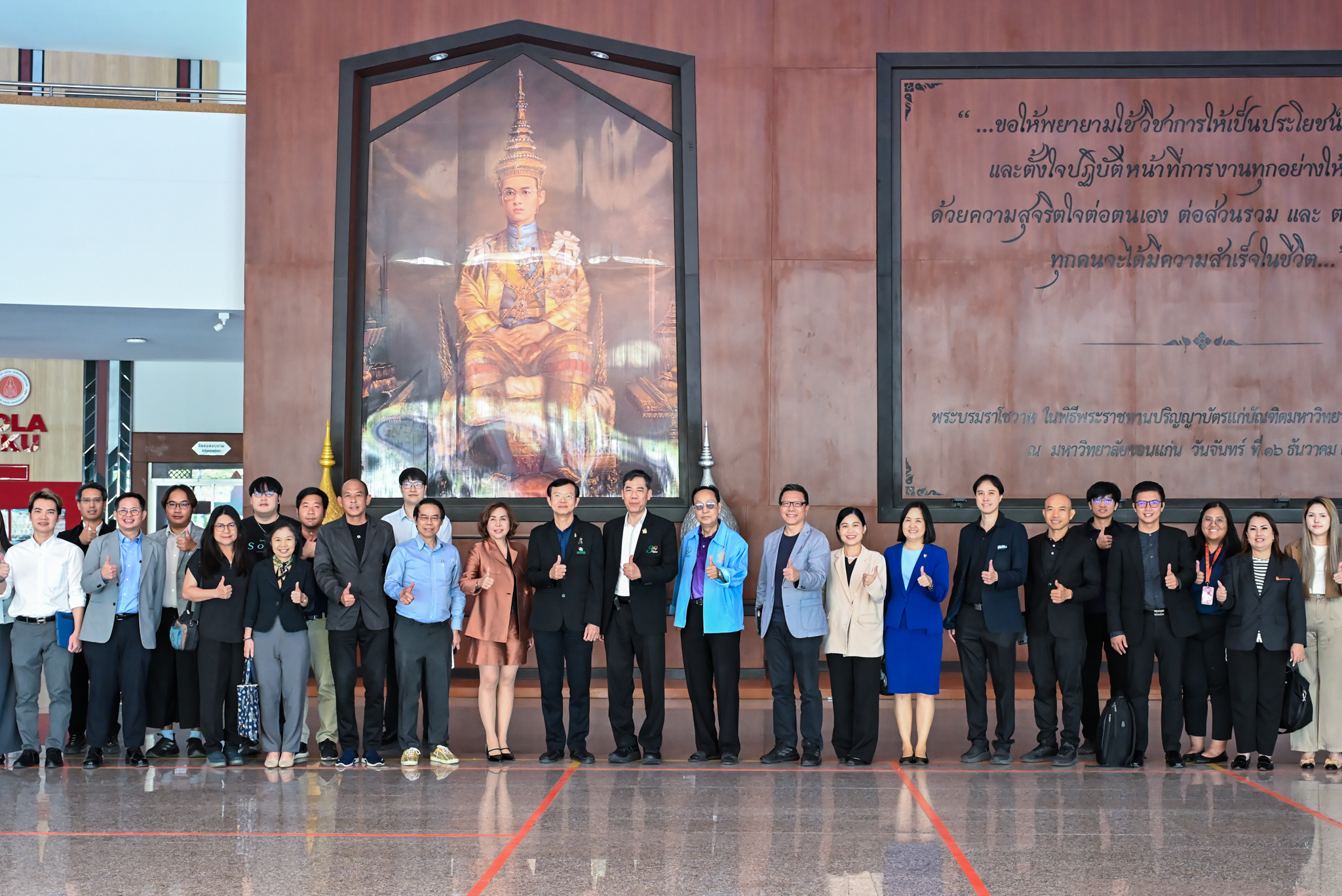
Khon Kaen – On 17 March 2026, the College of Local Administration (COLA) at Khon Kaen University hosted a brainstorming forum titled, “Forging Governance Partnerships for the Kungsadan Medical Innovation District (KMID): Designing a Collaborative Public-Private-Community-Civil Society Model for Sustainable Area Development.” Held at the Udon Tantisunthon Conference Room, COLA, the event convened a diverse range of stakeholders to exchange ideas and co-design a collaborative framework to advance the Kungsadan area into an international medical innovation district.
Associate Professor Cholatip Pongskul, M.D., Assistant to the President for Strategic Plan Monitoring and Key Initiatives and Acting Director of the Centre for Wellness and Medical Innovation District Administration, Khon Kaen University, joined the forum to present progress updates and help structure the collaborative efforts among all sectors. The event was focused on designing a systemic partnership model that integrates government, private, public, civil society, and academic sectors to work together concretely and elevate sustainable development in the area.
Key conceptual conclusions emerged from the collaborative brainstorming session with network partners:
First, the design of the administrative structure: A proposal was made to elevate the existing working mechanism, which currently centres on provincial and private sector cooperation, to a “Triple Helix” model. This enhanced model would incorporate the academic sector as a key driving force. Furthermore, it was suggested that a White Paper be developed to communicate the area’s potential and attract investment, addressing the critical question: “Why Khon Kaen?”
Second, a streamlined government mechanism: The discussion centred on transforming the government’s role from a “regulator” to a “facilitator.” This would be achieved through the implementation of Digital Governance, the development of a One-Stop Service platform to reduce bureaucratic procedures, and the creation of a real-time project tracking system to enhance speed, transparency, and accountability.
Third, the empowerment of local and community entities: Participants emphasised that local government should be a primary mechanism for driving the KMID. The benefits derived from innovation, investment, and area development must be distributed equitably to the community, ensuring they align with and genuinely improve the quality of life for all residents.
The brainstorming session was structured into four thematic groups: designing a governance partnership model for KMID, structuring public-private relations and cooperation, defining the role of local government in driving KMID, and outlining the role of the private sector in advancing the medical innovation district.
This forum reflects the role of the College of Local Administration, Khon Kaen University, as a public affairs institution dedicated to creating societal value and promoting multi-sectoral collaboration to deliver sustainable benefits to the community and a role that aligns with the College’s vision and organisational development goals for the 2026 fiscal year.
The event marks a significant step in laying the foundation for a “cooperative ecosystem”, aimed at transforming the Kungsadan area into a medical innovation district that integrates innovation, governance, and urban development to enhance the well-being of the people of Khon Kaen and society at large.