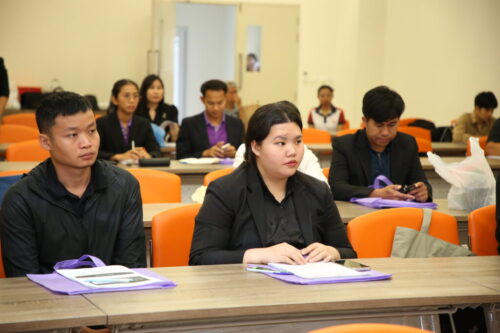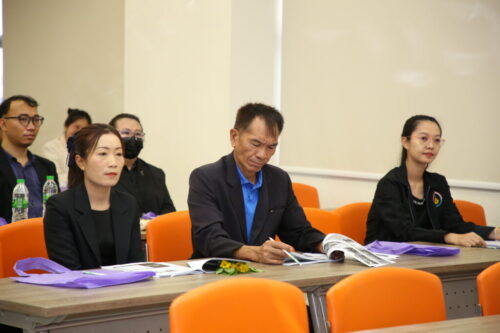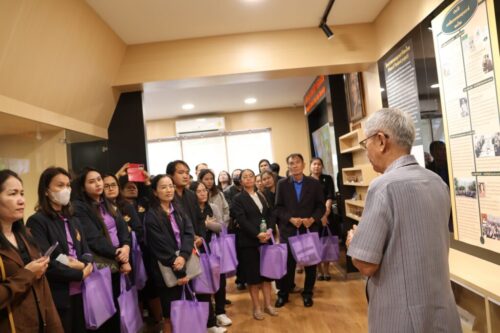
On 19–20 February 2026, academics and researchers from the Faculty of Science, Khon Kaen University, served as expert speakers for an academic service activity aimed at advancing the School Botanical Garden Project. This initiative is part of the Plant Genetic Conservation Project under the Royal Initiative of Her Royal Highness Princess Maha Chakri Sirindhorn (RSPG).
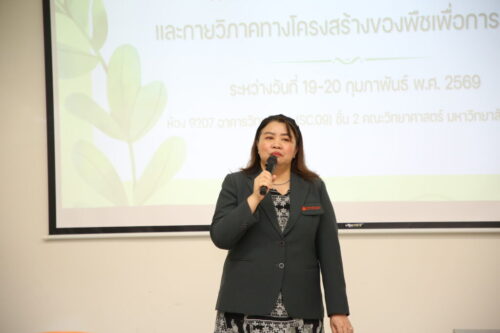
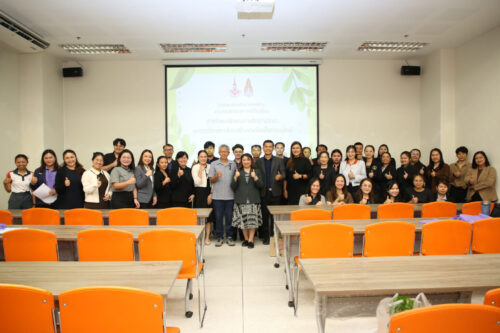
Held under the theme “Morphological and Anatomical Characterisation of Plants for Conservation,” the training welcomed 50 participants, including teachers and staff from 20 schools across Khon Kaen, Maha Sarakham, Roi Et, Loei, and Nong Khai provinces.
Associate Professor Jutaporn Sawaengkaew, Deputy Director of the Royal Project Coordination Centre at Khon Kaen University, delivered the opening remarks. She emphasised the importance of studying plant species according to plant taxonomy principles to rectify inaccuracies in the G7-003 plant registration records, a critical database for member schools. “Past monitoring of member schools revealed persistent errors in the recording of botanical characteristics in these registers, particularly in morphological descriptions,” she explained. “Inaccurate data can affect student learning and undermine the long-term reliability of the plant database. This training aims to enhance the knowledge, understanding, and practical skills of educators, enabling them to observe, analyse, and classify botanical features correctly and to align their plant registers with the standards of the School Botanical Garden Project.”
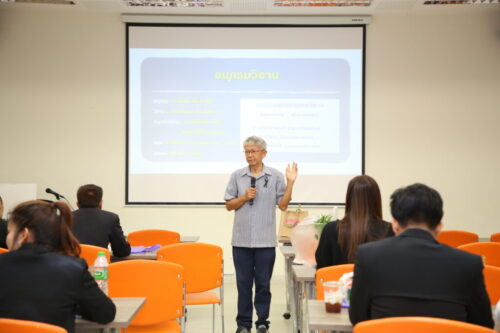
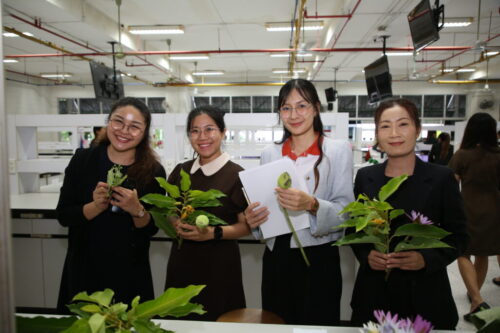
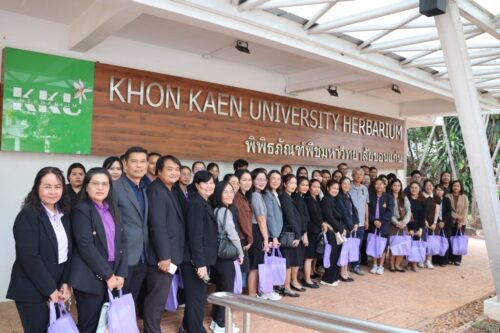
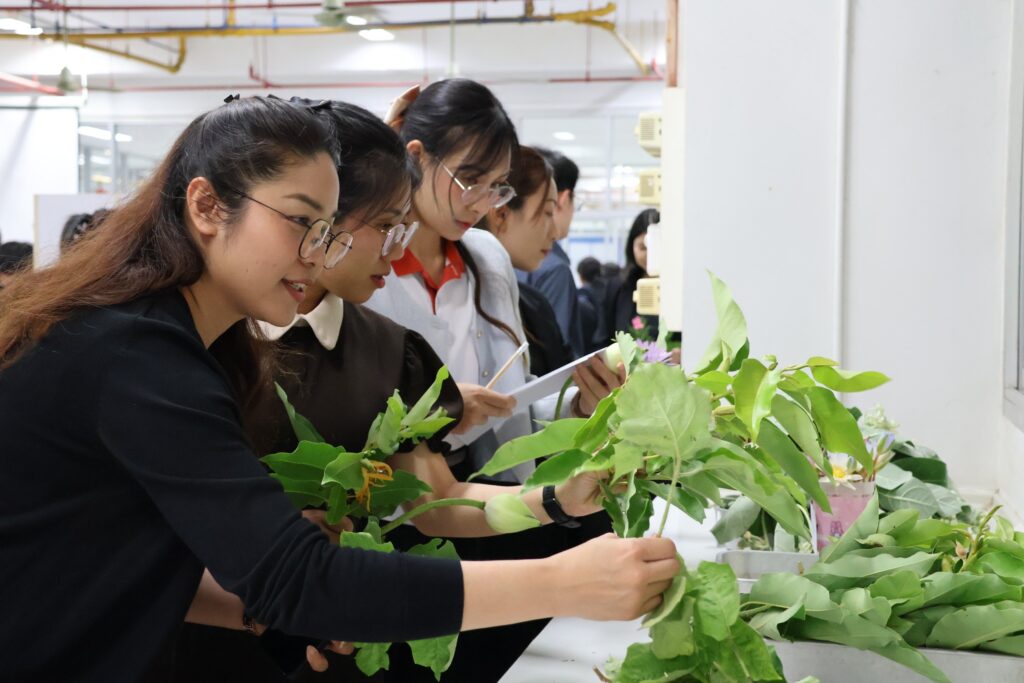
Professor Pranom Chantaranothai was invited as the lead speaker for three key sessions: “Principles of Plant Taxonomy and Plant Morphology,” “Collection and Preservation of Dried Plant Specimens,” which included a tour of the Khon Kaen University Herbarium, and “A Field Trip to Study Flora at Khon Kaen University,” an outdoor activity along the Faculty of Science’s nature trail.
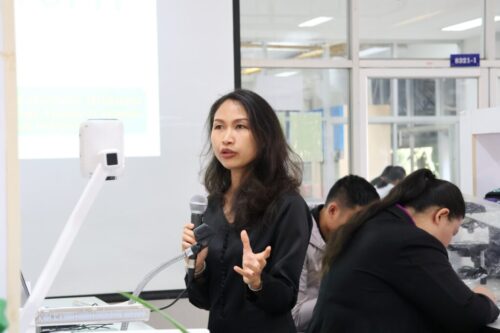
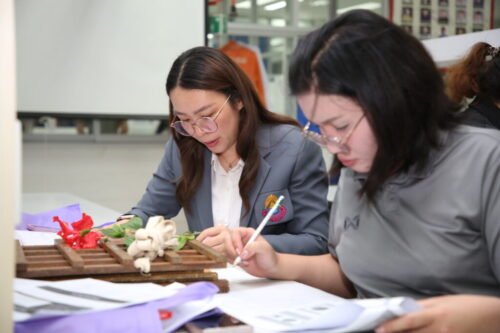
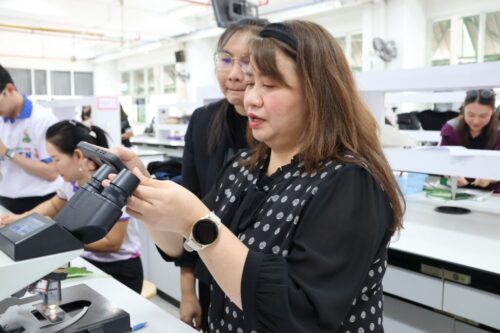
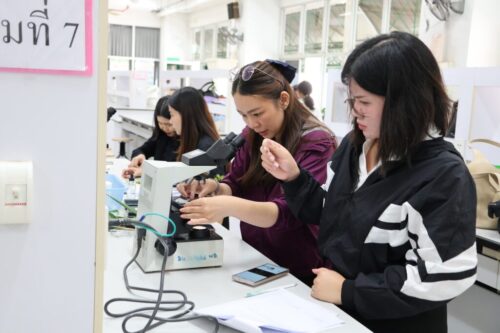
Assistant Professor Sakuntala Nillkaew from the Department of Biology conducted a session on “Internal Anatomical Structures of Plants.” This included a hands-on laboratory workshop where participants studied internal plant structures using microscopes to deepen their understanding of plant classification and evolution.
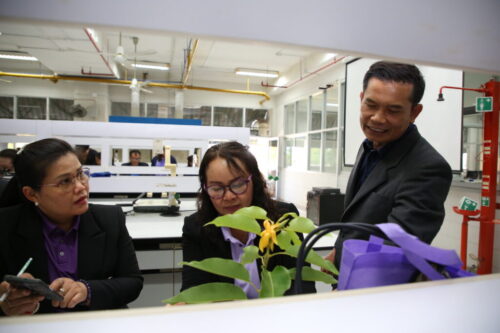
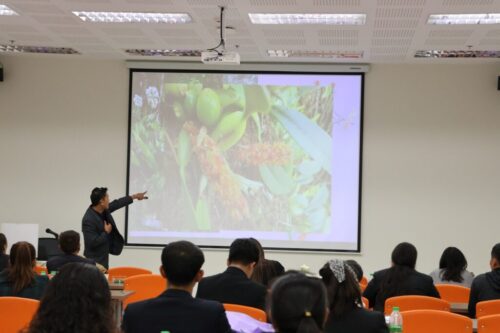
Mr. Thong-in Khammee, a scientist from the Department of Environmental Science, presented on “Plant Morphology: Leaves, Flowers, Fruits, and Seeds, and Data Recording using the G7-003 Form.” His session focused on observing and documenting key features of plant organs for accurate species identification.
The activity was organised to strengthen the knowledge and skills of teachers and staff in plant taxonomy, morphology, and anatomy. The objective was to ensure accurate classification, analysis, and recording of plant characteristics in the G7-003 registers in accordance with academic standards. This will enhance both the quality and credibility of school plant databases, reaffirming the Faculty of Science’s role as a hub of scientific expertise supporting national education and natural resource conservation. By transferring academic knowledge to the educational community, the initiative contributes to improved learning outcomes and fosters a sustainable conservation mindset among young people.