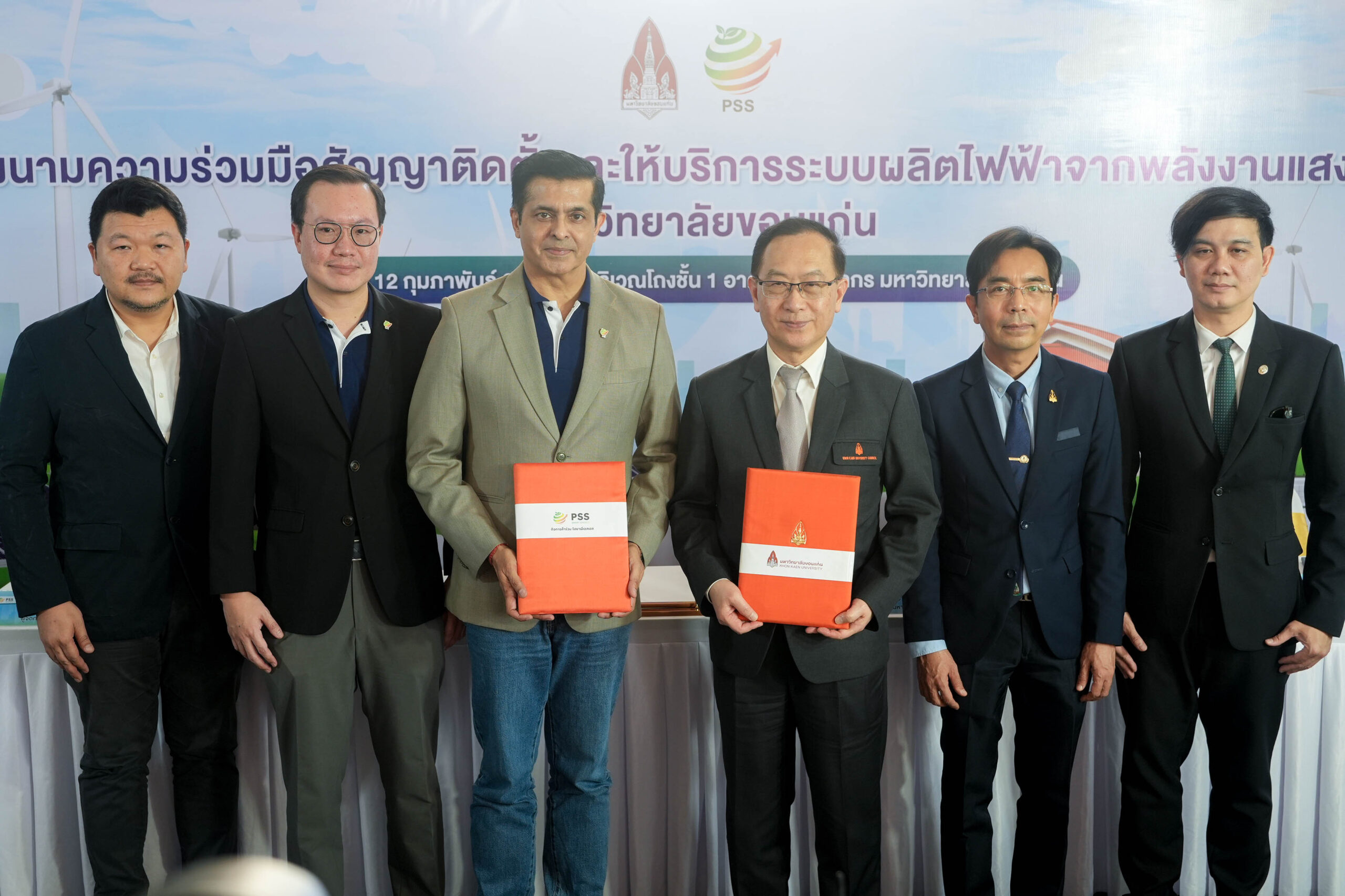
Khon Kaen University (KKU) has signed a contract for the installation and operation of a solar power generation system with HYAPSS, totalling 30 megawatt-peak (MWp) capacity. This initiative is expected to reduce greenhouse gas emissions by over 15,000 tonnes of carbon dioxide equivalent per year, driving the university’s “Carbon Neutrality University” strategy forward with a target of achieving full carbon neutrality by 2029.
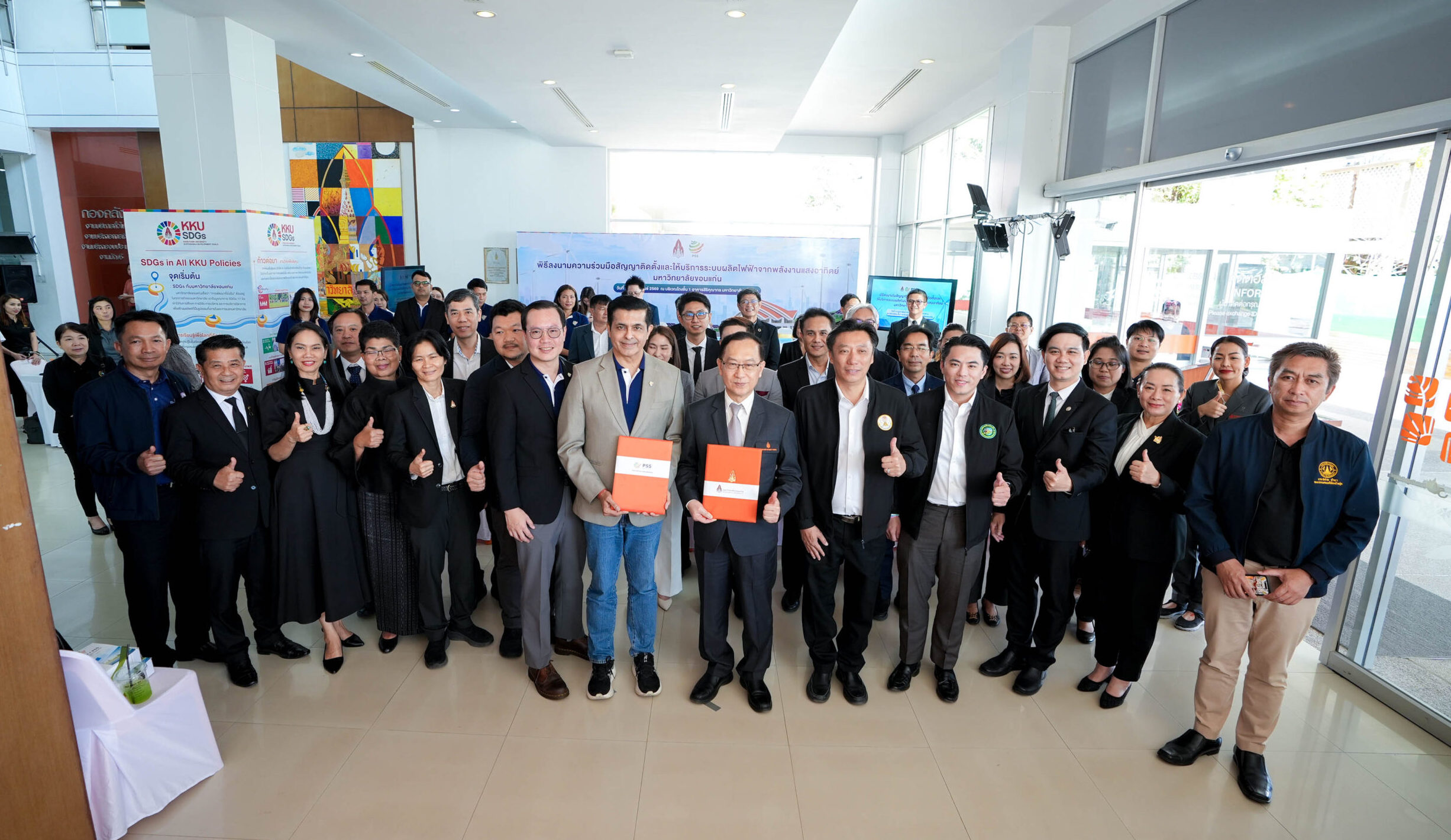
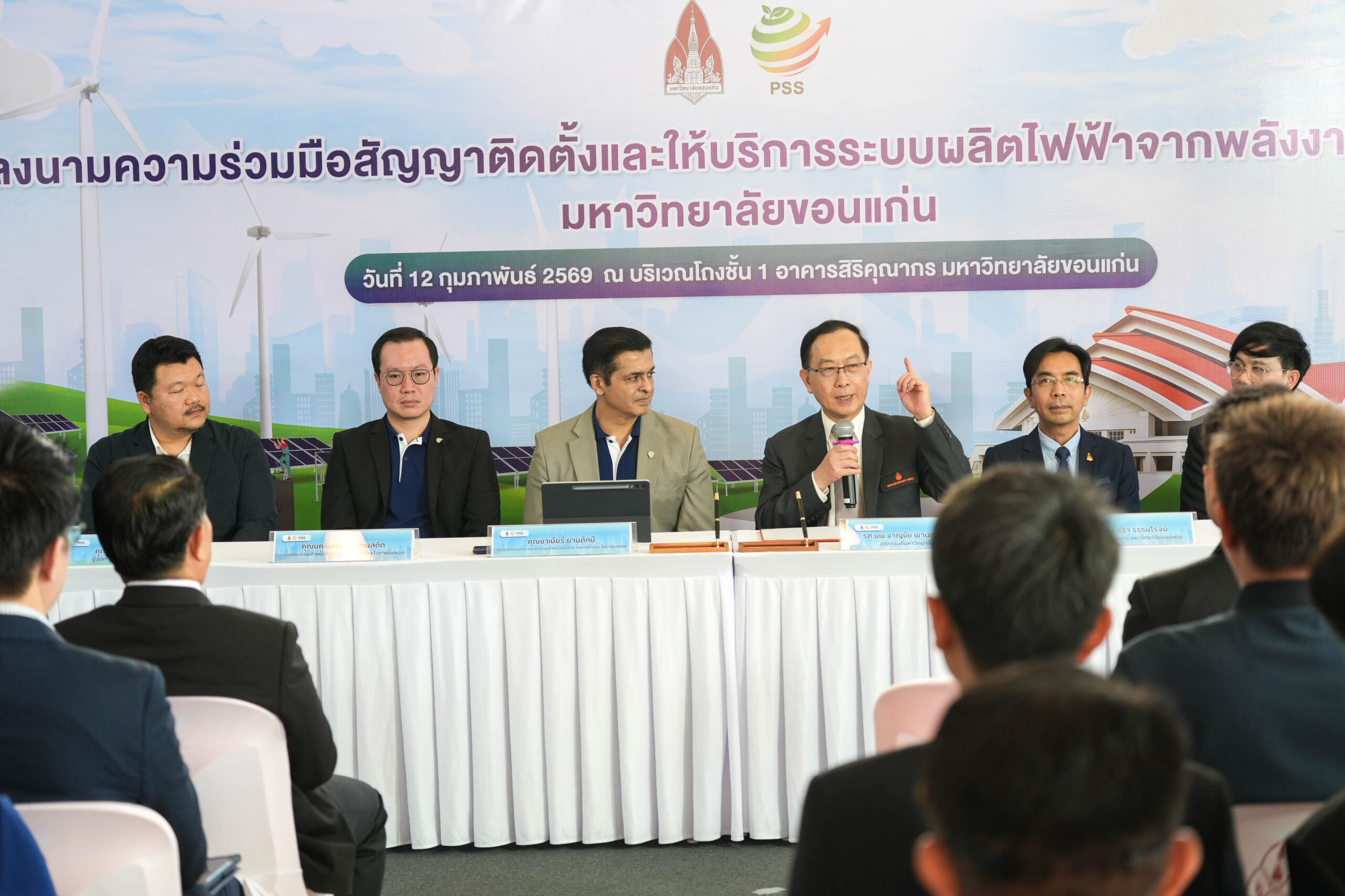
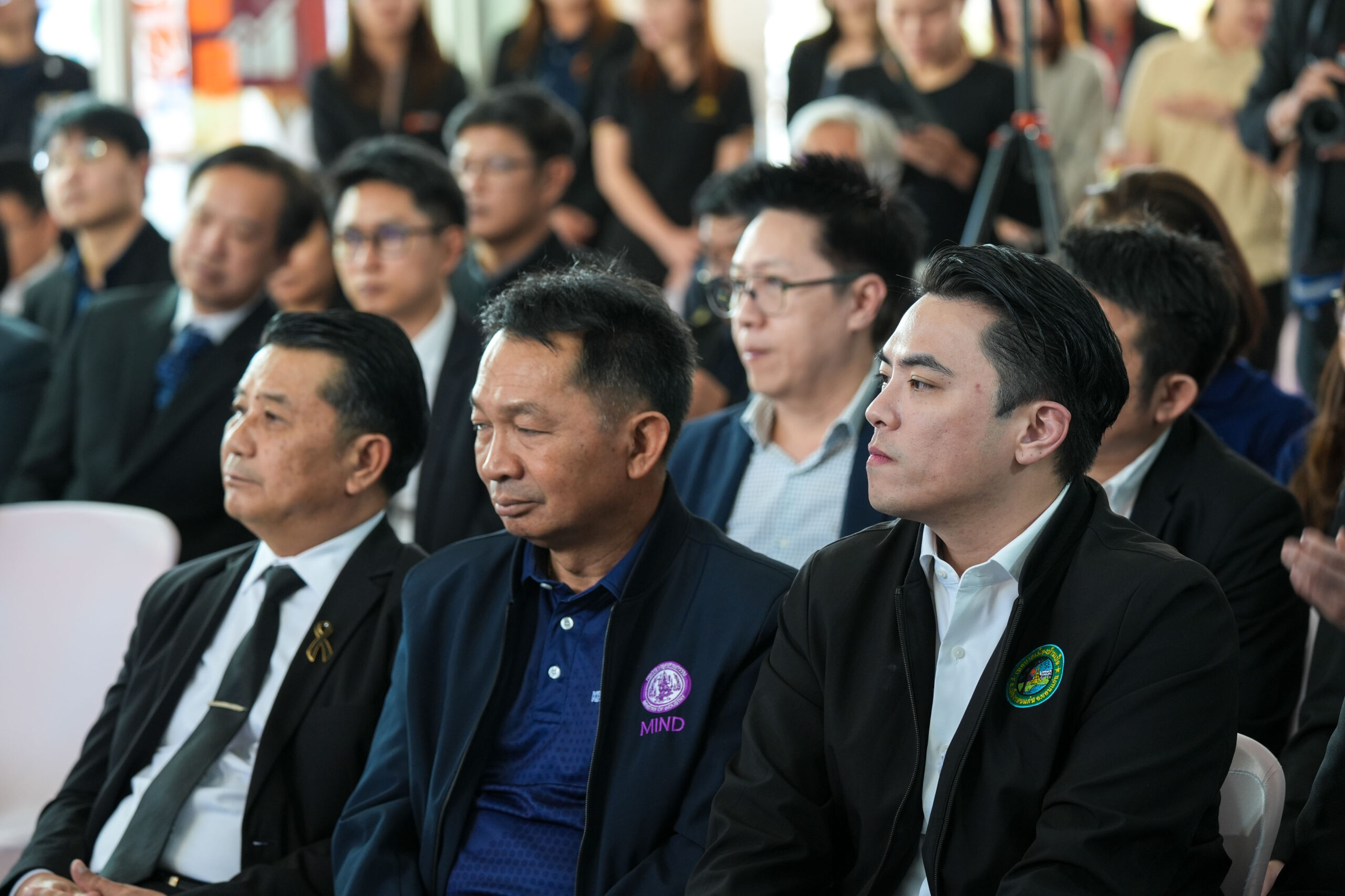
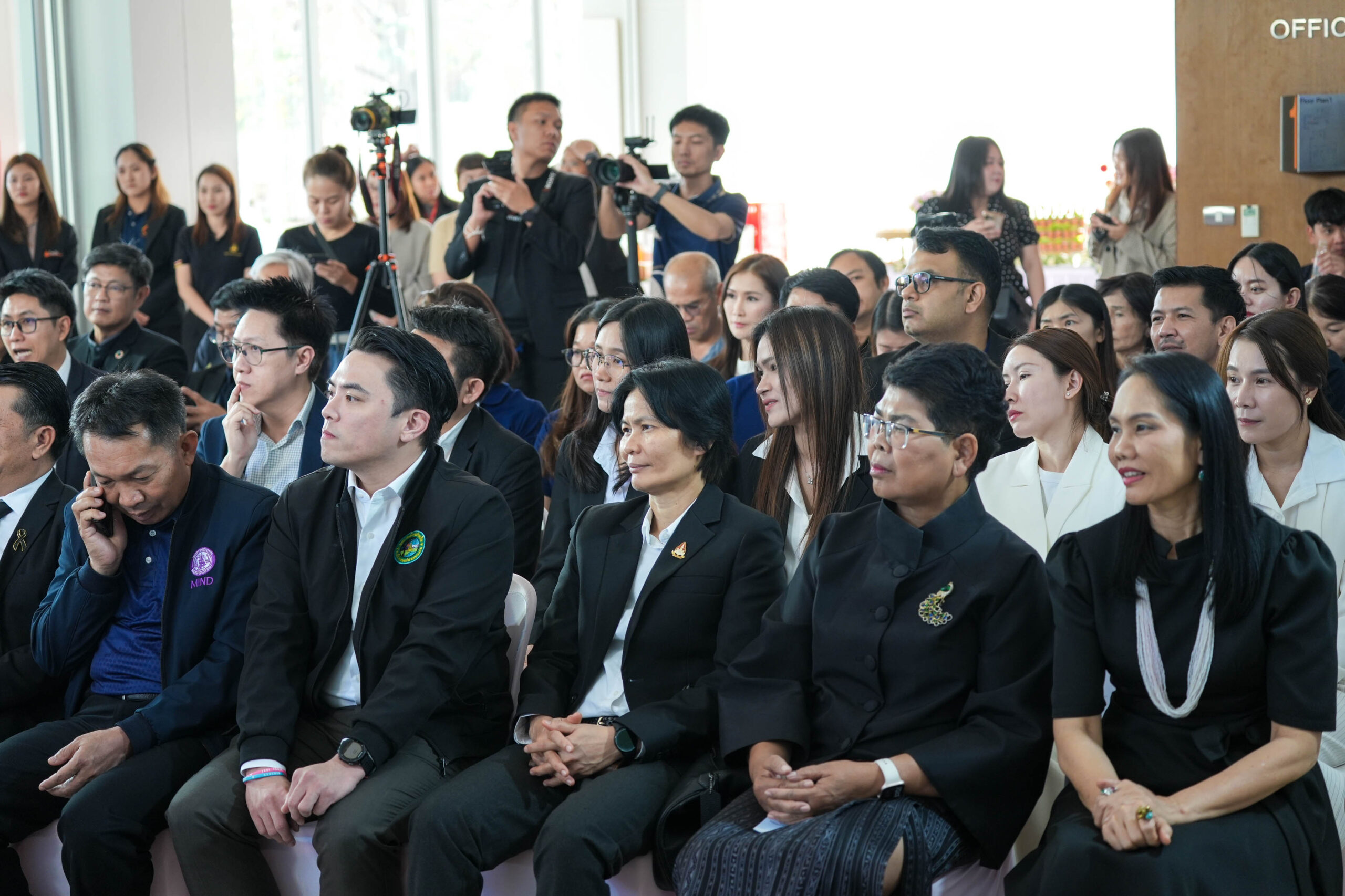
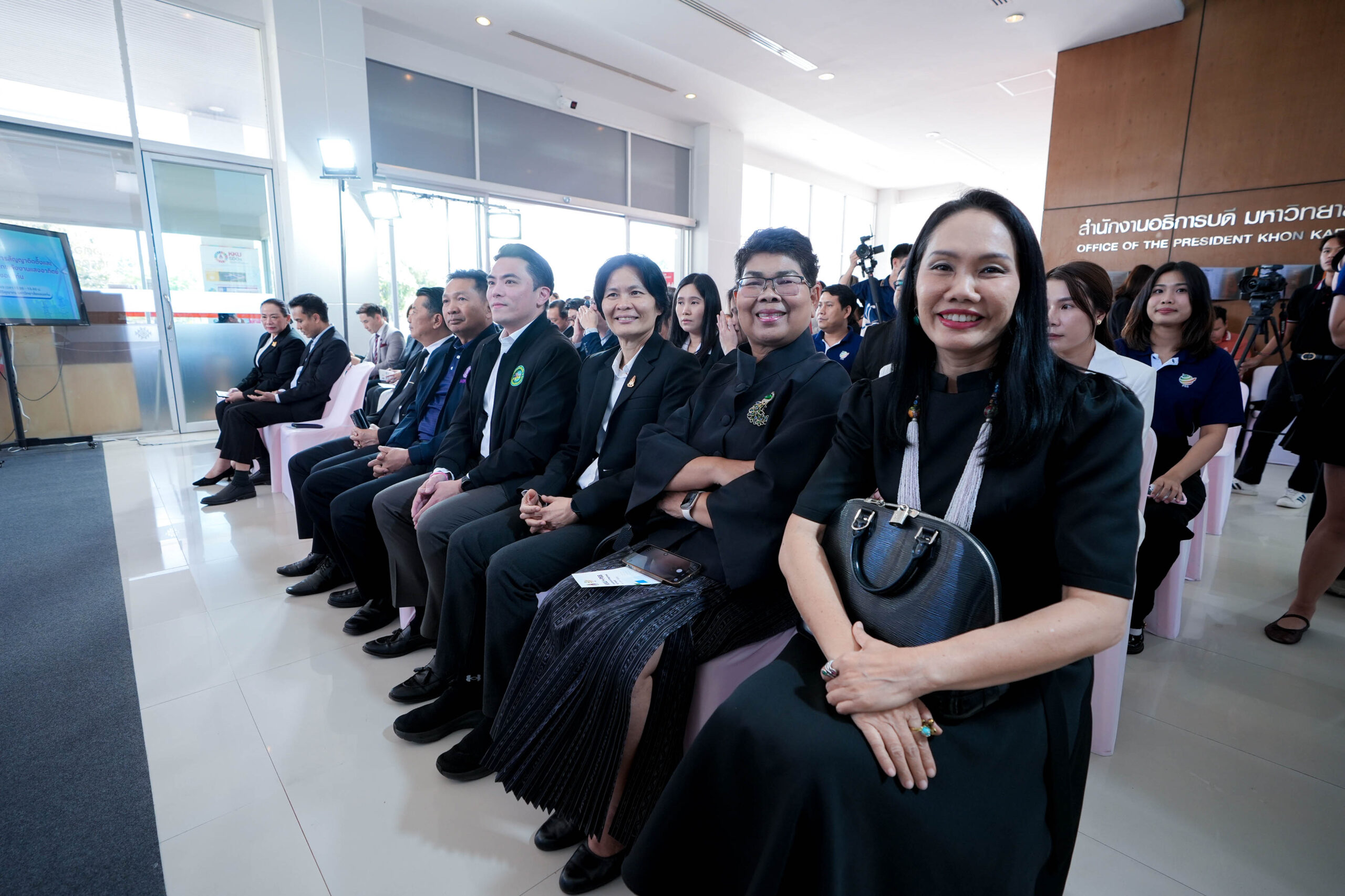
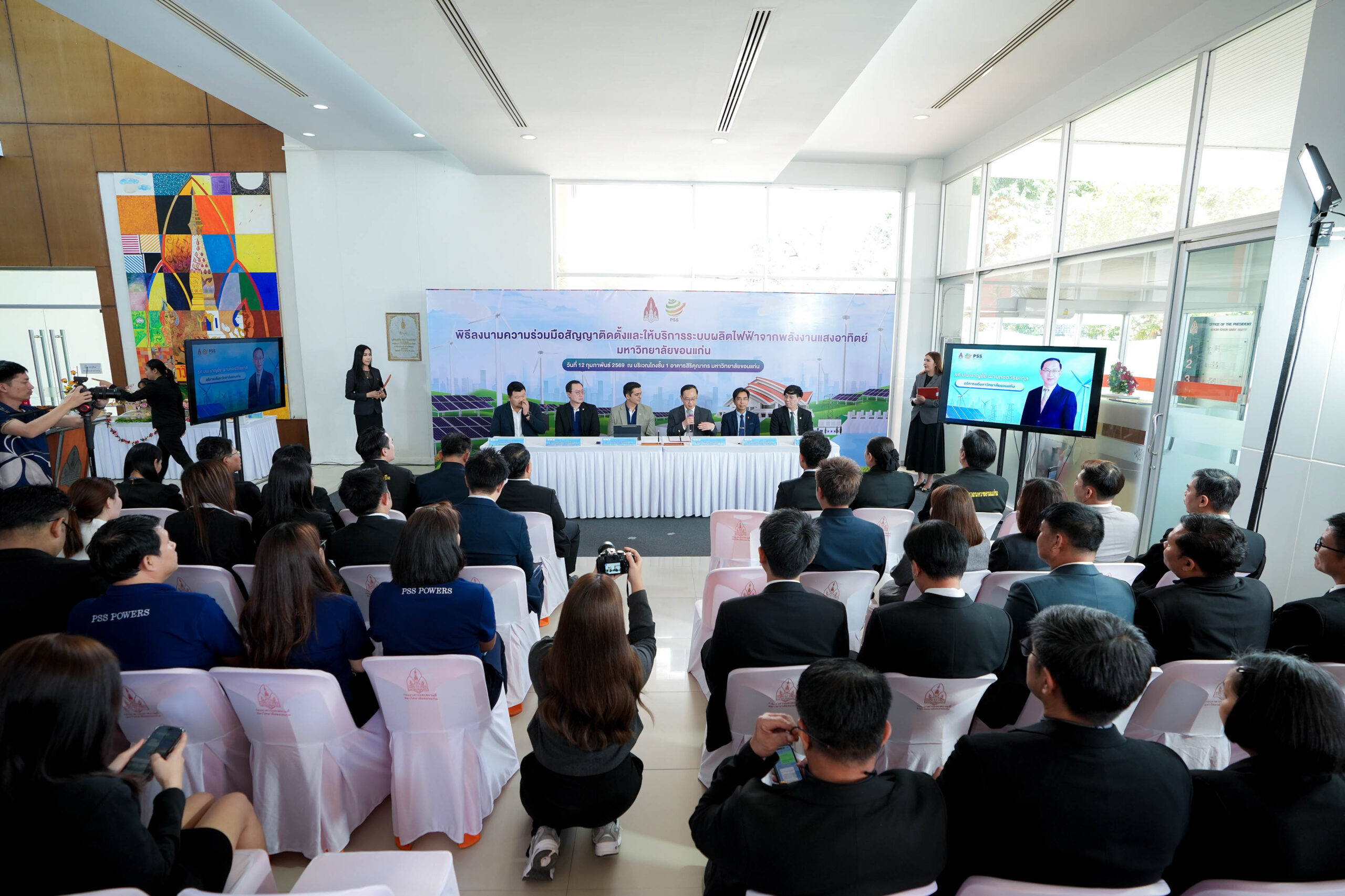
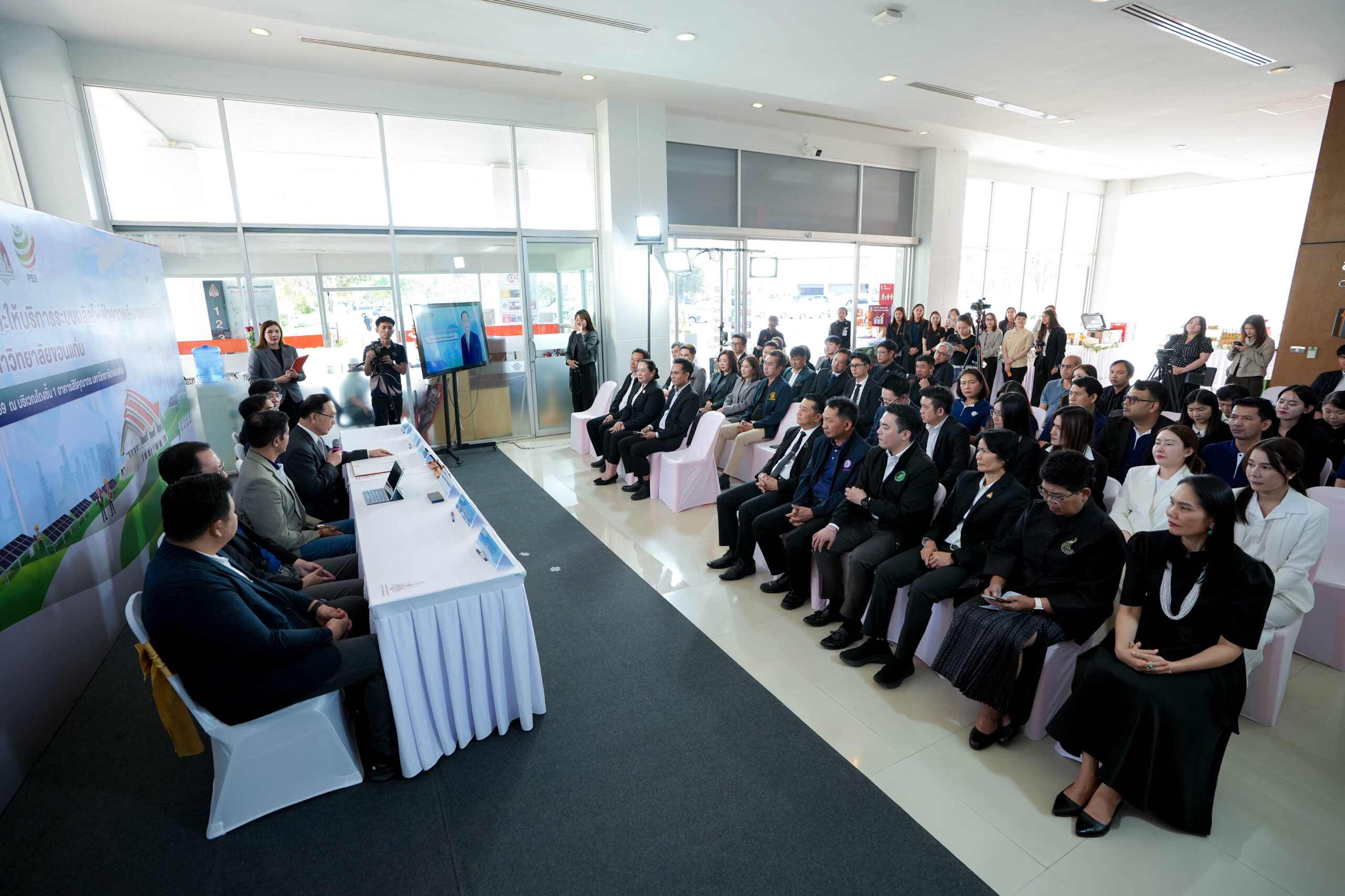
On Thursday, 12 February 2026, from 13:30 to 15:00 hrs, Khon Kaen University hosted the signing ceremony for the Solar Power Generation System Installation and Service Project between Khon Kaen University and the HYAPSS Joint Venture. The ceremony took place in the lobby on the first floor of the Sirikunakorn Building, Office of the President.
The signatories and official witnesses included representatives from Khon Kaen University: Assoc. Prof. Charnchai Panthongviriyakul, M.D., President of Khon Kaen University; Asst. Prof. Tala Thammaroj, M.D., Vice President for Administration; and Assoc. Prof. Choopong Thongkamsamut, Ph.D., Vice President for Physical Ecosystem and Environment.
Representing the HYAPSS Joint Venture were Mr. Samir Yamdagni, Chairman and Chief Executive Officer; Mr. Nakarin Saintngamsathit, Executive Vice President; and Mr. Chaweng Suessat, Business Development Manager.
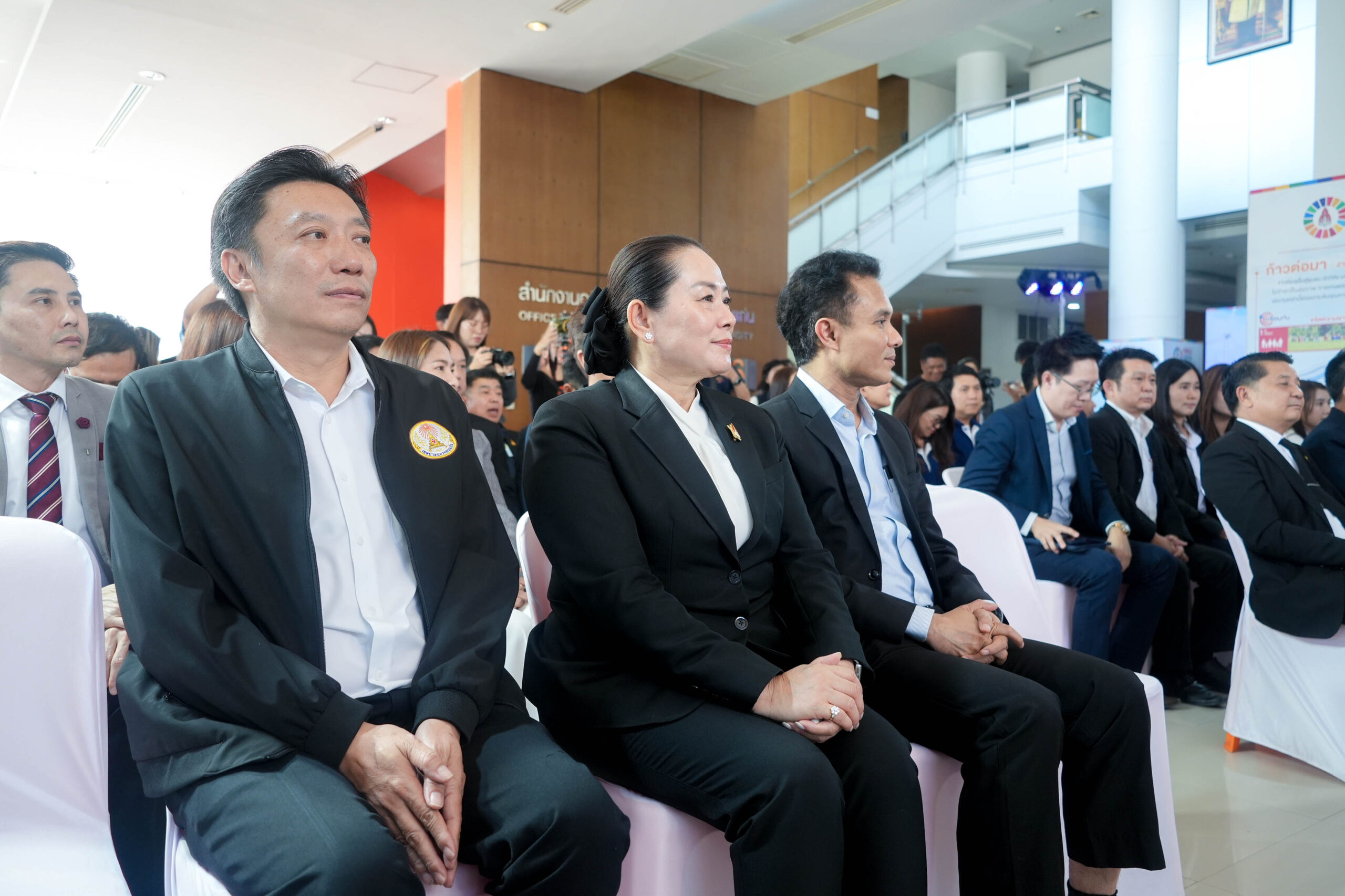
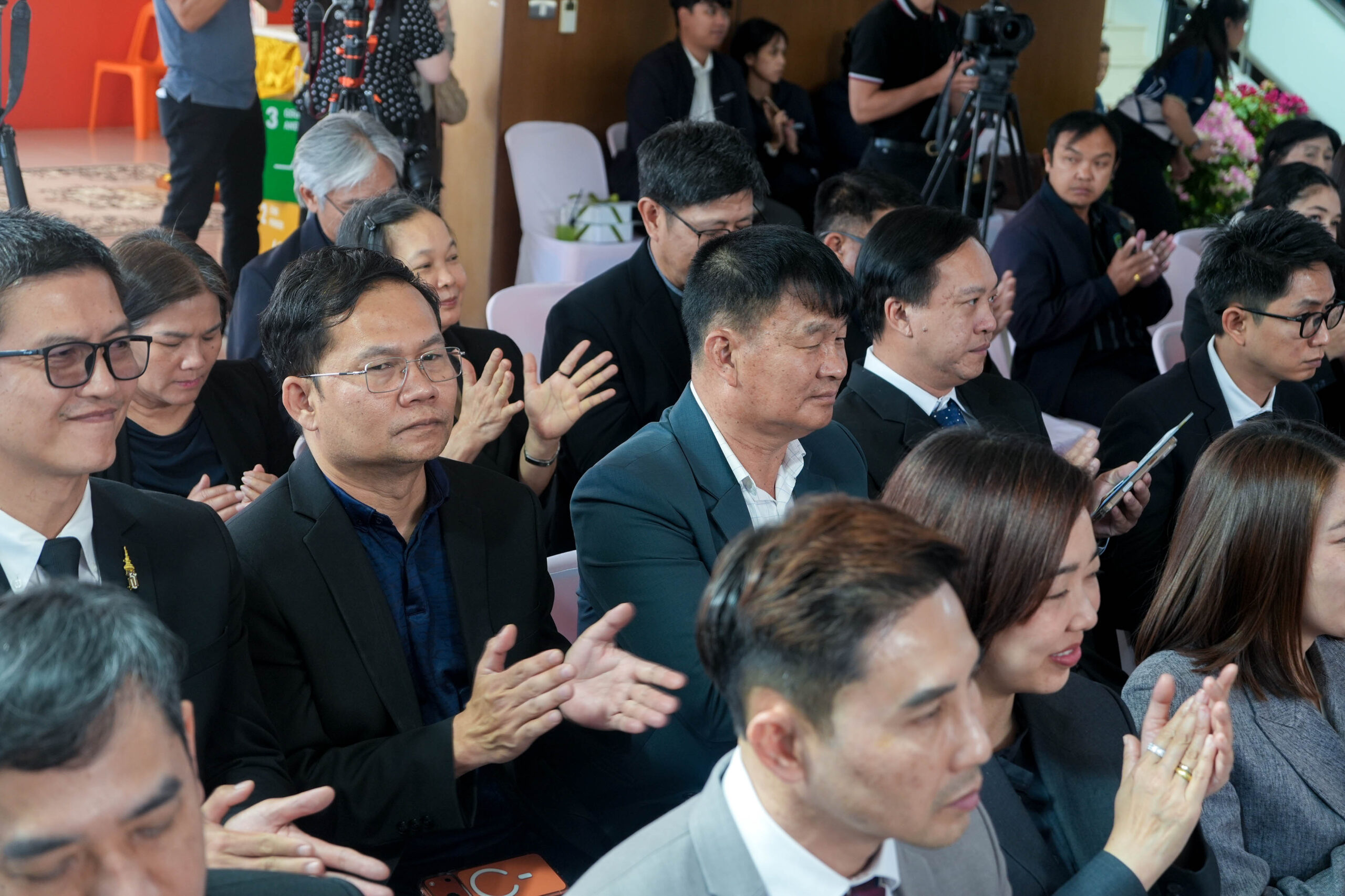
The signing was attended by representatives from government and local authorities, including Mr. Thongchai Muangsonthi, Khon Kaen Provincial Industry Officer; Mr. Surachai Sinprakorb, Khon Kaen Provincial Energy Officer; Mr. Chairat Pathumnanagul, Deputy Mayor of Khon Kaen City Municipality; Mr. Soraworn Dansermsuk, Deputy Mayor of Ban Ped Town Municipality; and Mr. Pisarn Khamya, Deputy Mayor of Ban Tum Town Municipality. University executives, and representatives from the public, private, and media sectors also participated as witnesses.
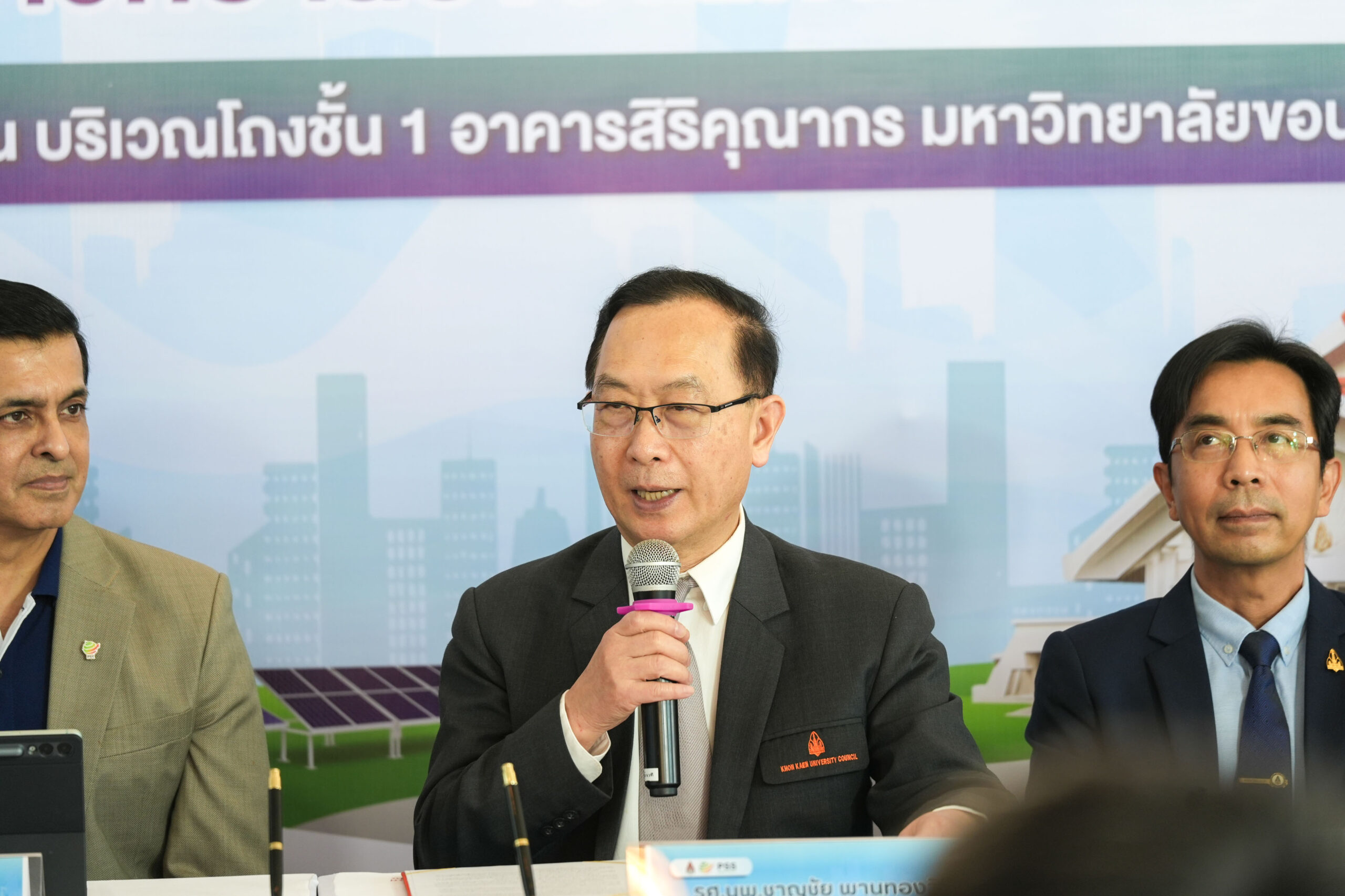
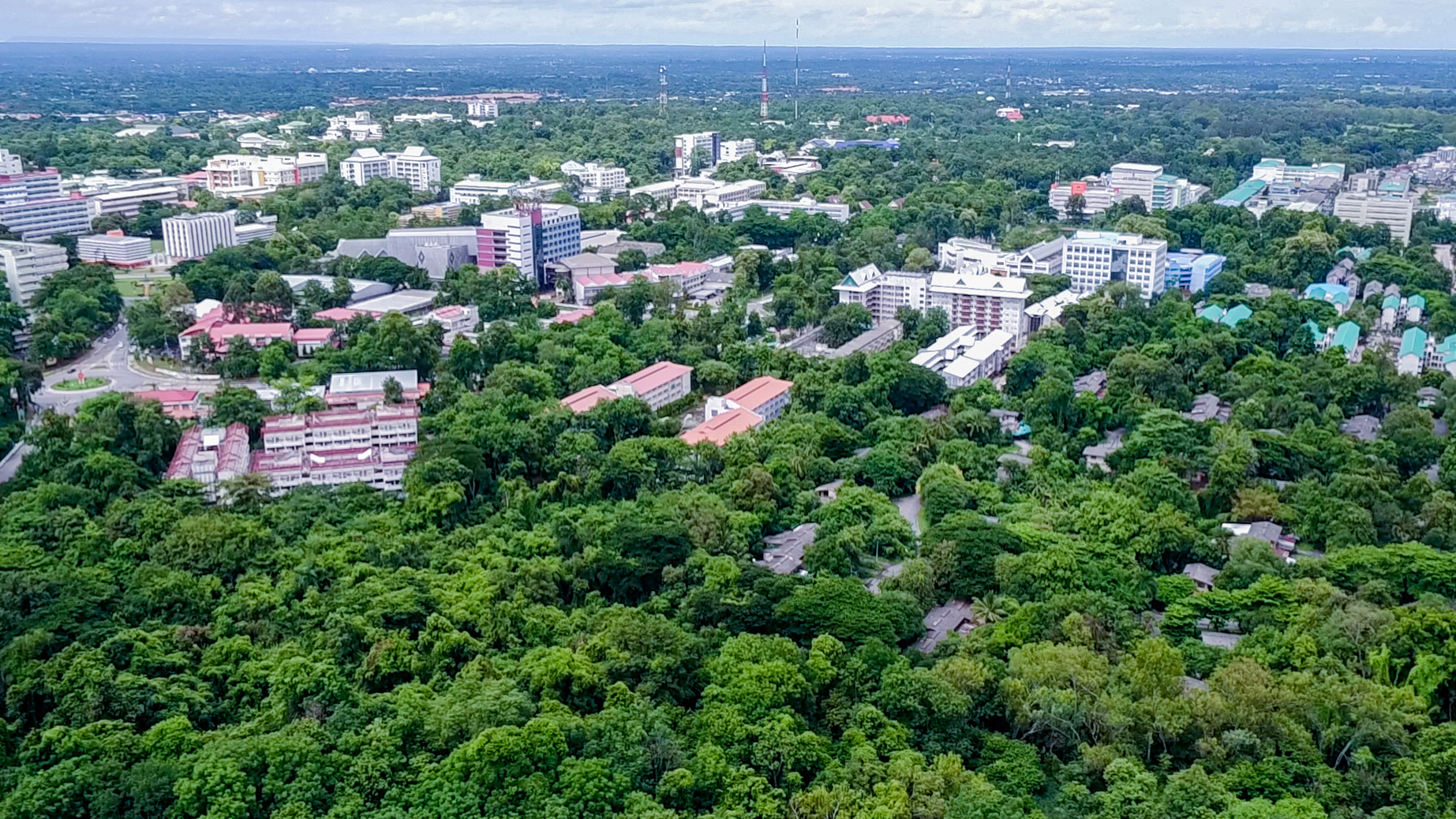
Assoc. Prof. Charnchai Panthongviriyakul, M.D., President of Khon Kaen University, remarked that the university—spanning over 5,500 rai—has a history of development dating back more than 60 years. KKU is committed to driving sustainable development in all dimensions, including the physical environment, economy, and society, under the strategic plan, “KKU’S Carbon Neutrality.”
“This plan targets achieving carbon neutrality by 2029 through six important programmes. This solar project is a key mechanism for making that goal tangible and aligns with SDG 7: Affordable and Clean Energy and SDG 13: Climate Action,” said Professor Charnchai.
The project involves installing solar power systems with a combined capacity of 30 MWp, in both ground-mounted (Solar Farm) and floating (Solar Floating) formats. This makes it one of the largest solar power generation projects within an educational institution globally. It is projected to reduce greenhouse gas emissions by approximately 15,000 tonnes of carbon dioxide equivalent per year, contributing significantly to the reduction of the university’s total annual emissions, which stand at around 80,000 tonnes of carbon dioxide equivalent. Over the 20-year contract period, the project will also help reduce electricity procurement costs by more than 2.5 billion Thai baht.
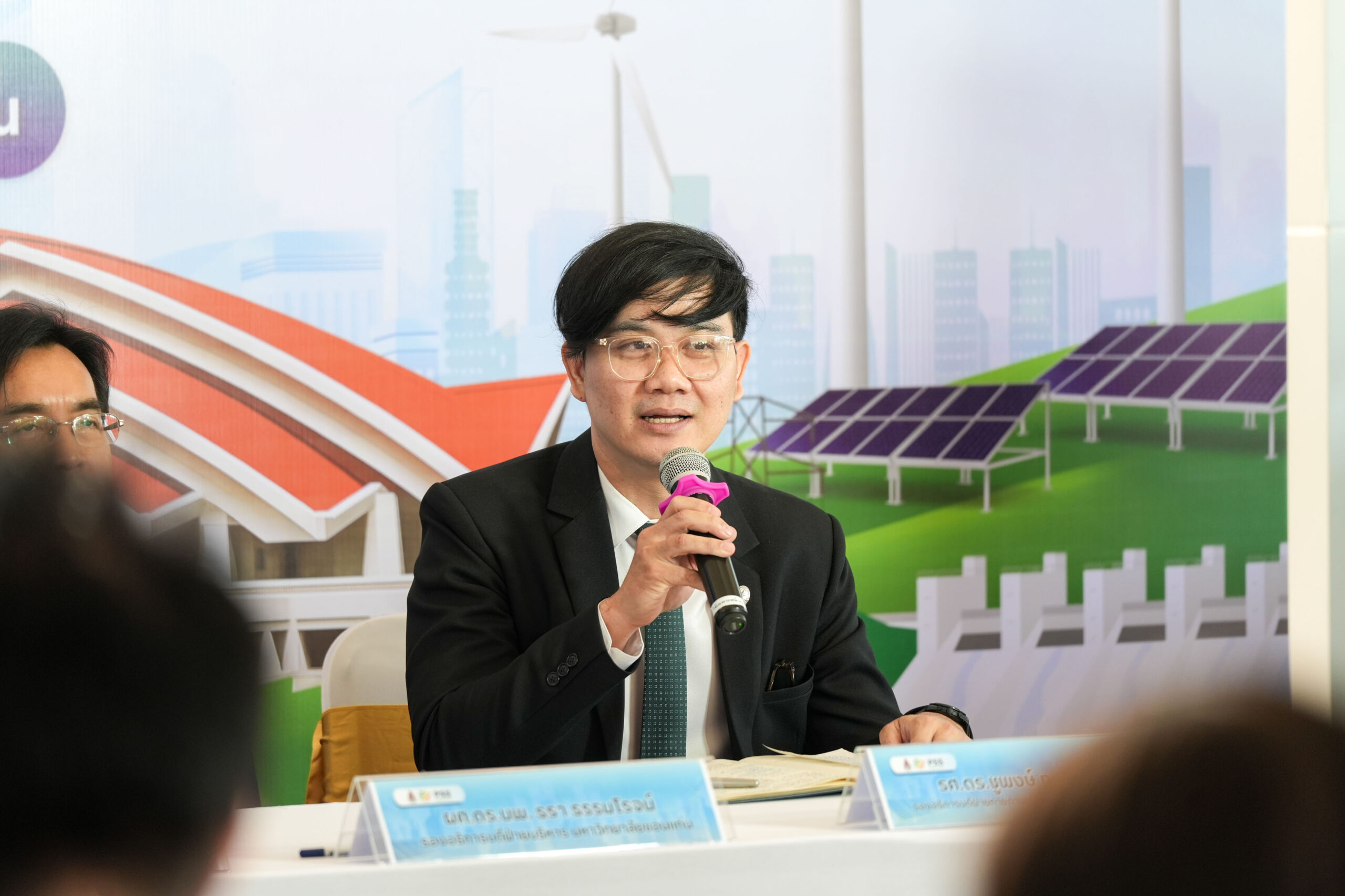
Assoc. Prof. Choopong Thongkamsamut, Ph.D., Vice President for Physical Ecosystem and Environment, explained that Low Carbon, Net Zero Carbon, and Carbon Neutrality share the goal of balancing carbon emissions with equivalent sequestration or offsetting. Khon Kaen University has established six systematic plans to achieve carbon neutrality: utilising clean energy and increasing energy efficiency; developing energy-saving buildings; managing campus areas by usage zone; promoting electric vehicles; planting a target of 100,000 trees (with 35,000 trees currently planted); and implementing upstream waste management, which has already reduced daily waste by three tonnes.
“Achieving this success depends on the collaboration of all sectors. We thank everyone for their commitment to driving this forward towards a sustainable green university,” Professor Choopong remarked.
Professor Choopong added that, based on current assessments, the university aims to achieve Carbon Neutral University status by 2029 by focusing on internally generated carbon offsets and developing carbon credit generation capabilities in the future.
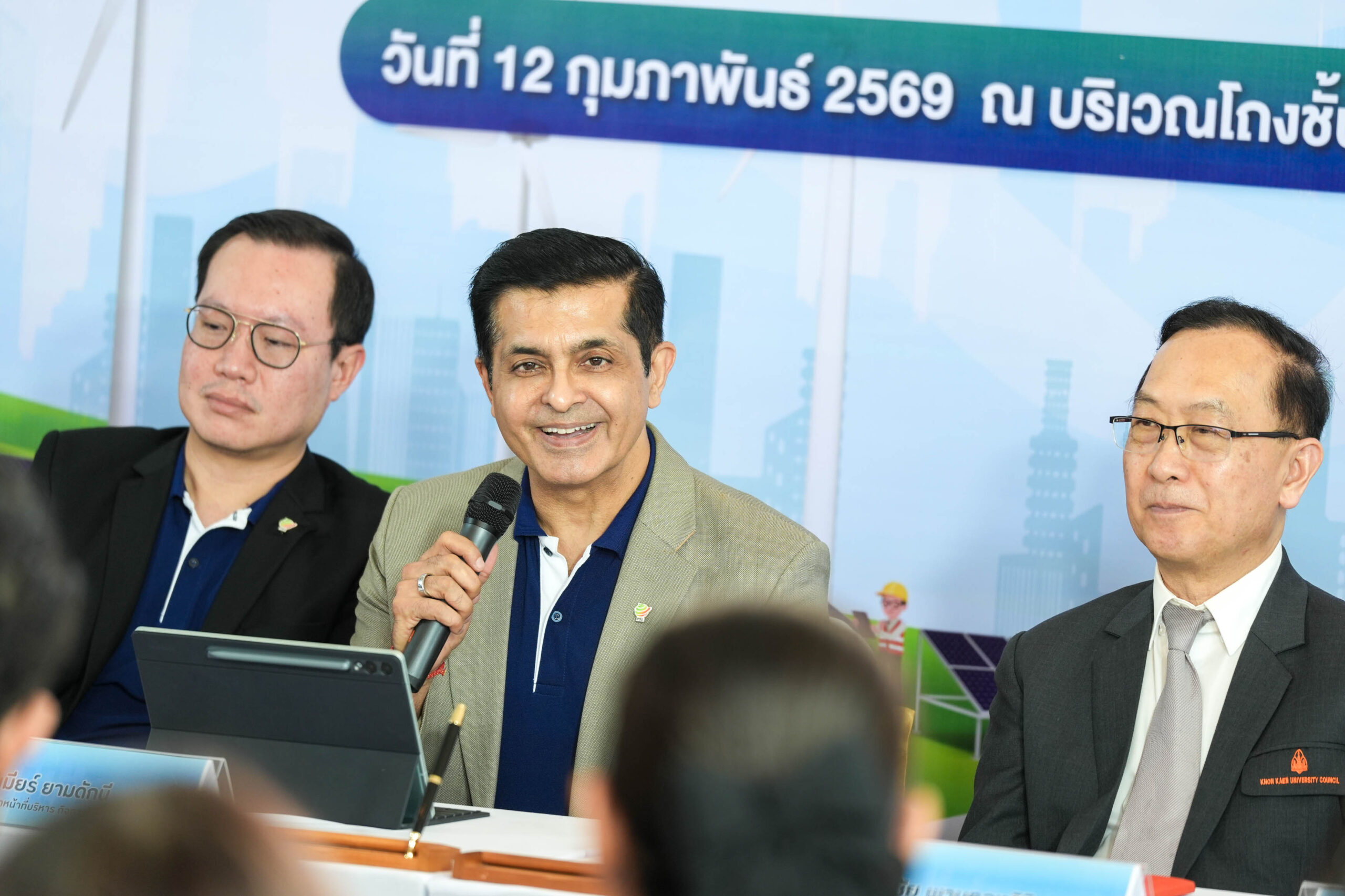
Mr. Samir Yamdagni, Chairman and Chief Executive Officer of HYAPSS, expressed his company’s honour in being entrusted with Khon Kaen University’s renewable energy project, highlighting it as a pioneering endeavour in Thailand and the Southeast Asian region. He noted that HYAPSS has been operating for over 30 years, with a focus on renewable energy for the past 14 years, accumulating a total portfolio of over 250 megawatts and investments exceeding 3 billion Thai baht.
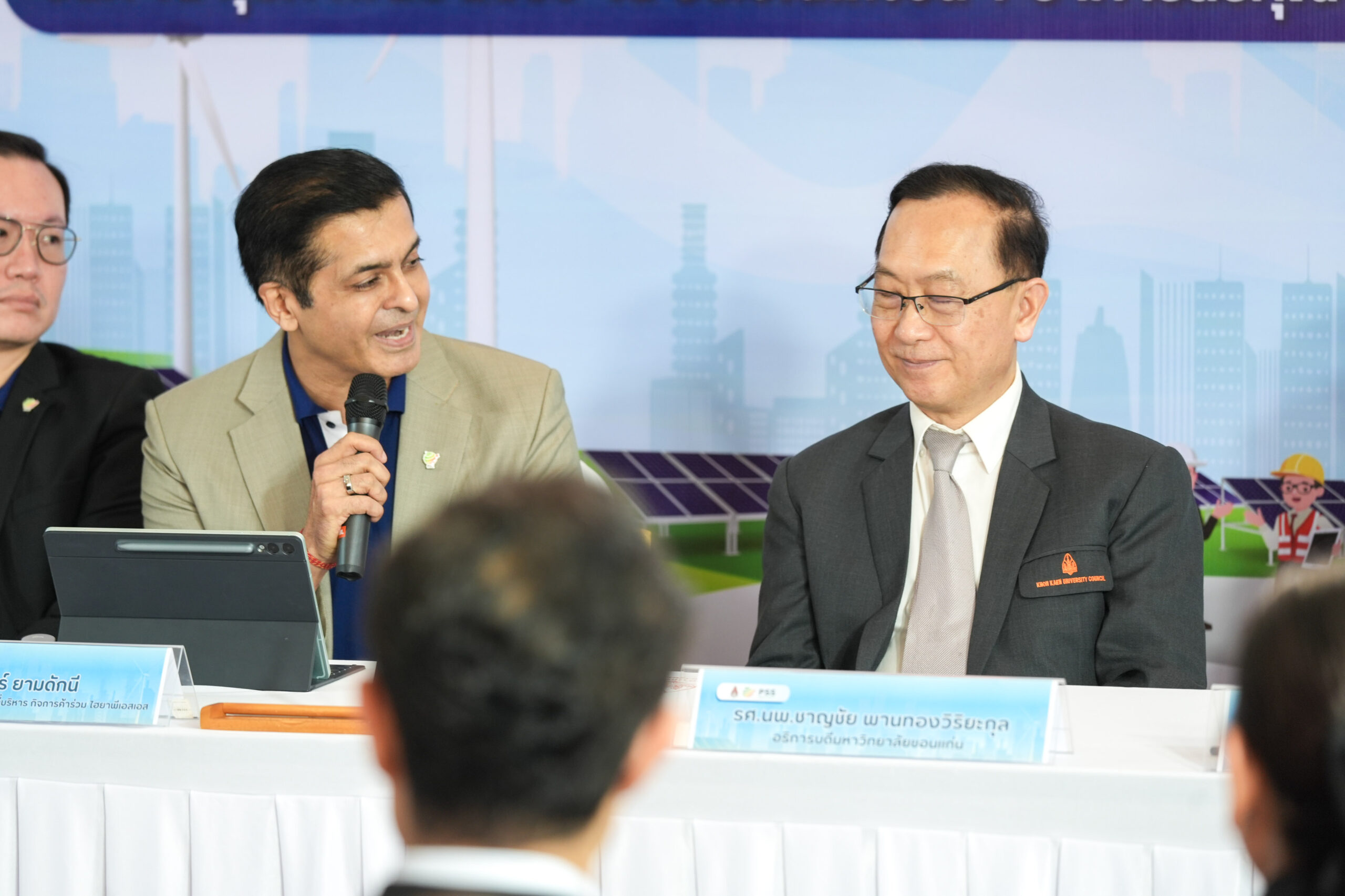
“This project has a total capacity of 30 megawatts, including 10 megawatts of Floating Solar, 8 megawatts of Solar Farm, and a 5 megawatt-hour battery energy storage system. The company will be responsible for electricity generation for 20 years, saving the university approximately 3 billion baht and reducing carbon emissions equivalent to planting over 700,000 trees annually. We are proud to support the university’s carbon neutrality goal,” Mr. Yamdagni stated.
Mr. Yamdagni concluded by expressing the company’s confidence that this project will serve as a clean energy model for the nation and provide a significant opportunity for developing the skills of future students and personnel.

The solar initiative is one of the six main work plans overseen by the University’s Zero Carbon Committee, which includes: Energy Efficient Buildings (Building & NC/EBOM); Area Management and Car-Free Zone promotion; Electric Vehicle Mobility (EV Mobility); Carbon Capture (with a target absorption rate of 5,500–32,000 tonnes per year); Efficient Waste Management; and Infrastructure and Energy Systems Deployment. The university has set critical milestones to achieve Carbon Neutrality by 2028 and progress toward Zero Carbon by 2029.
In addition to the environmental and economic benefits, Khon Kaen University aims to integrate the project into its teaching, research, and student development programmes. This initiative will serve as a vital source for knowledge concerning renewable energy, generating future opportunities for clean energy research and innovation.
The signing ceremony thus marks the beginning of a long-term partnership focused not only on reducing greenhouse gas emissions and energy resource depletion but also on providing clean energy for the university. This reflects Khon Kaen University’s role as a university for society, actively driving sustainable development in alignment with SDG 11: Sustainable Cities and Communities, SDG 13: Climate Action, and SDG 17: Partnerships for the Goals, ensuring long-term benefits for society, the economy, and the environment.
News: Benjamaporn Mamook / Punnawaj Khuntip (4th Year Co-operative Education Trainee, Thai Language Programme, Faculty of Humanities and Social Sciences, Khon Kaen University)
Photography: Natthawut Charuwong / Punnawaj Khuntip