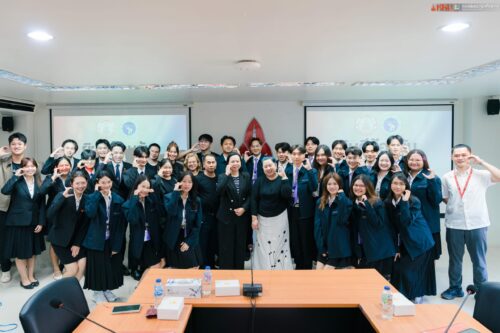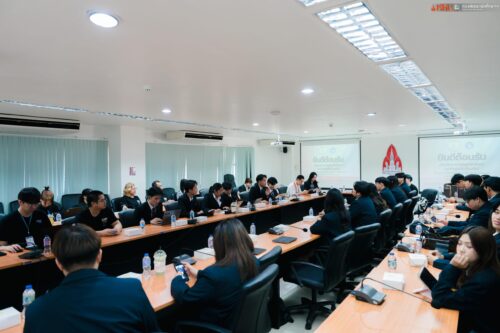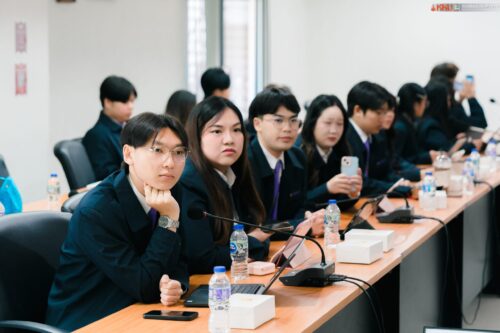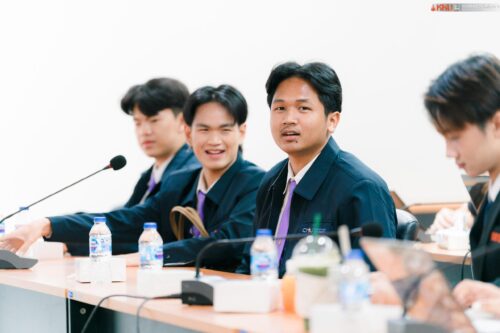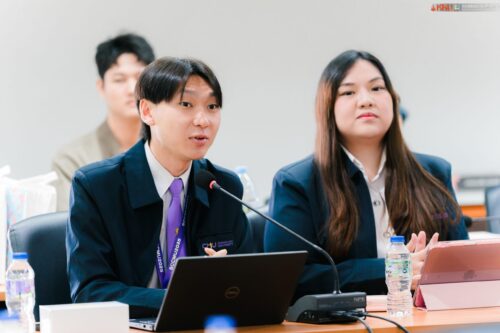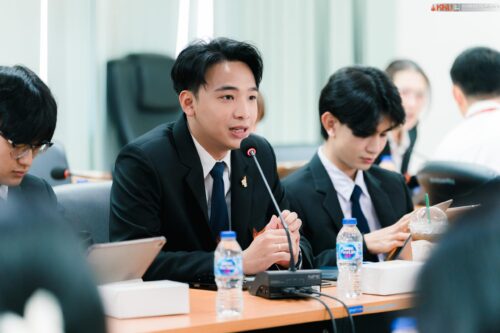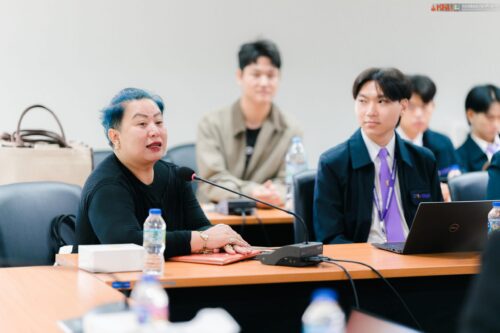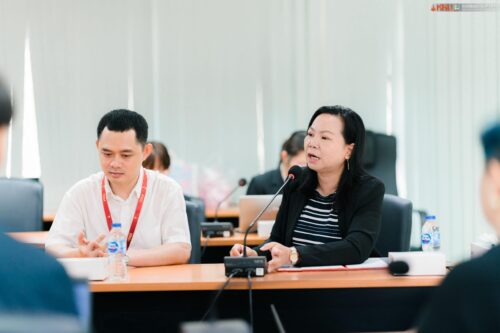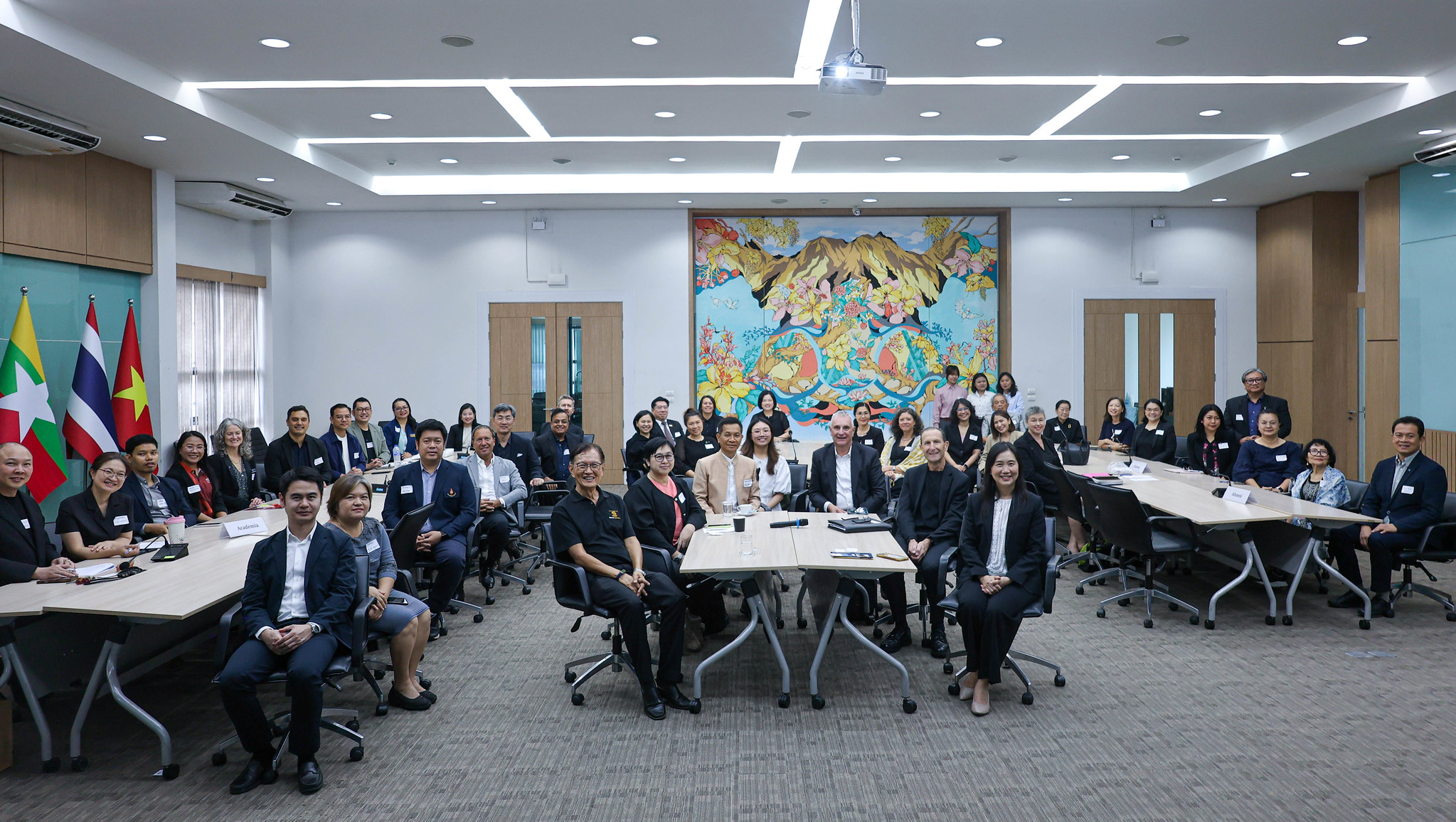
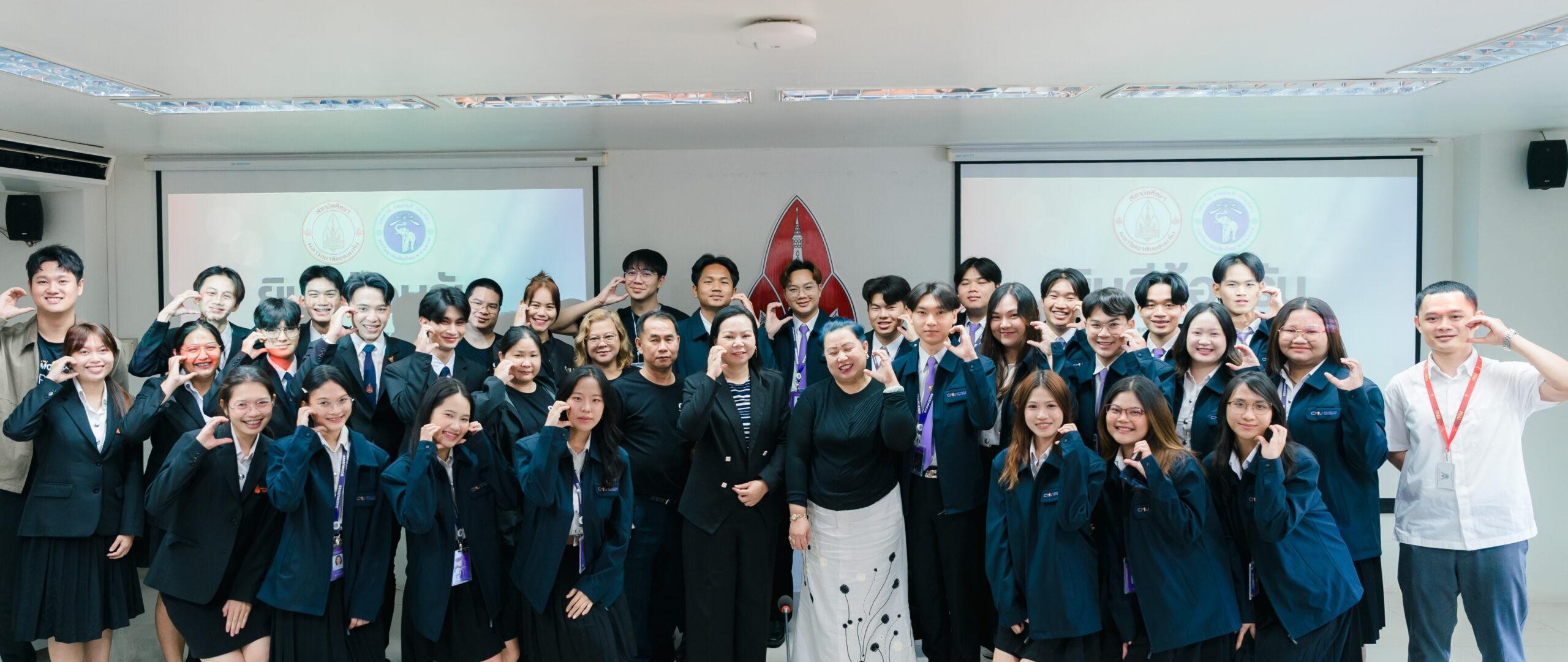
On 2 February 2026, at Meeting Room 1 of the Student Activity Organisation Building, Khon Kaen University (KKU), the Division of Student Affairs and Alumni Relations hosted administrators, staff, and student leaders from Chiang Mai University (CMU). The delegation visited KKU as part of the “Study Tour and Knowledge Exchange Programme for Chiang Mai University Student Council, Academic Year 2025.”
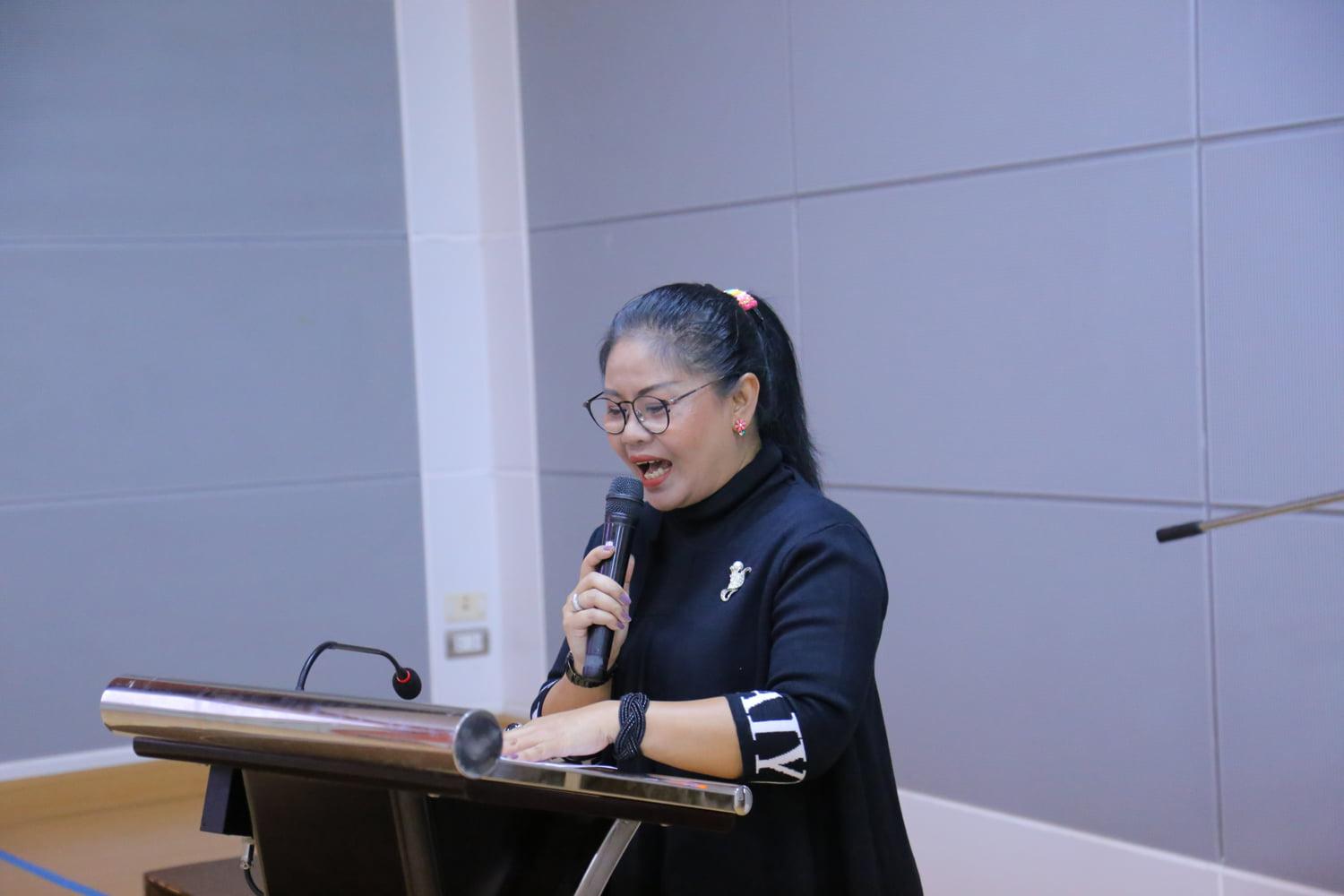
The morning session commenced in a warm atmosphere with a welcoming address delivered by Ms.Jessadaporn Srirattanaprapun, Director of the Division of Student Affairs and Alumni Relations, KKU. He emphasised that the visit by the CMU delegation represented an invaluable opportunity to strengthen the excellent relationship between the two institutions. Furthermore, he noted that the event serves as a crucial platform for exchanging experiences, creative ideas, and operational approaches in student affairs, which will significantly benefit development efforts at both universities.
In response, Ms.Sutthinee Chatayalak, Director of the Division of Student Affairs, CMU, expressed gratitude to Khon Kaen University for the exceptionally warm welcome. She stated that the study tour was highly beneficial for learning about KKU’s administration and management guidelines for student activities. She affirmed that the knowledge and experiences gained would be applied to develop the work of the CMU Student Council moving forward, expressing hope for even stronger future collaboration.
Ms. Sutthinee further explained that this study tour formed part of the annual Student Council Knowledge Exchange Project for Academic Year 2025. Its primary objectives are to develop the potential of CMU student leaders to embody the ‘CMU Student DNA’, by embracing new perspectives, exchanging active learning experiences in student activities, and enhancing the efficiency of Student Council operations in response to evolving social and higher education contexts. This initiative aims to strengthen knowledge related to policy formulation, student organisation management, and leadership development, ultimately enabling the systematic and sustainable advancement of student development initiatives.
The programme agenda included introductions of administrators, staff, and student leaders from both institutions, followed by the study tour and knowledge exchange sessions focusing on various aspects of Student Council operations. These activities contributed to strengthening inter-university networks and jointly enhancing the leadership capabilities of student representatives.