
The strategic cooperation focuses on integrating anti-corruption education, developing lifelong learning centres, and conducting policy research to strengthen the rule of law in Khon Kaen.

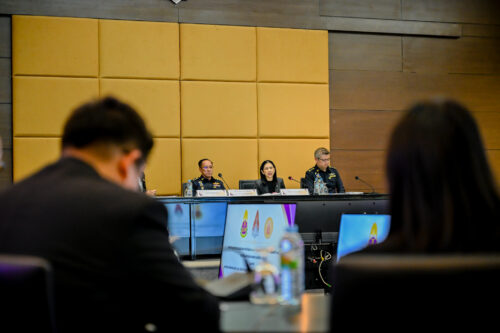
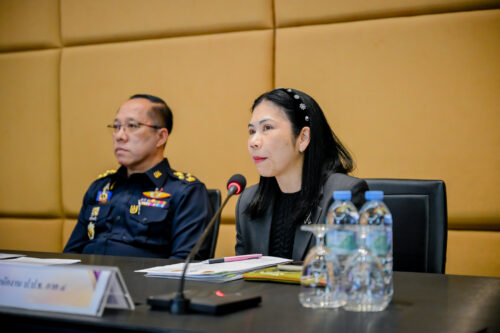
On 3 February 2026, the Faculty of Law, Khon Kaen University, along with the National Anti-Corruption Commission (NACC), signed a cooperation agreement and convened a meeting to summarise operational outcomes and define future directions for collaboration. This partnership operates under a Memorandum of Understanding (MoU) signed in 2024, with the objective of establishing a strategic framework for the rule of law, anti-corruption, and the systematic development of a learning city.
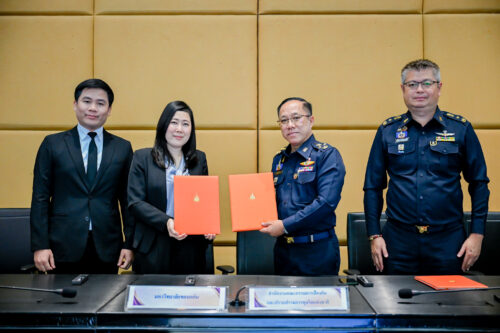

The strategic Co-Creation Framework, which was approved by the KKU Faculty of Law and the NACC Region 4 Office on 30 January 2026, is guided by the core concept of “Integrity & Law.” This initiative seeks to promote a collaborative learning ecosystem involving higher education institutions, government agencies, and the social sector. Its aim is to cultivate a culture of the rule of law, anti-corruption, and social responsibility, functioning as an “ethical immunity system” integrated with learning city development.




This collaboration focuses on four operational strategies:
1. Curriculum Development and Legal Education Management The Faculty has systematically integrated anti-corruption content into its curriculum since 2017. This covers mandatory subjects (e.g., Law and Society, Justice Administration, and Legal Philosophy and Ethics for Lawyers) and specialised courses (e.g., Anti-Corruption Law). Anti-Corruption Education is also applied to other subjects, including Constitutional Law, Administrative Law, Commercial Law, Securities Law, and Financial Business Law. Teaching utilises a Blended Active Learning format, incorporating Case-based Learning and Problem-based Learning. This approach encourages students to analyse real-world scenarios relating to state power, the use of discretion, and professional ethics, leading to professional socialisation and the development of a legal perspective that serves society.
2. Lifelong Learning System Development (Law KKU Everywhere) The collaboration will establish a learning system under the strategic pillar “Law KKU Everywhere,” comprising five core centres:
- Centre for Human Rights and Sustainability (HRS): Developing tools to support the Integrity and Transparency Assessment (ITA) in the context of human rights and sustainable development.
- Institute of Economic and International Trade Law (IEIL): Developing transparent business law frameworks, promoting good corporate governance, and preventing corruption in the economic sector.
- Araysukh Law and Justice Institute (ANIL): Developing data mechanisms focused on public participation, utilising Open Data and Citizen Data to support the ITA at local and city levels.
- Legal Research and Academic Service Centre (LRAS): Integrating legal research, academic services, and policy recommendations.
- Legal Aid and Public Service Centre (KLAC): Coordinating legal assistance for the public and supporting local anti-corruption efforts.
Additionally, the project aims to develop Micro-Credential programmes for legal professionals, focusing on topics such as Conflict of Interest & Ethical Decision-Making, Anti-Corruption Law & Compliance, and Rule of Law, Human Rights and Integrity.
3. Promoting a Culture of Rule of Law and Anti-Corruption The strategy involves organising activities and projects to instil values of honesty and integrity among students, youth, and the general public through the Law & Ethical Leadership programme.
4. Research and Policy Knowledge Development This focuses on developing open data systems and tools to support the local-level ITA. The research findings of Associate Professor Supawatanakorn Wongthanawasu, Ph.D., and her team will be applied to enhance disclosure mechanisms, promote citizen learning, and drive the development of the learning city.
This agreement represents a significant milestone in formal cooperation between a government agency and a higher education institution, embedding integrity and the rule of law as foundational pillars of Thai society. It further positions Khon Kaen as a potential model “City of Integrity and Learning” for the region.