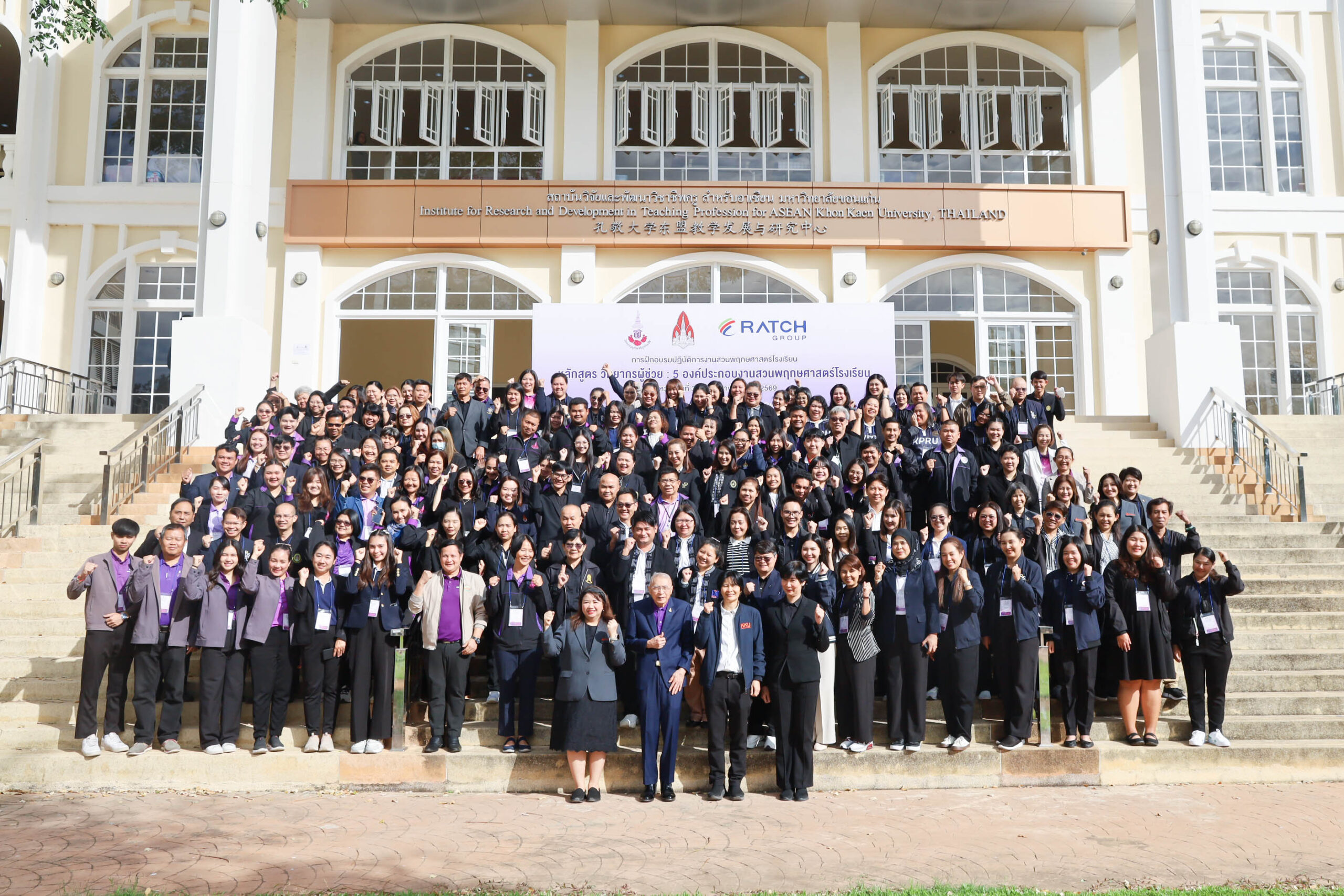
On Tuesday, 3 February 2026, the Khon Kaen University (KKU), through the Office of the Royal Initiative Project for the Conservation of Thai Plant Genetic Resources (OEPF) Coordination Centre (KKU Network Centre), in collaboration with RATCH Group Public Company Limited, organised a Practical Workshop on School Botanical Gardens under the curriculum “Assistant Trainer: The Five Components of School Botanical Gardens.”
The workshop was conducted from 3–6 February 2026.
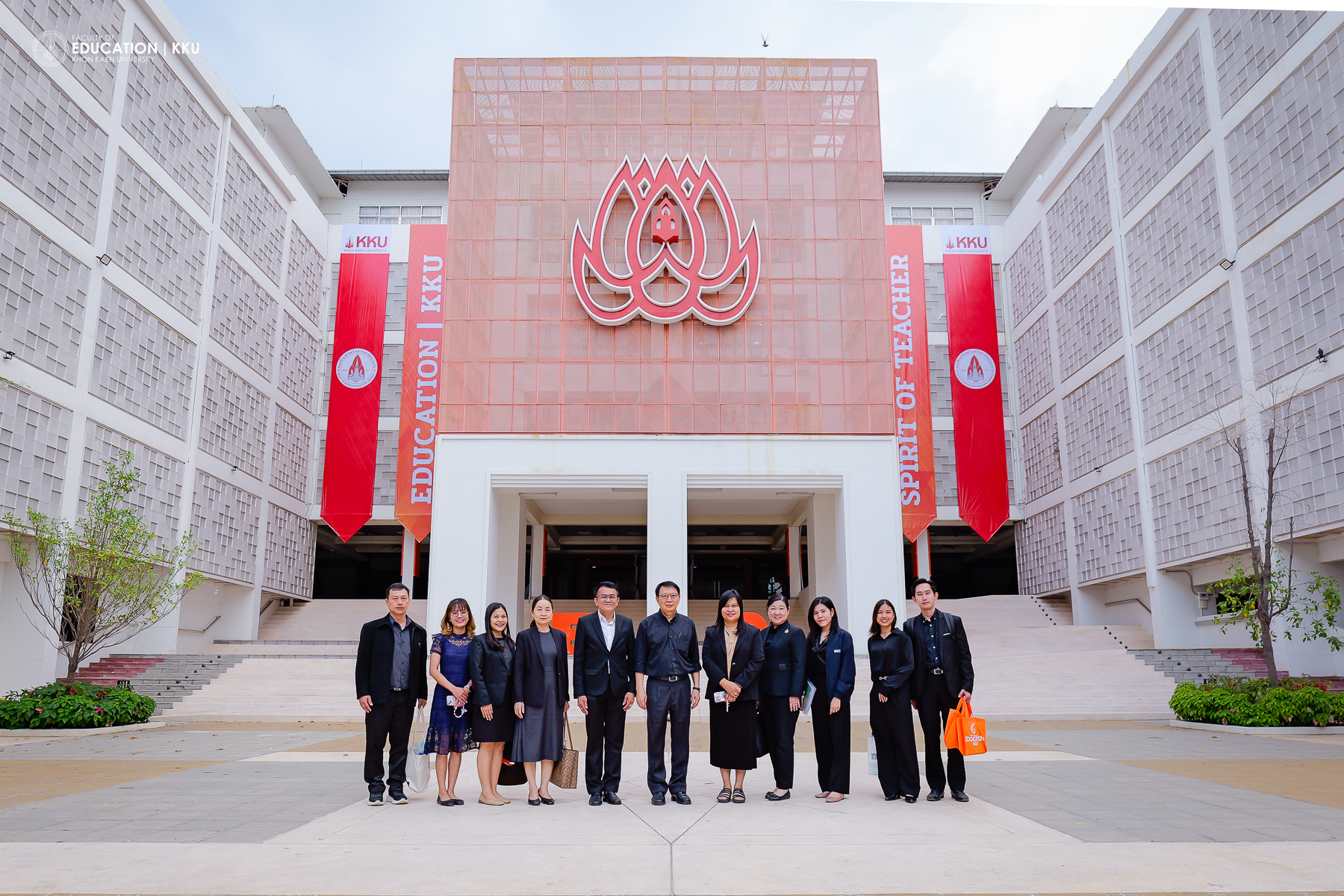
The opening ceremony was presided over by Professor Thidarut Boonmars, D.V.M., Ph.D., Vice President for Enterprise and Societal Sustainability, Khon Kaen University. Also in attendance was Mr. Kittisak Duangsoithong, Manager of Social Activities at RATCH Group PCL., together with executives, administrators, and teachers. More than 150 participants attended the programme at Meeting Room 2201, 2nd Floor, the Institute for Research and Development on Teaching Profession for ASEAN, Khon Kaen University.

Professor Thidarut Boonmars, Vice President for Enterprise and Societal Sustainability, stated that the objective of the Practical Workshop on School Botanical Gardens (Assistant Trainer Curriculum) for the 2026 fiscal year was to respond to the Royal Initiative of Her Royal Highness Princess Maha Chakri Sirindhorn’s Plant Genetic Conservation Project (OEPF) concerning school botanical gardens. Furthermore, the activity aimed to ensure that trainers from both the OEPF Network Centre and OEPF Coordination Centres possessed accurate knowledge and a thorough understanding of the proper methods for operating school botanical gardens. The training welcomed over 150 administrators and personnel from 38 OEPF Network and Coordination Centres.

“I am confident that throughout these four days of training, all administrators and teachers will become integral parts of driving the School Botanical Gardens Project, fostering awareness for the conservation of plant genetic resources and natural resources. This training will cultivate students into experts in botany and the environment, leading to a deeper recognition and understanding of the importance of plants,” Professor Thidarut remarked. “Looking five or ten years into the future, I hope that everyone continues to integrate work across all dimensions to ensure that the School Botanical Gardens project takes deep root in every area sustainably.”
Mr. Kittisak Duangsoithong, Manager of Social Activities at RATCH Group PCL., expressed the company’s intention for the project, noting that RATCH Group PCL. focuses on sustainable growth by creating economic, social, environmental, and educational value. The company began participating in the OEPF Royal Initiative in 2018, focusing on raising awareness, supporting resource conservation, and local resource base management. Since then, RATCH Group PCL. has consistently organised practical workshops on School Botanical Gardens and Local Resource Base Management for the project’s target groups.
“For this specific School Botanical Gardens workshop, the company expects that participants will gain comprehensive knowledge, concepts, and guidelines that are beneficial for fully developing their school botanical garden programmes,” Mr. Duangsoithong concluded.

Assistant Professor Kesaree Ladlia, Ph.D., Vice President for Research and Innovation and Director of the OEPF Coordination Centre at Yala Rajabhat University, noted that her institution was appointed as an OEPF Coordination Centre in June 2025. She highlighted the importance of acquiring systematic operational knowledge, particularly in the context of Yala and the southern border provinces. She added that participating in the training at Khon Kaen University, an experienced and well-established OEPF centre, provided both inspiration and confidence to advance the School Botanical Gardens Project in a tangible and locally appropriate manner.

The four-day training programme was designed around “learning by doing.” It commenced with fundamental concepts under Component 1: Preparing Plant Labels, led by Mr. Pornchai Chutamas, Deputy Director of OEPF, and Dr. Piyarat Prinyapong Charoensap, Assistant Director of OEPF.
This was followed by an intense practical session led by Ms. Praewpan Patthayuti, who guided participants through mapping study areas, surveying plant species, preparing plant registers, and correctly designing and producing botanical labels. This practical approach fostered a systematic understanding and provided a clear picture of the work that can be immediately applied in educational institutions.


Component 2: Collecting Plants for Cultivation at School, led by Mr. Chananthin Thianthong, focused on area analysis, selecting appropriate plant species, and landscape design to develop the schools into vibrant, green learning resources. Participants then explored in-depth learning through Component 3: Studying Various Information, guided by Ms. Payeia Tiyapan, which enhanced skills for systematic plant study and data retrieval.


The programme concluded with Component 4: Reporting Learning Outcomes and Component 5: Educational Utilisation, led by Mr. Thanin Sankhanuch and Mr. Morakot Watcharamusik. These sessions emphasised integrating school botanical gardens into teaching curricula, establishing learning centres, and ensuring long-term sustainability. Overall, the training aimed not only to transfer technical knowledge but also to spark innovation, enabling educators to transform surrounding natural resources into living classrooms that support environmental education, community engagement, and sustainable development in line with the Royal Initiative.