In an era where universities globally are striving for academic excellence and high international rankings, Khon Kaen University (KKU) has demonstrated that genuine “excellence” stems not only from robust systems or structures but fundamentally from ensuring employee satisfaction within a supportive environment. This philosophy is perfectly embodied by the atmosphere thriving at the ground floor lobby of the Sirikunakorn Building.

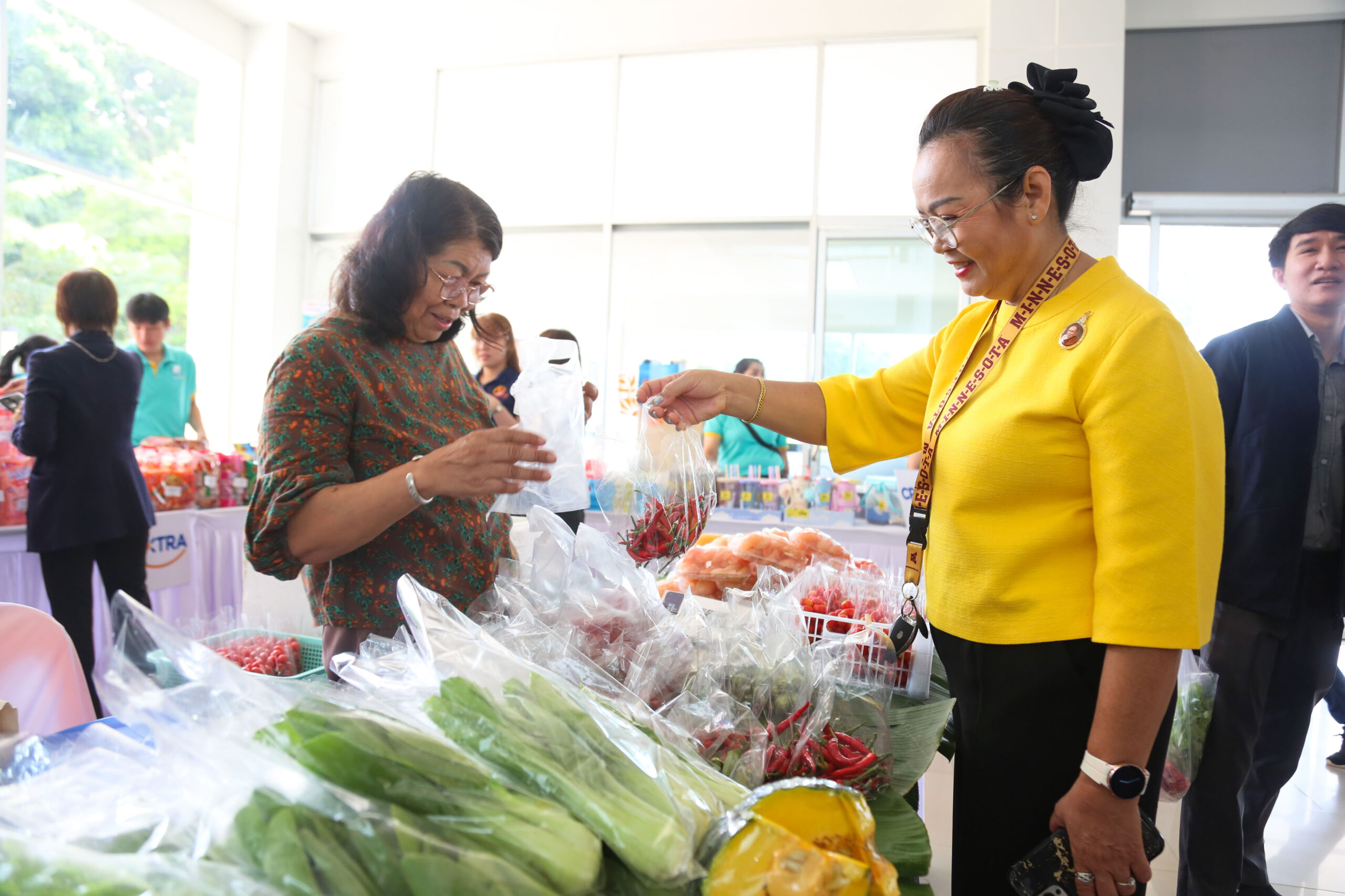
A space once merely an empty courtyard has been transformed into a simple yet powerful model of social innovation, christened the “Siri Market: Market of Happiness” (Siri Market: Talat Im Suk). This project was not launched based on complex strategies, but rather from observing and caring for the small, daily quality-of-life needs of staff. Consequently, it has become a vital mechanism in driving the University’s strategy towards achieving global sustainability goals.

Professor Thidarut Boonmars, Vice President for Enterprise and Societal Sustainability at Khon Kaen University and the project initiator, described the simple yet insightful beginning of the idea. The inspiration arose from noticing the high incidence of staff in the Sirikunakorn building carrying packed lunches or relying extensively on delivery services for meals—breakfast, lunch, and even dinner during overtime. This clearly indicated a lack of accessible and quality food sources in the vicinity of the building.
“The true starting point was realising that the area surrounding our building lacked food resources for our personnel,” Professor Thidarut explained. “Working happily involves many factors, and readily available food is one way to ensure staff don’t waste time driving out or spending money on fuel. It helps reduce energy consumption and allows them to enjoy purchasing quality, affordable food.”

Addressing these fundamental issues, the team aligned the solution with Strategy 4, “Making KKU the Best Place to Work.” They designed a “Trust-based Economy” model, fully adopting a self-service system. Customers select items and scan/pay digitally themselves, fostering a culture of honesty and integrity within the organisation. This model is coupled with integrated management involving multiple sectors to strictly vet all goods sold. The Vice President for Enterprise and Societal Sustainability elaborated on the vetting process:
“We implement two levels of screening. The first level focuses on quality: vegetables must be GAP-certified or organic, and cooked food must be able to maintain its quality at room temperature. The second level is ‘automatic feedback’ from the customers. Whatever sells out quickly means it is delicious, high quality, and affordable. This acts as an organic filtering process.”
Four months after its launch, this modest market has exceeded its original objective of simply providing food. It has unexpectedly become a space that generates supplementary income, while also strengthening mental well-being and family relationships. These outcomes represent tangible progress towards multiple Sustainable Development Goals (SDGs), particularly food security and access to quality food (SDG 2) and good health and well-being (SDG 3).

“Siri Market is not just about food; it is about happiness at work and generating income for staff almost without them realising it,” Professor Thidarut added, describing the social dimension of the project. “Many work on this as a family unit—the husband buys supplies, the wife prepares the food, and they collaborate to ensure it is ready for the morning sale. This has fostered love and unity within families, significantly supporting mental health and domestic stability.”
Beyond the internal organisational impact, Siri Market has extended its spirit of sharing to the external community. The space is opened monthly to community enterprises, network farmers, and vulnerable groups, such as the Autism Parents Association, allowing them to sell their products. This initiative contributes to reducing inequality and promoting self-reliance (SDG 10), while also encouraging responsible consumption (SDG 12) and lowering carbon emissions by shortening the distance staff must travel for food purchases (SDG 13).
“Sustainability requires continuity. Therefore, the University established dedicated committees for each SDG to oversee and ensure the stability of these projects, ensuring they don’t fade after one year,” stated Professor Thidarut. “For Siri Market, we must continuously adapt our methods to ensure supply and demand are balanced so the market can truly remain sustainable.”

Looking ahead, the growth of Siri Market transcends its role as a trading space. It has become evidence that institutional excellence is deeply rooted in the happiness of its people. The success of this pilot initiative has begun to attract interest from other faculties and units within the University, many of which have expressed a desire to replicate the model to enhance staff quality of life.

“On the day of the opening, several faculties expressed interest in replicating this model. They want the University to help implement it across their units,” Professor Thidarut said. “We view Siri Market as a versatile prototype. We can easily transfer the system management methodology to other units for use with their staff and students. It is an excellent example of creating a source of food and happiness within a specific area.”
Ultimately, Siri Market demonstrates that Khon Kaen University’s path to excellence and sustainability does not require grand or complicated policies. It can take root from genuine attention to the basic necessities of life. Transforming an empty courtyard into a space of satisfaction and happiness today is more than just solving the issue of daily meals; it affirms that when “employees are happy,” that space inherently becomes the starting point of a force ready to drive families, the organisation, and society toward true sustainability.