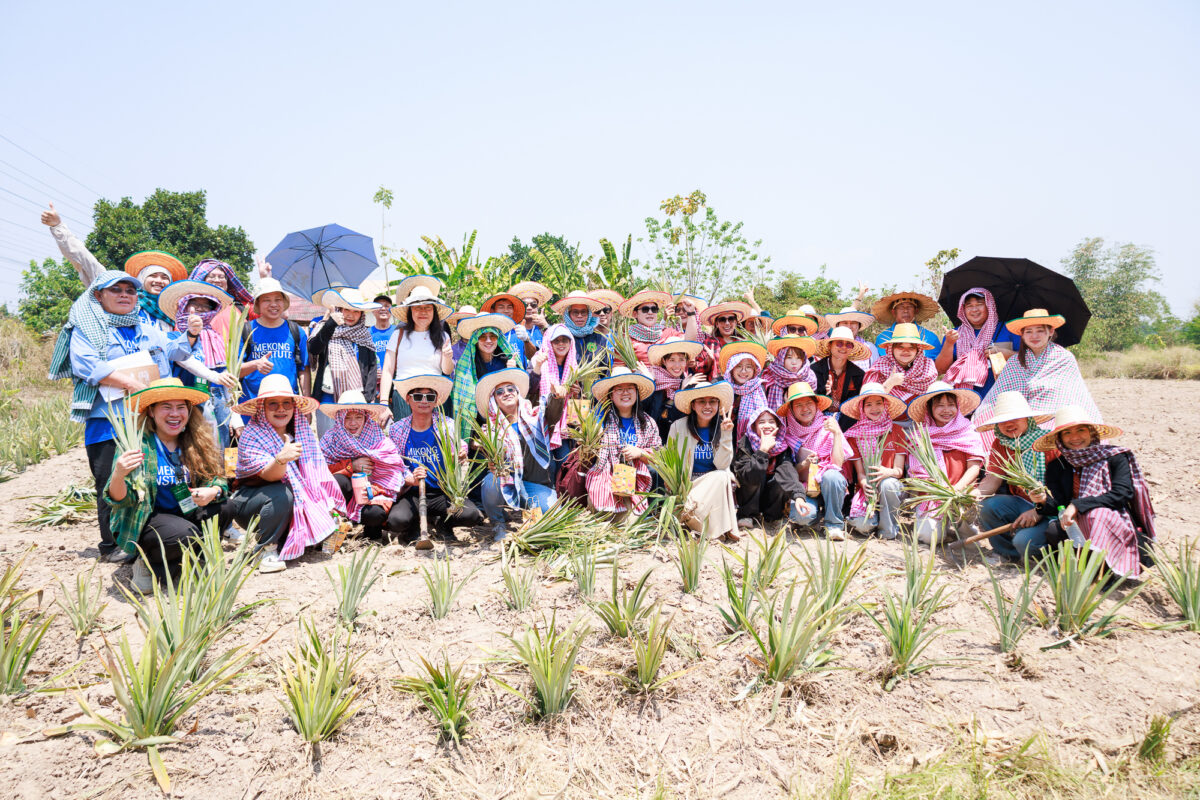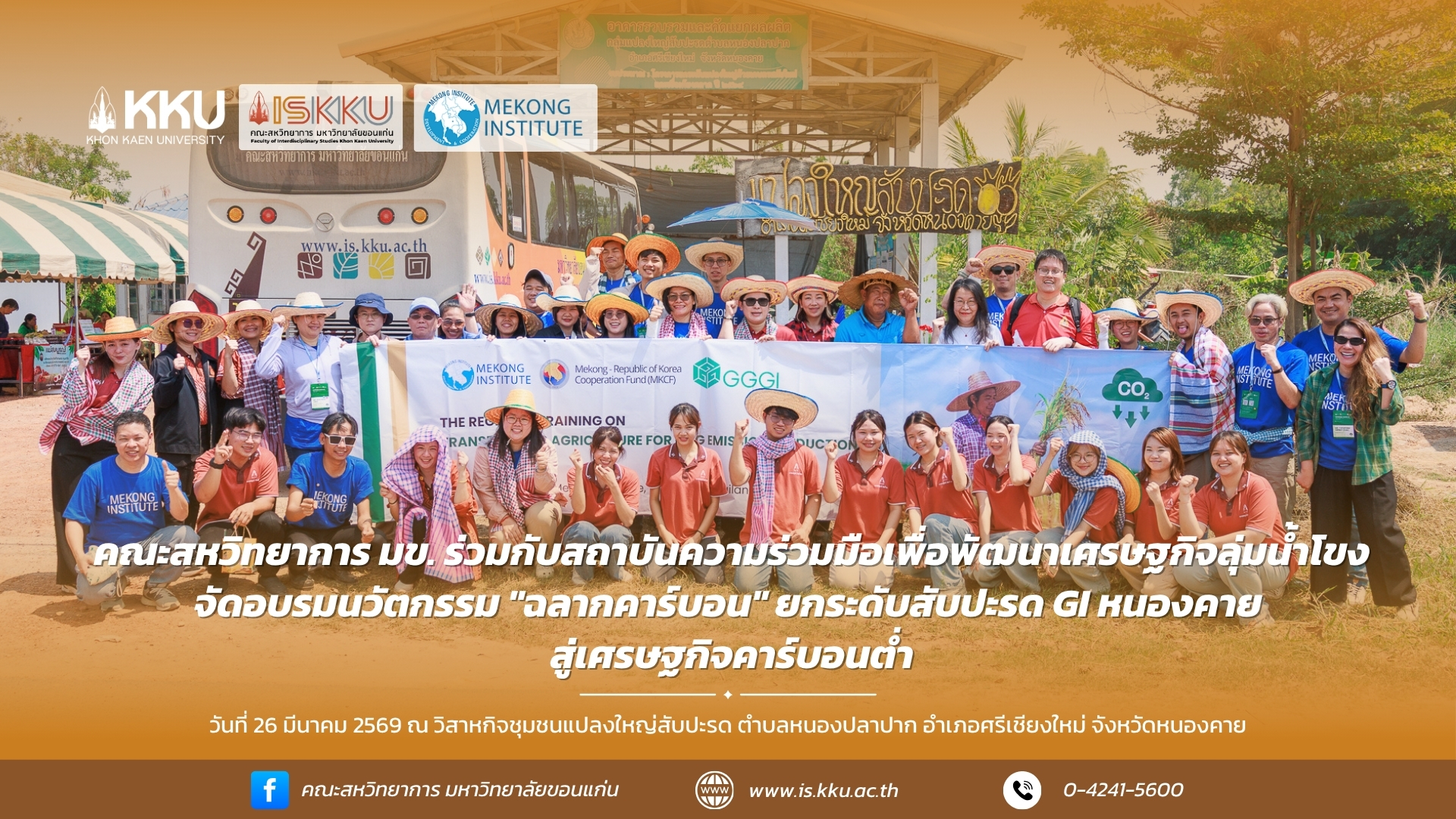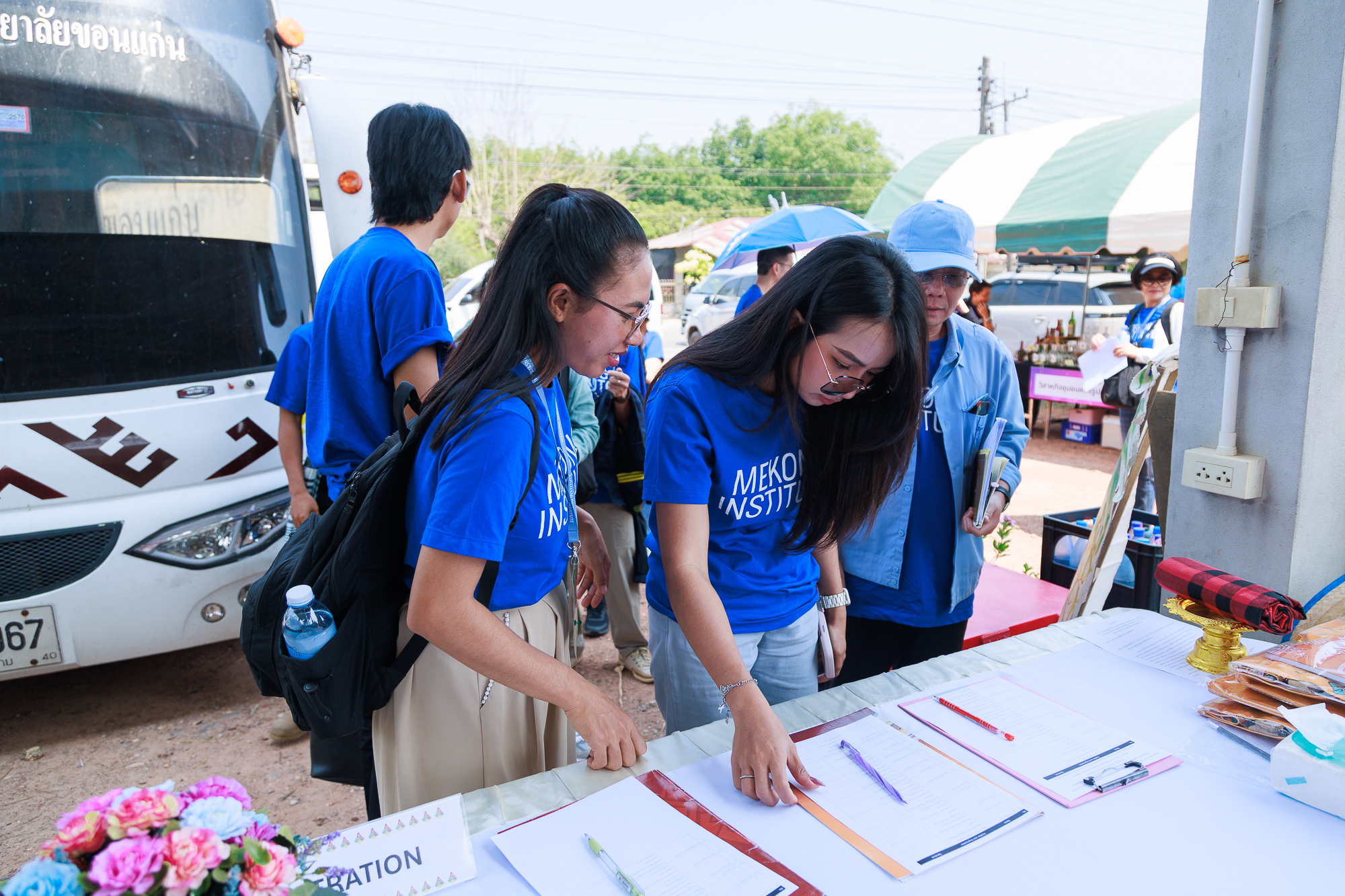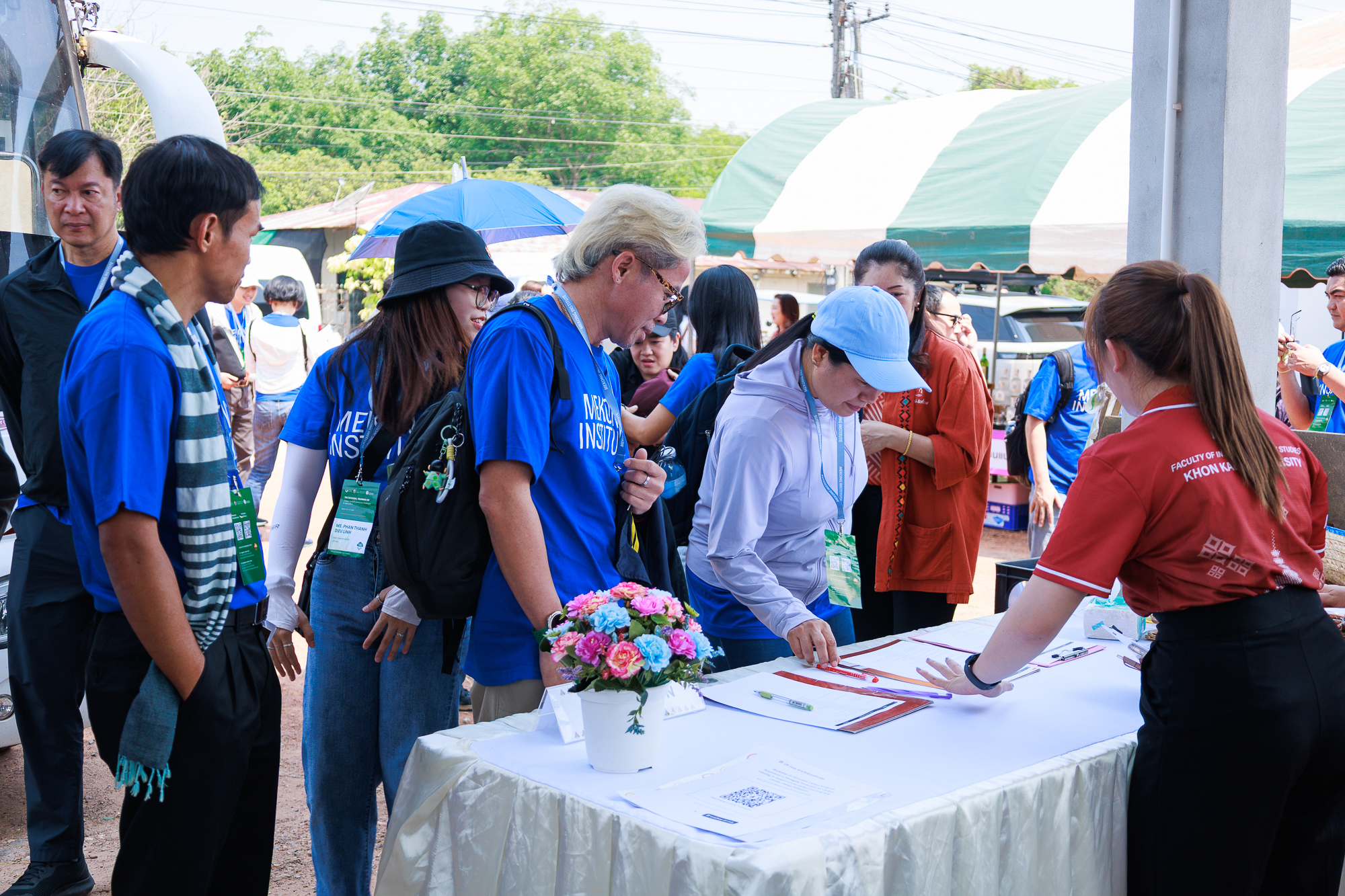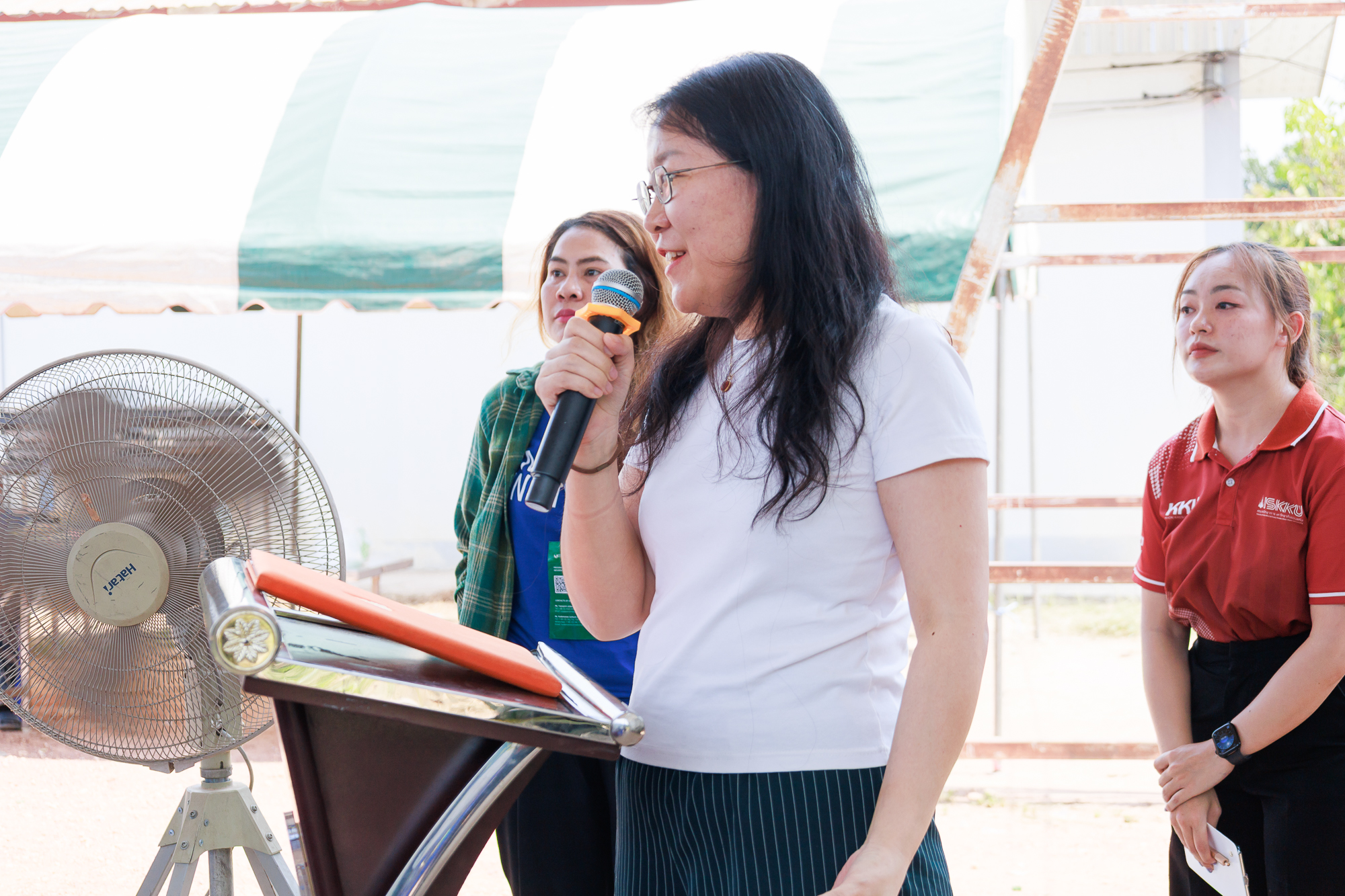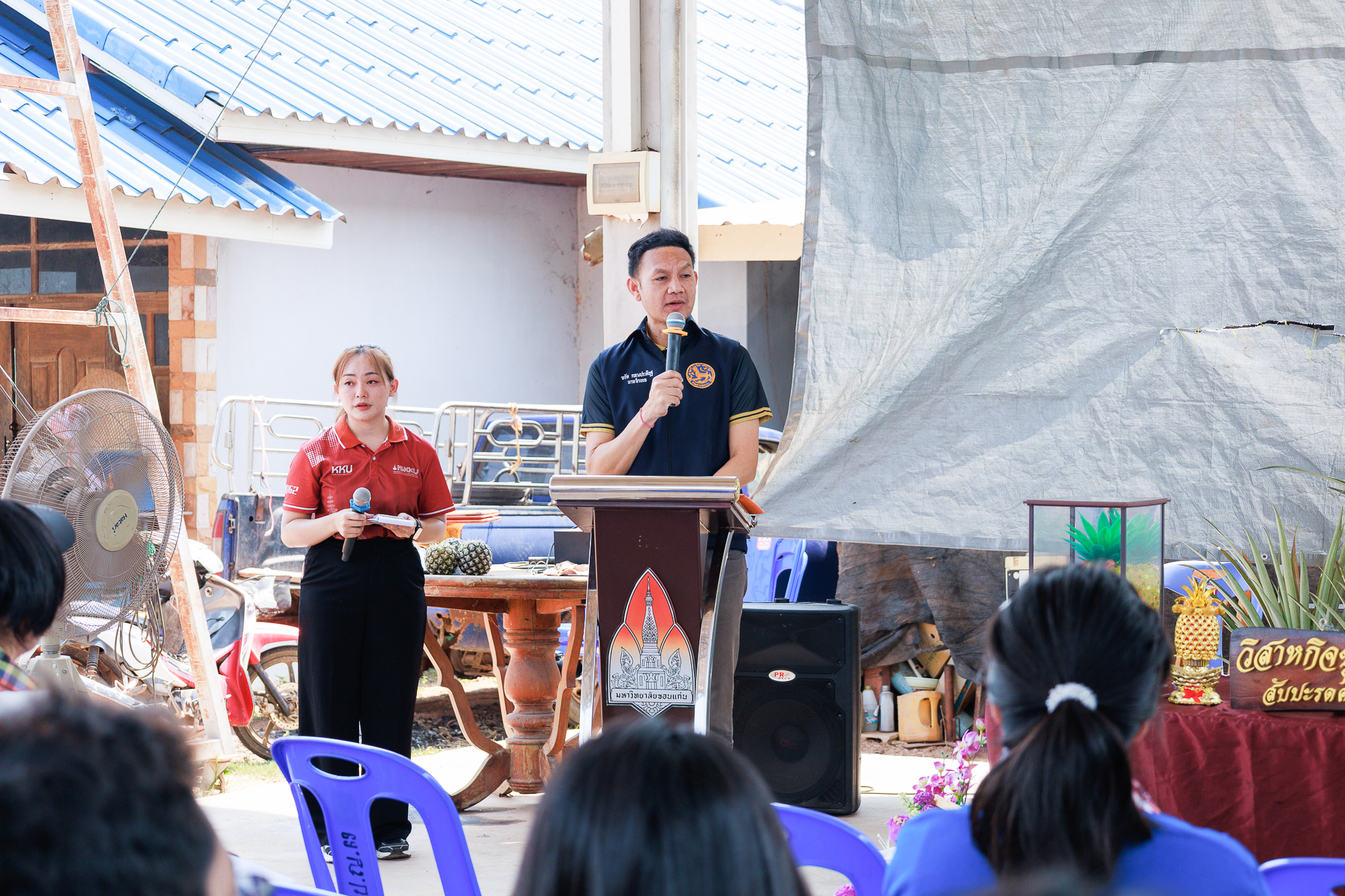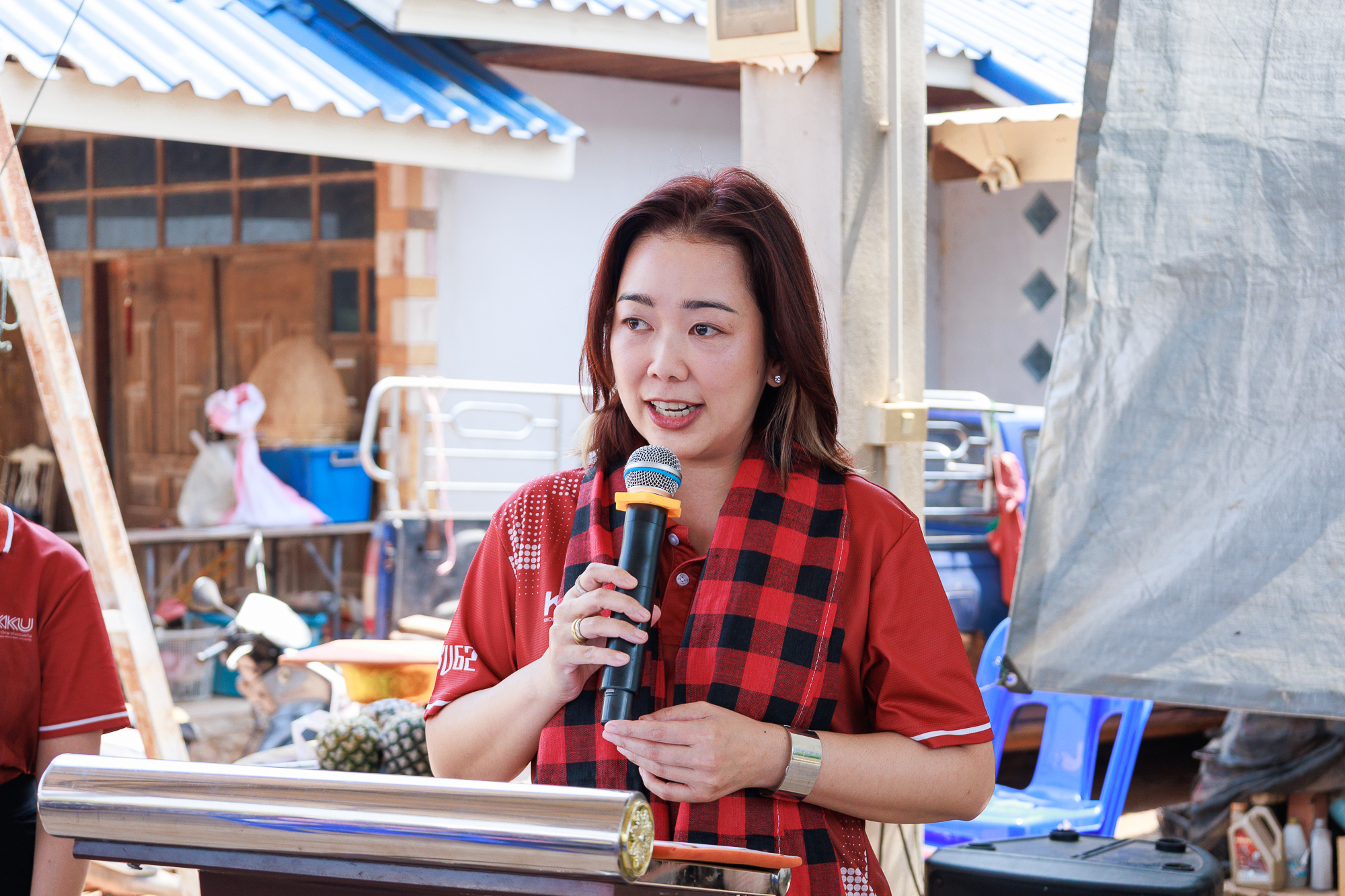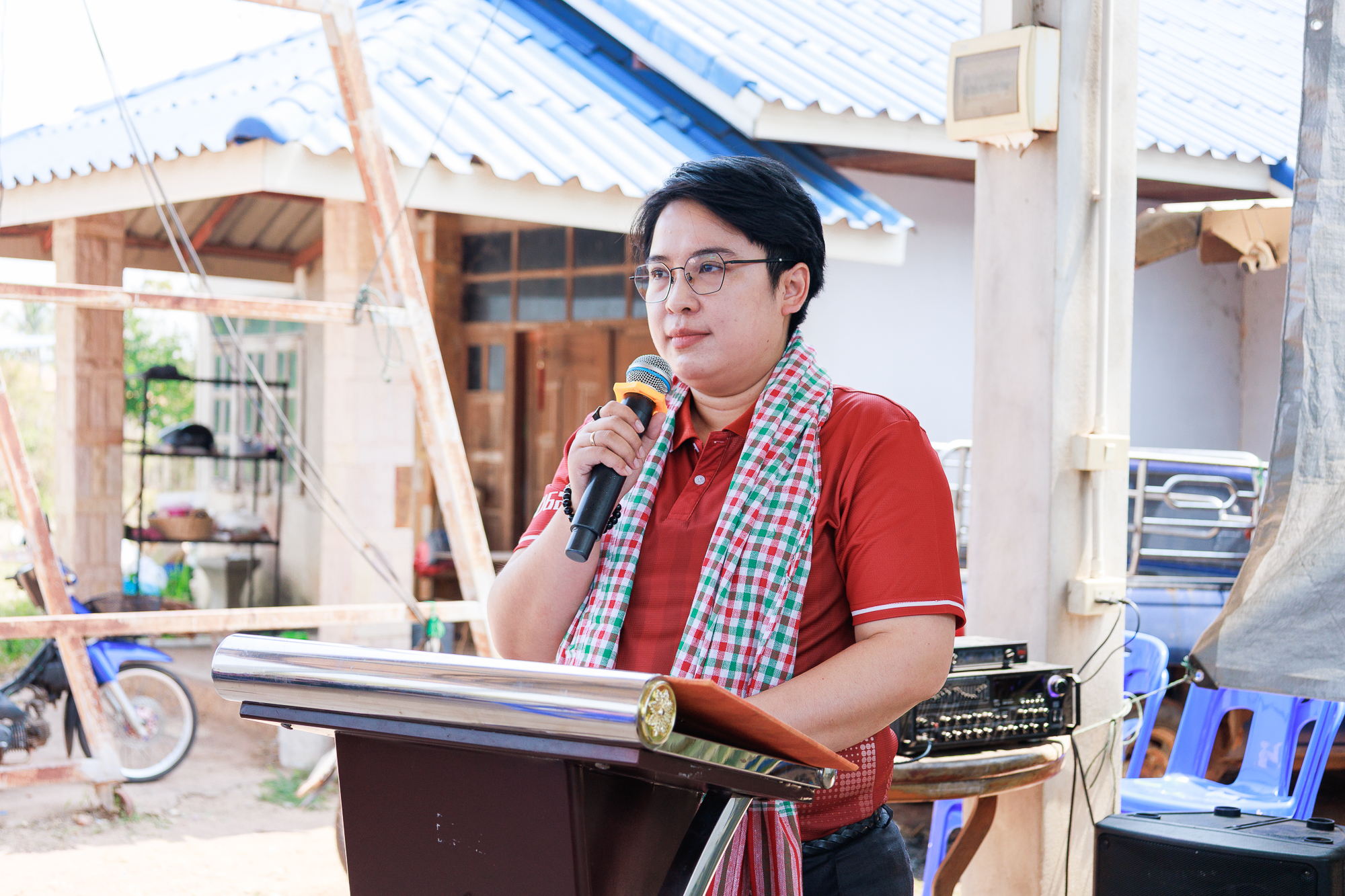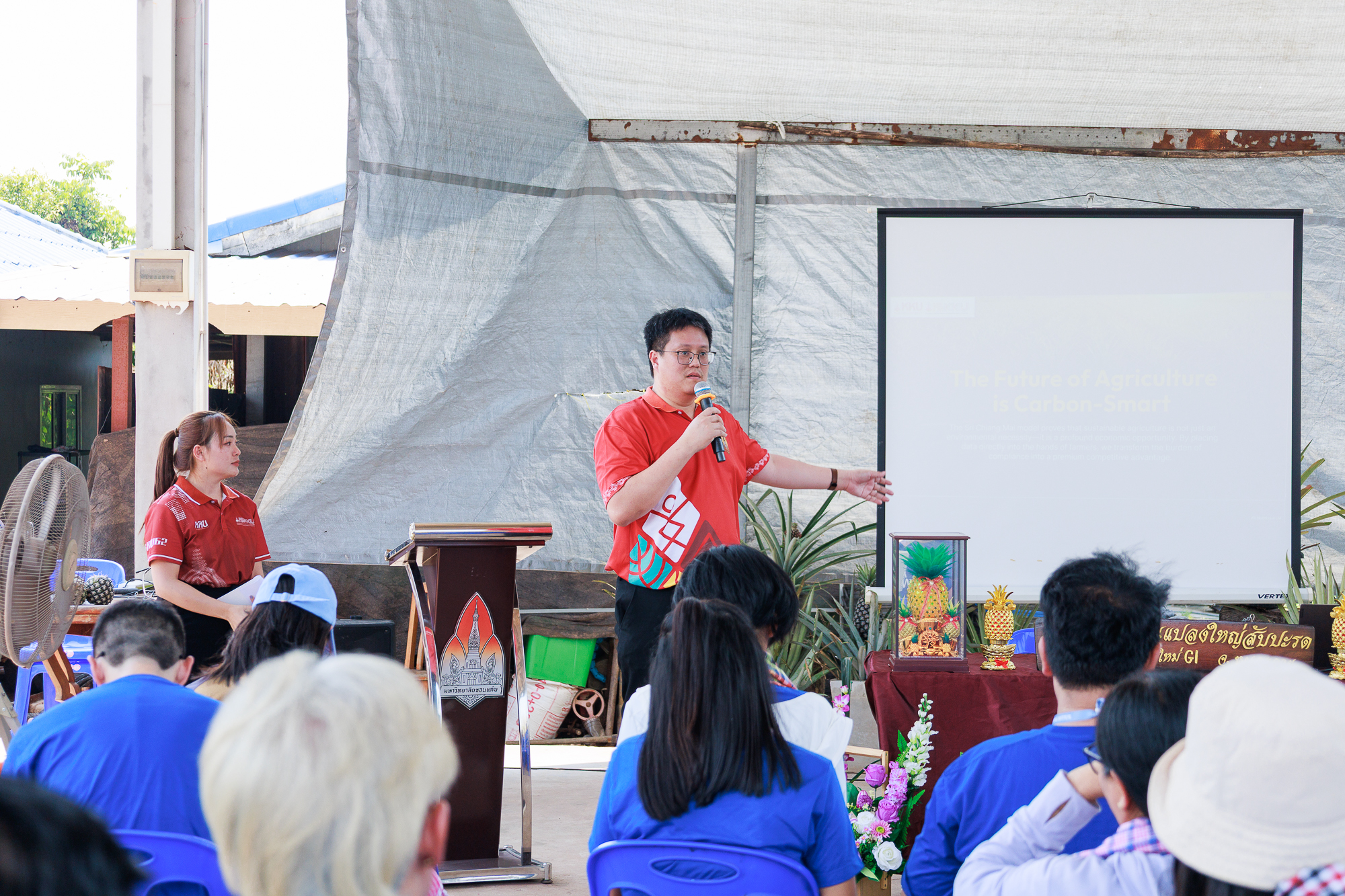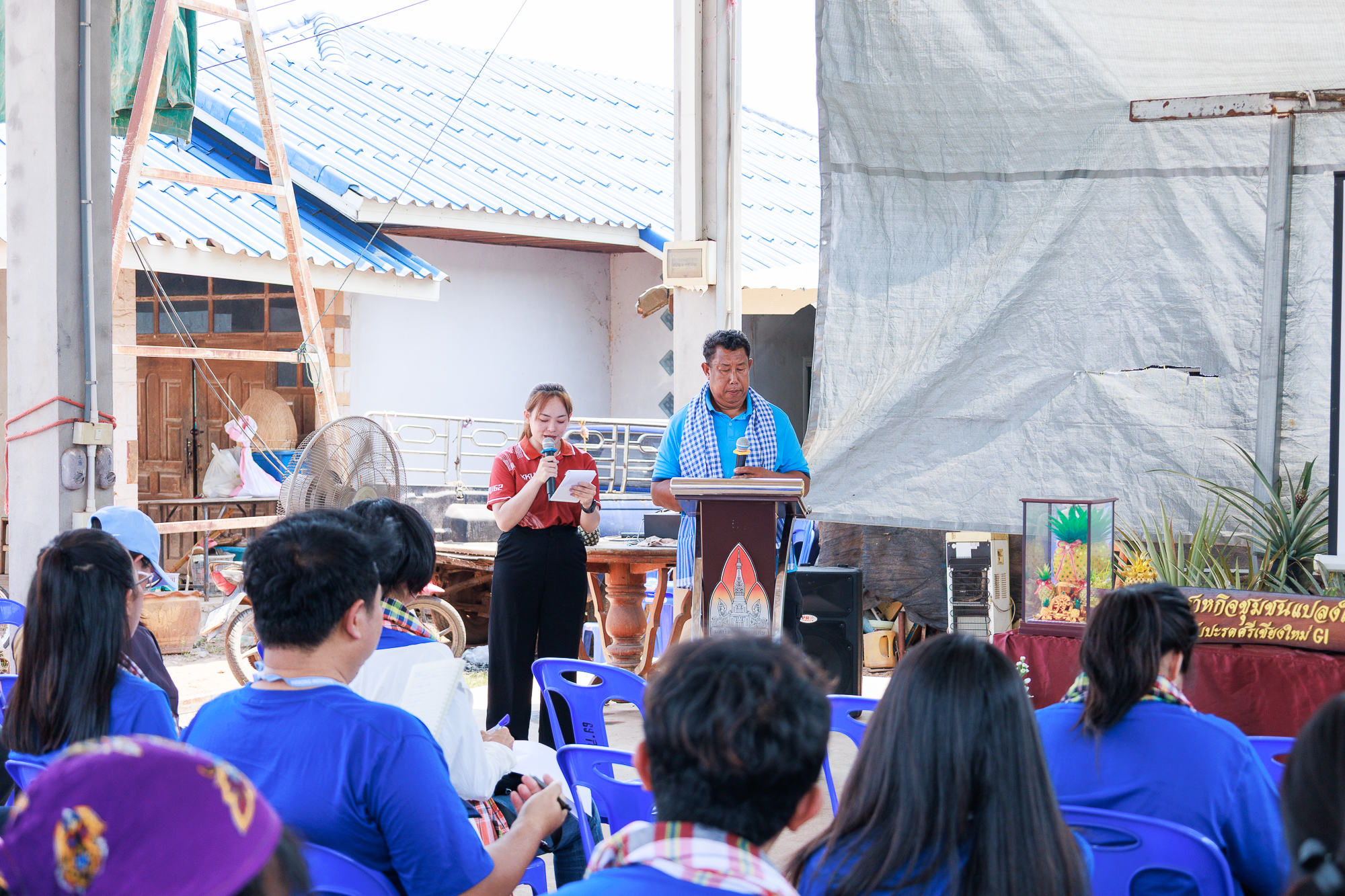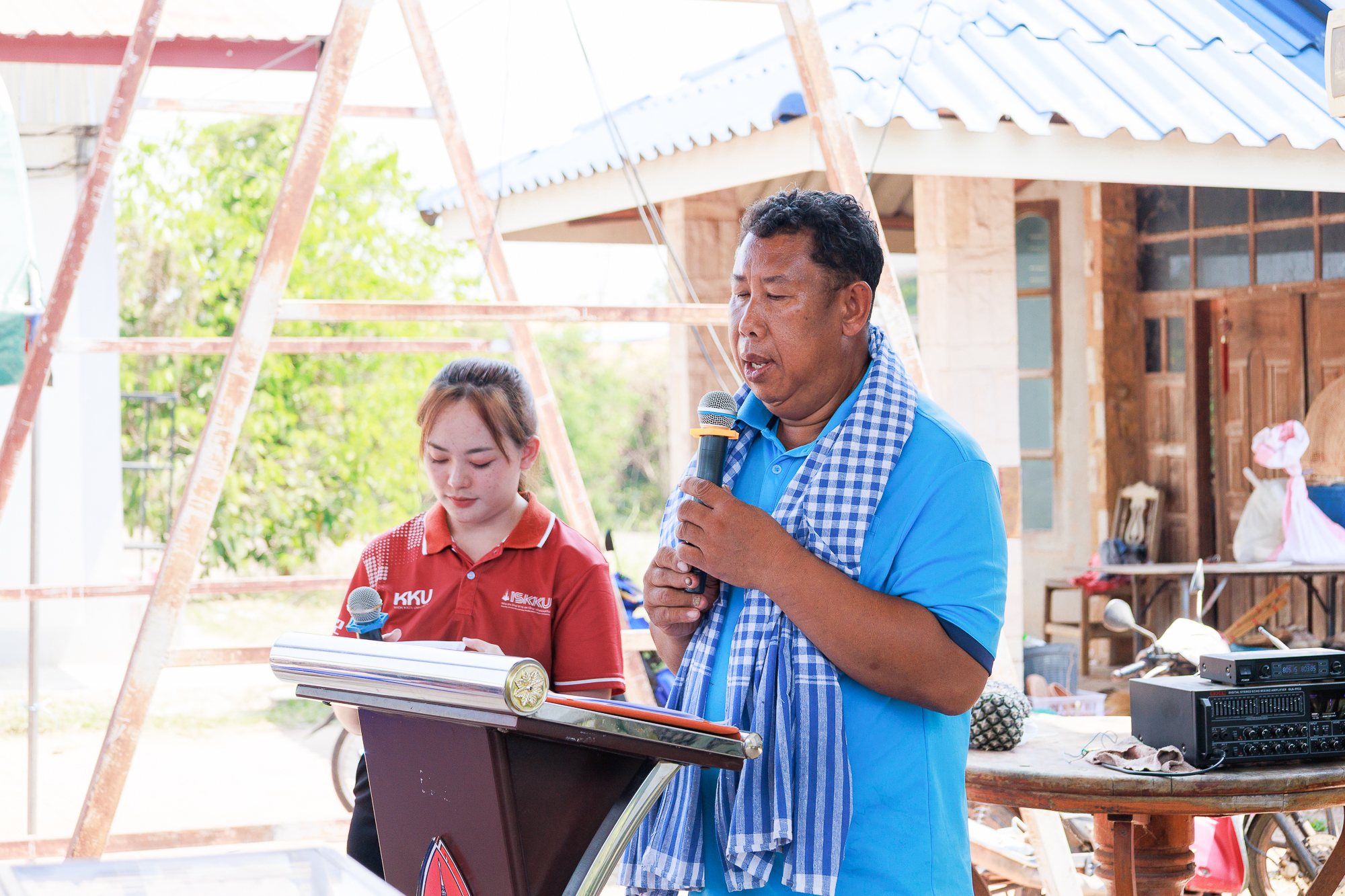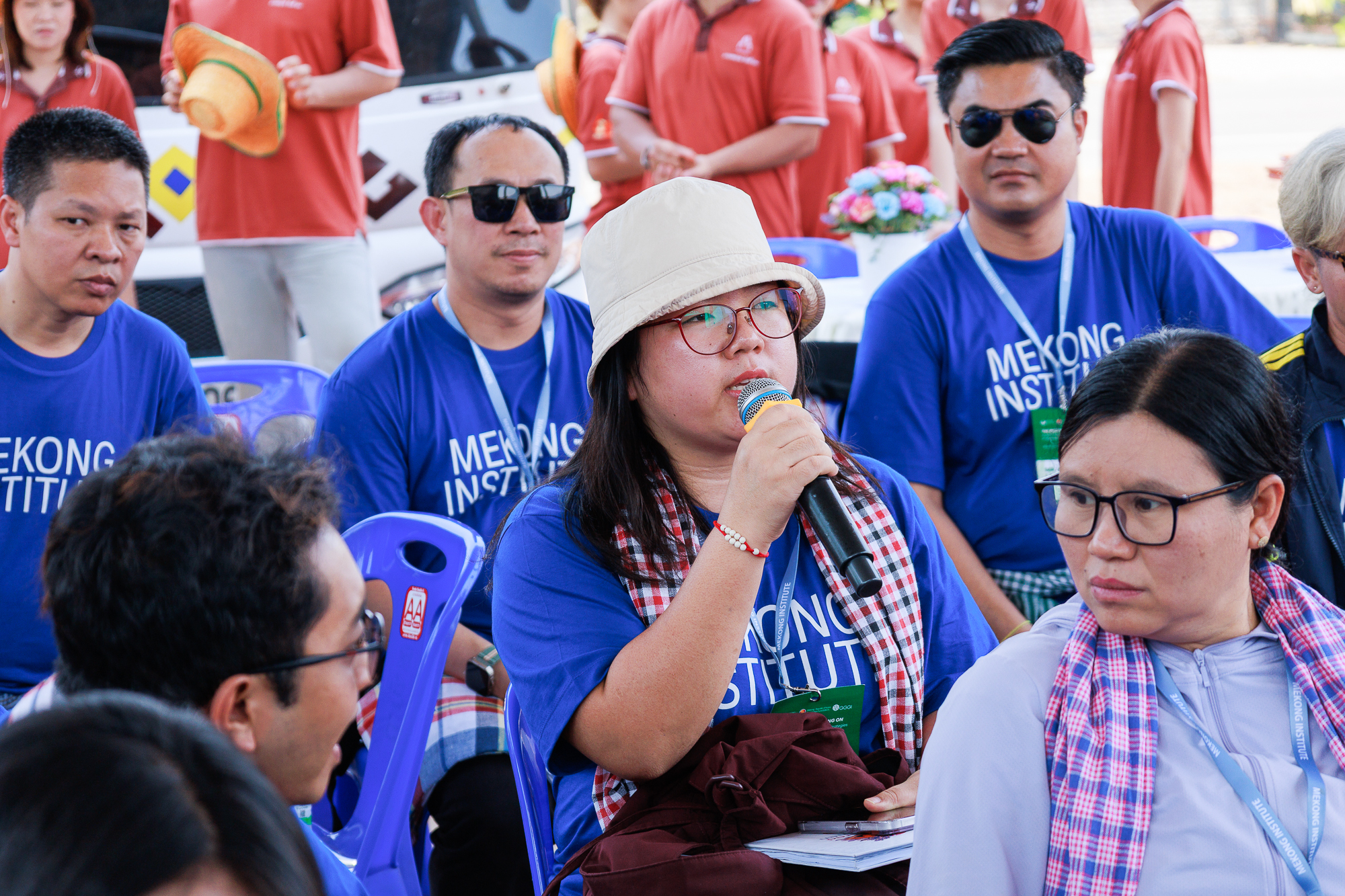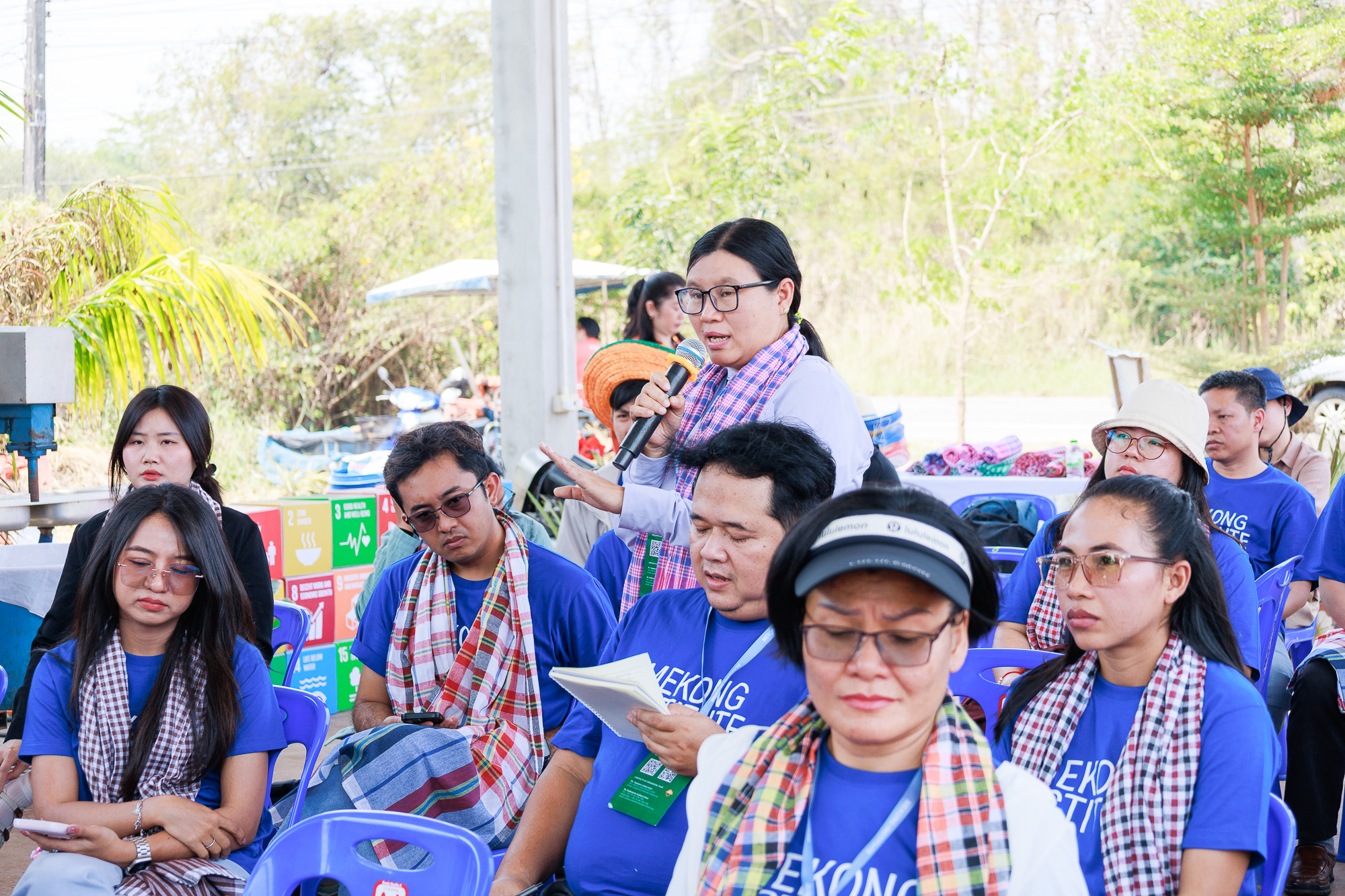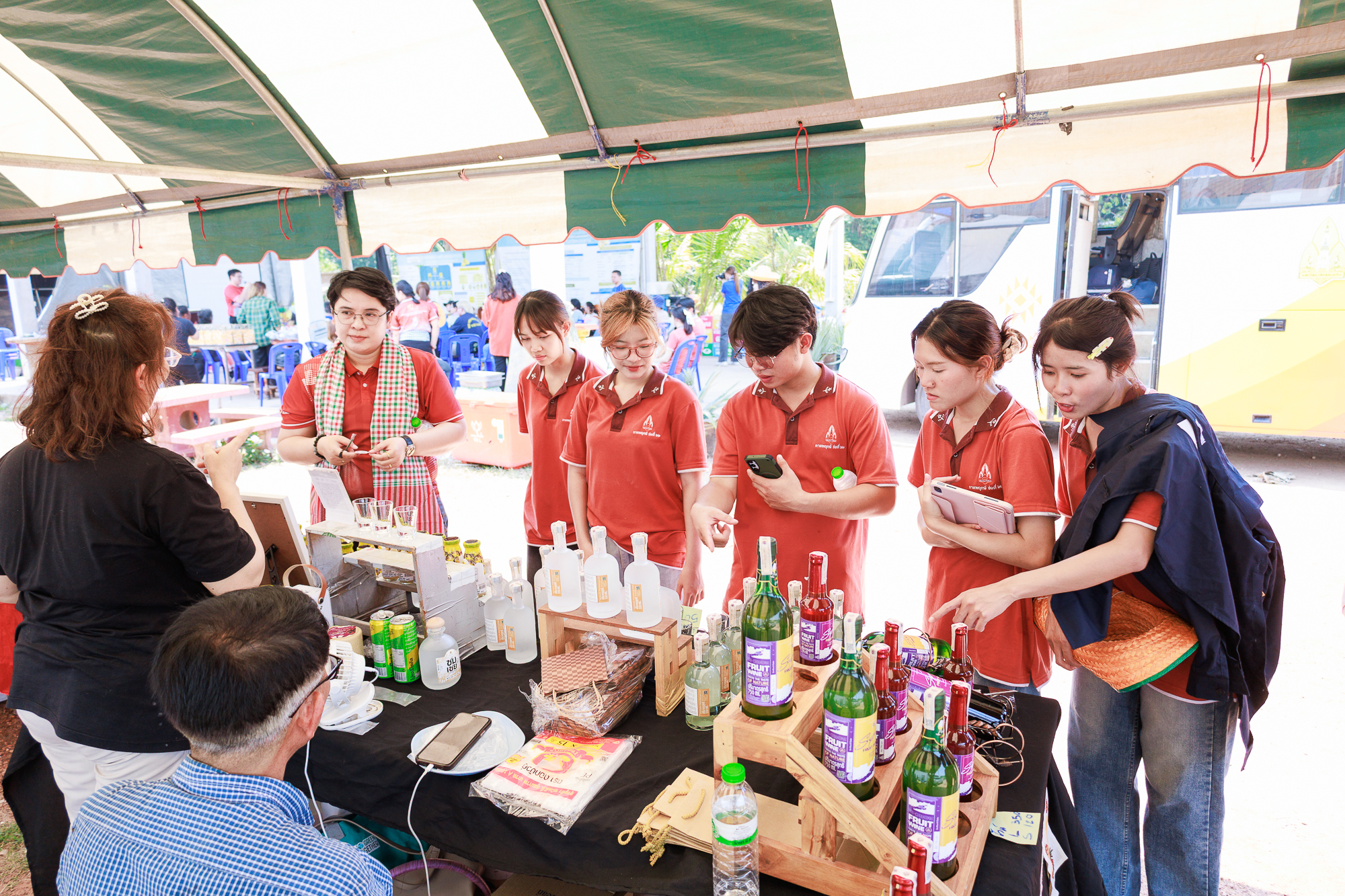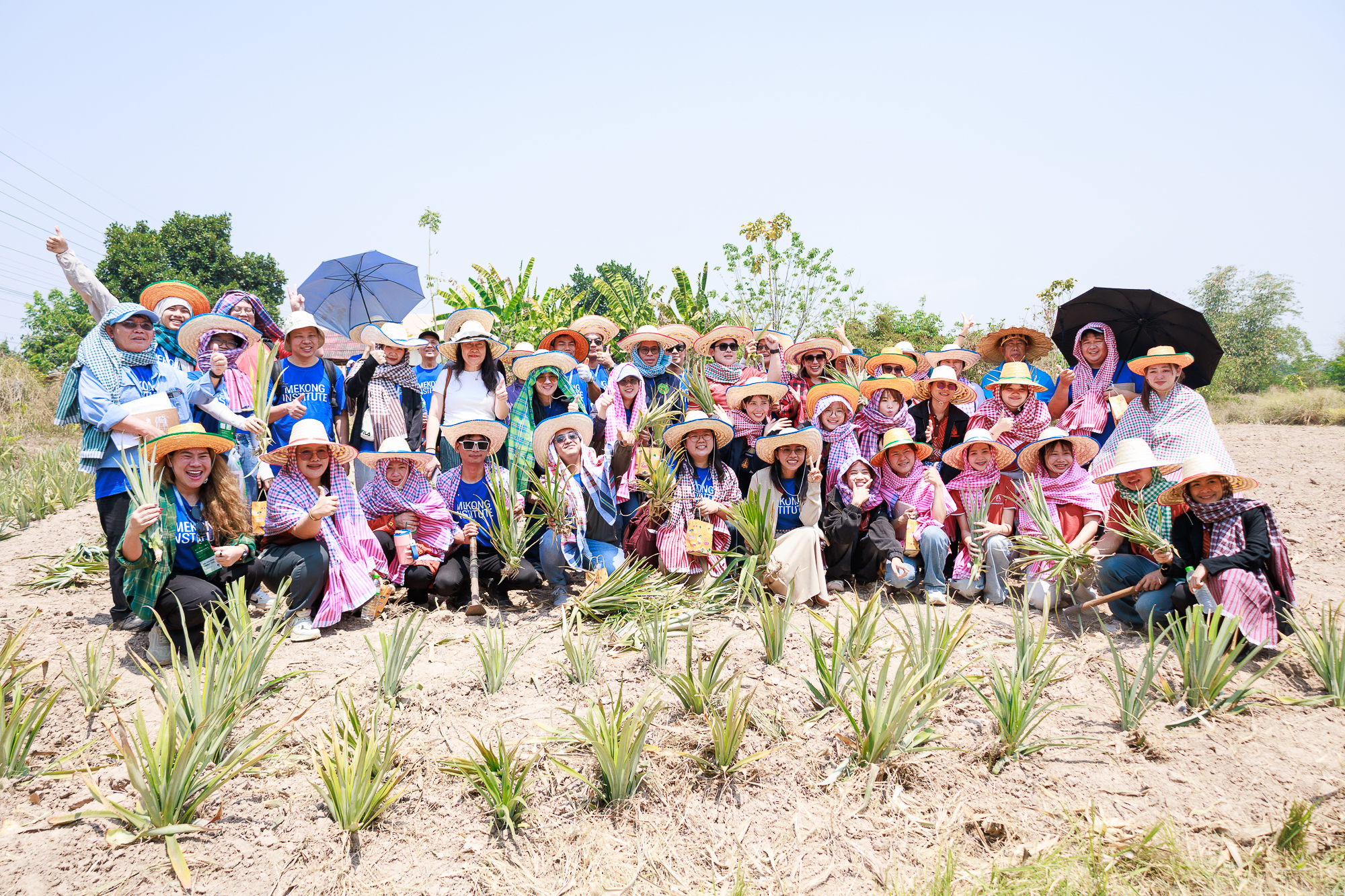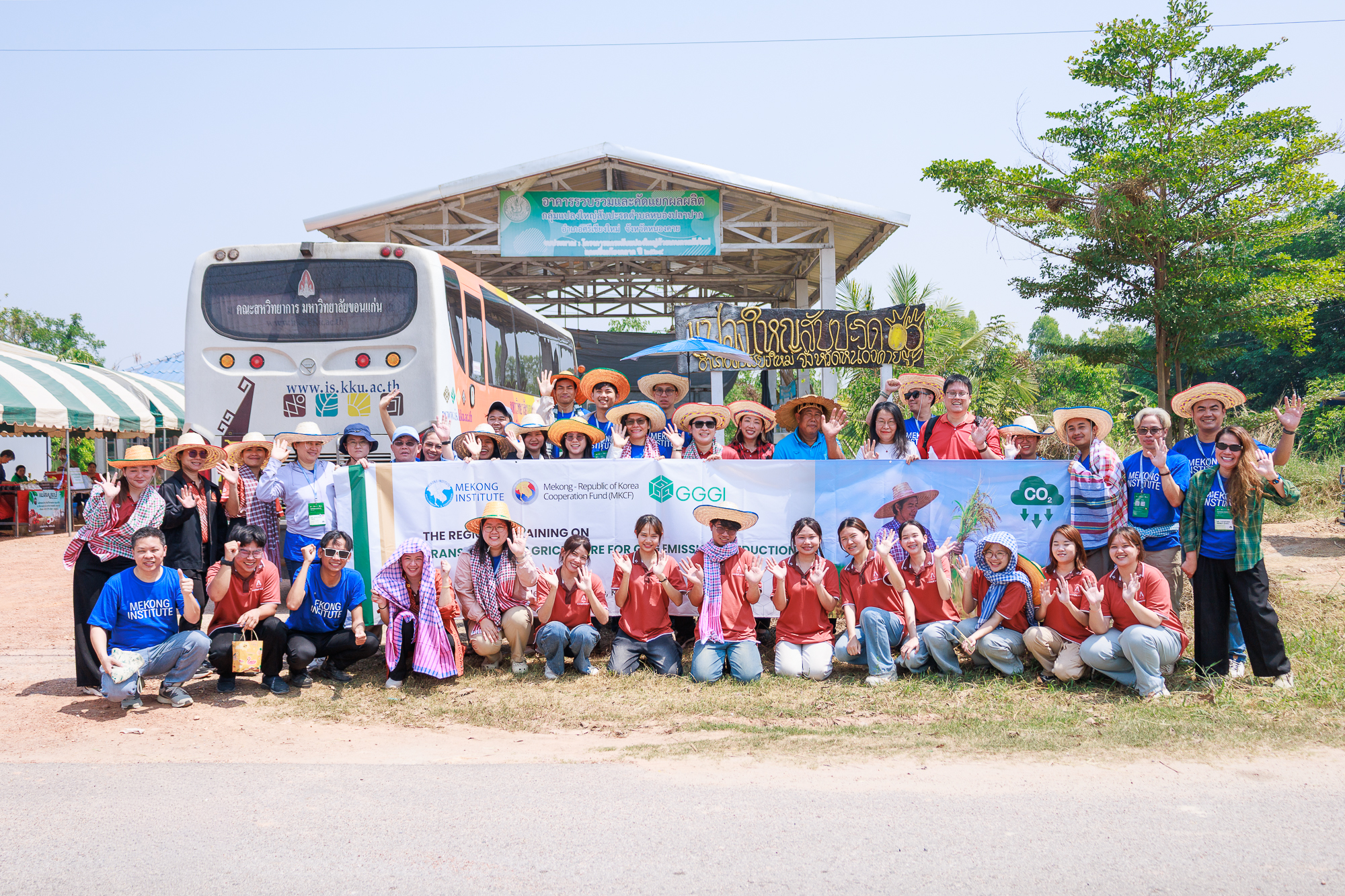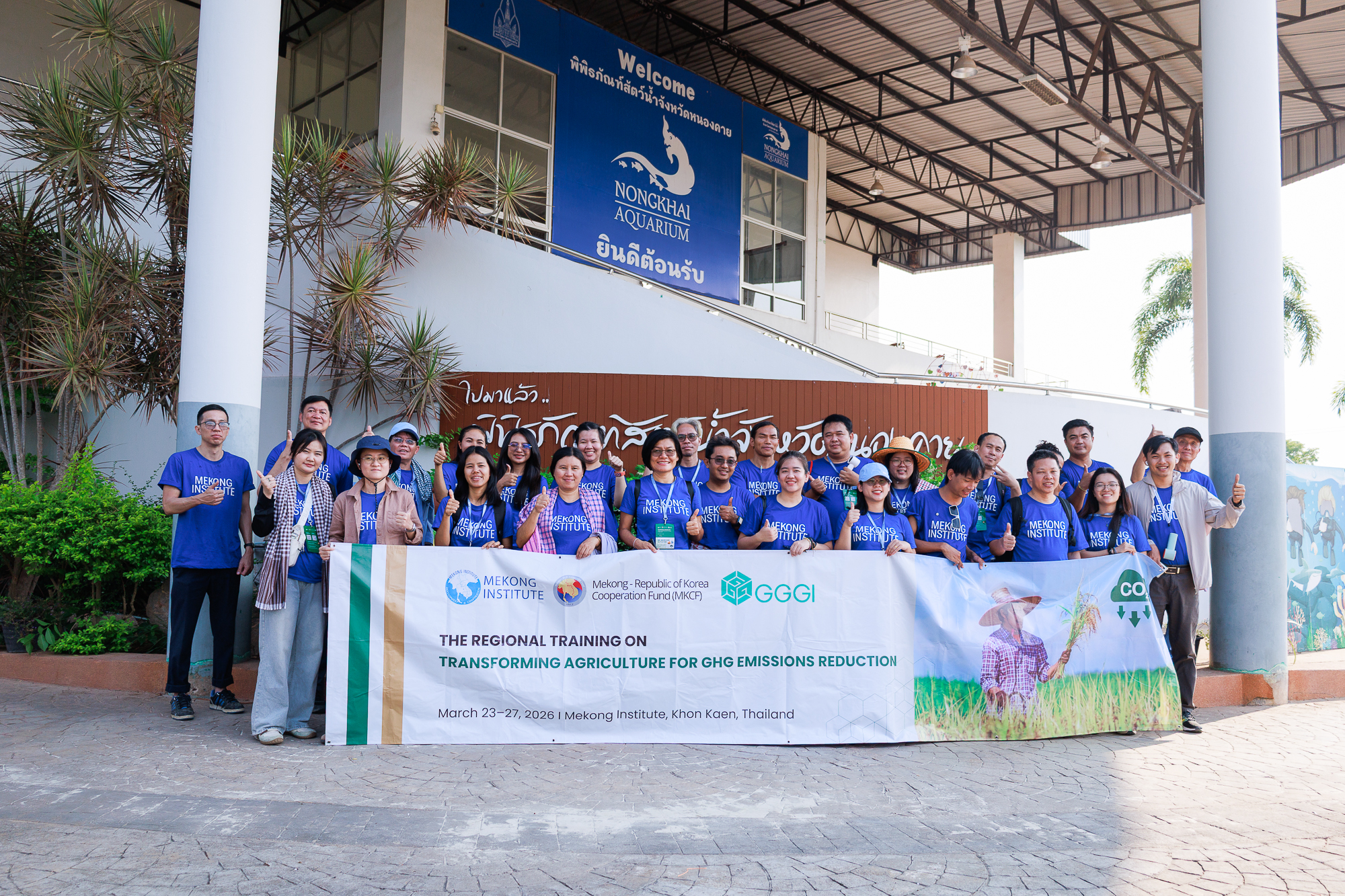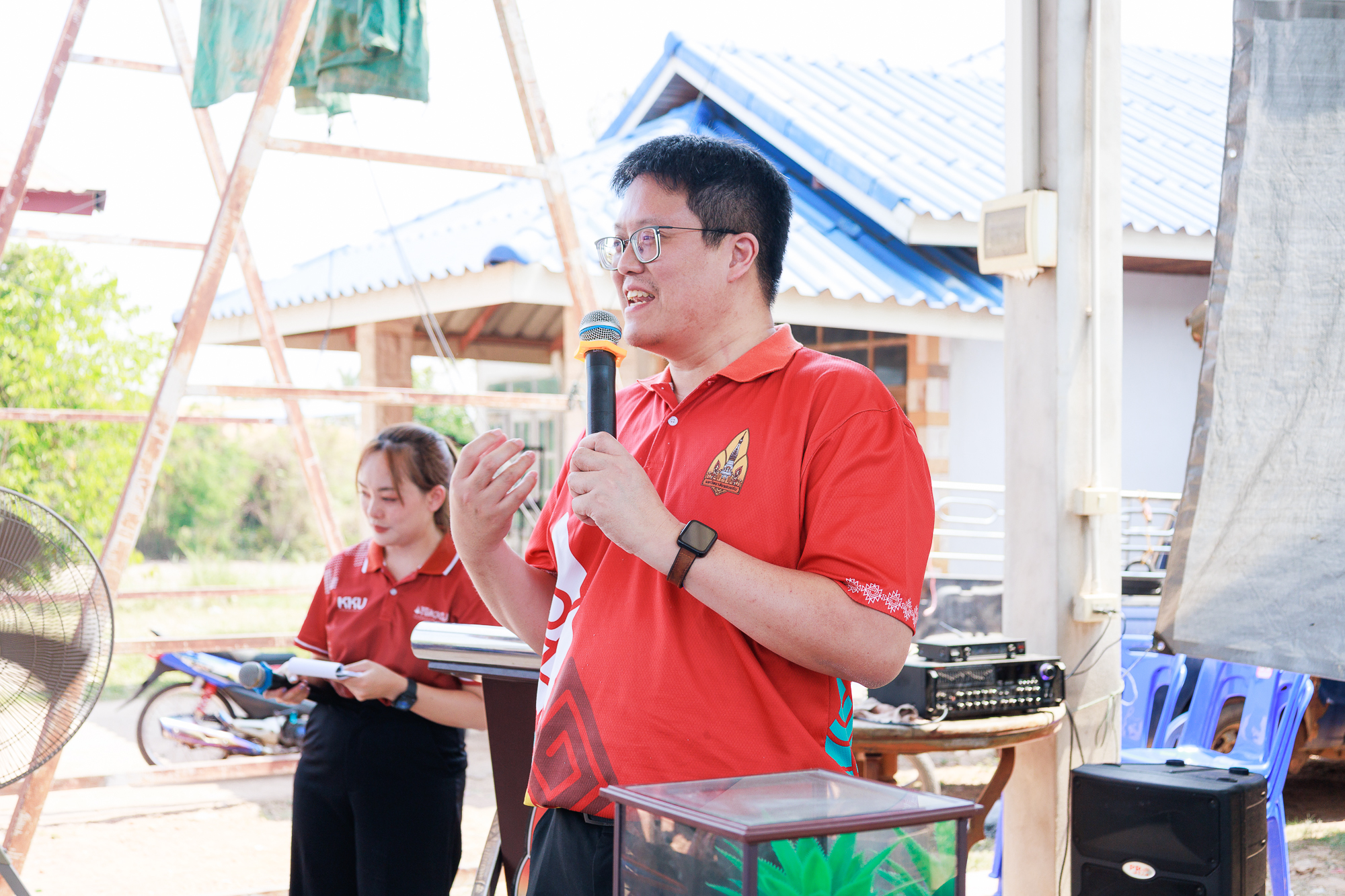

Nong Khai – On 26 March 2024, the Faculty of Interdisciplinary Studies, Khon Kaen University, organised a workshop on innovative carbon footprint assessment for carbon labelling of pineapple production. The initiative, aimed at supporting a low-carbon economy and mitigating global warming, was held at the Ban Champa Thong Large-Plot Pineapple Community Enterprise in Nong Pla Pak Sub-district, Si Chiang Mai District, Nong Khai Province.
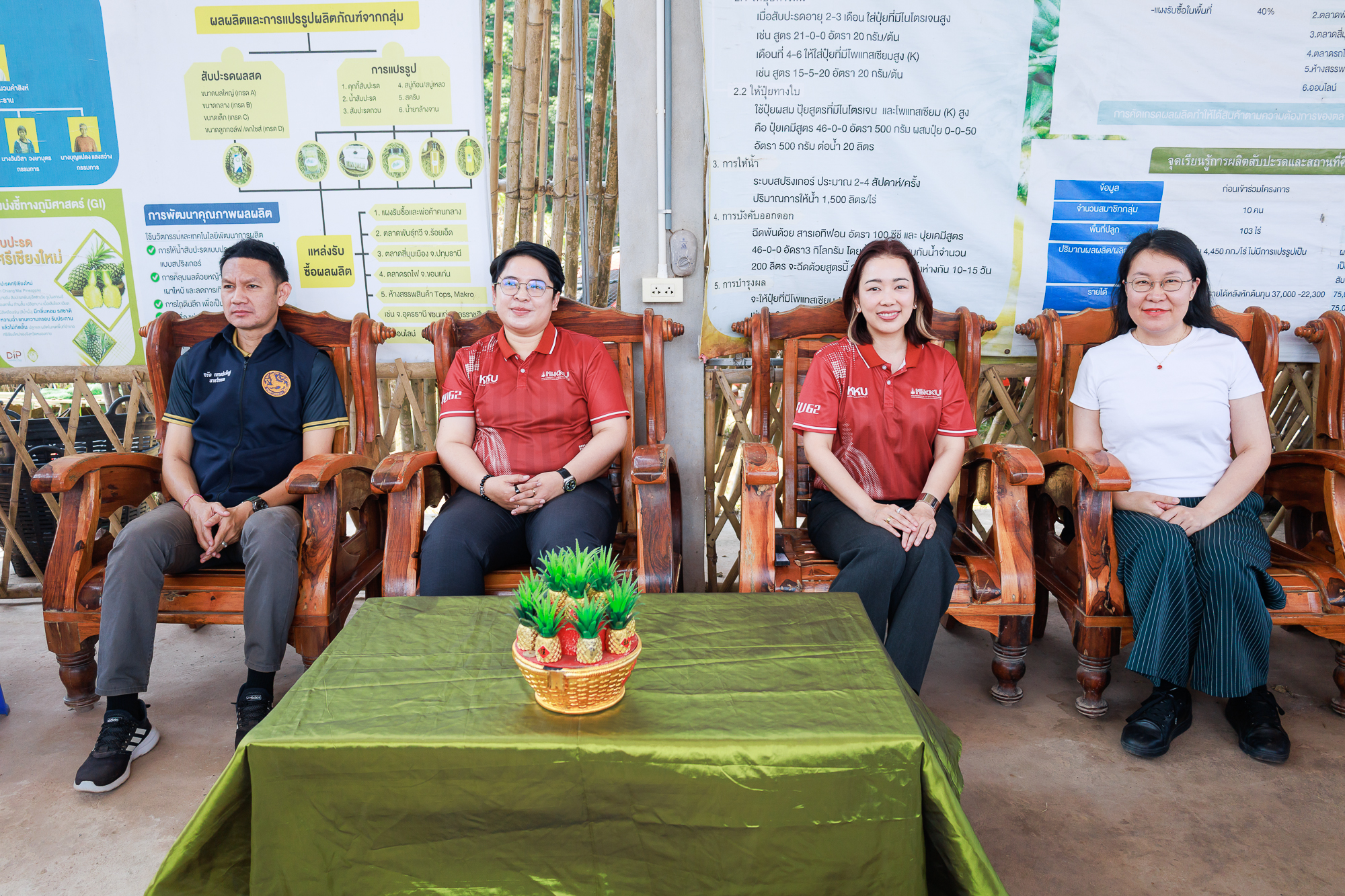
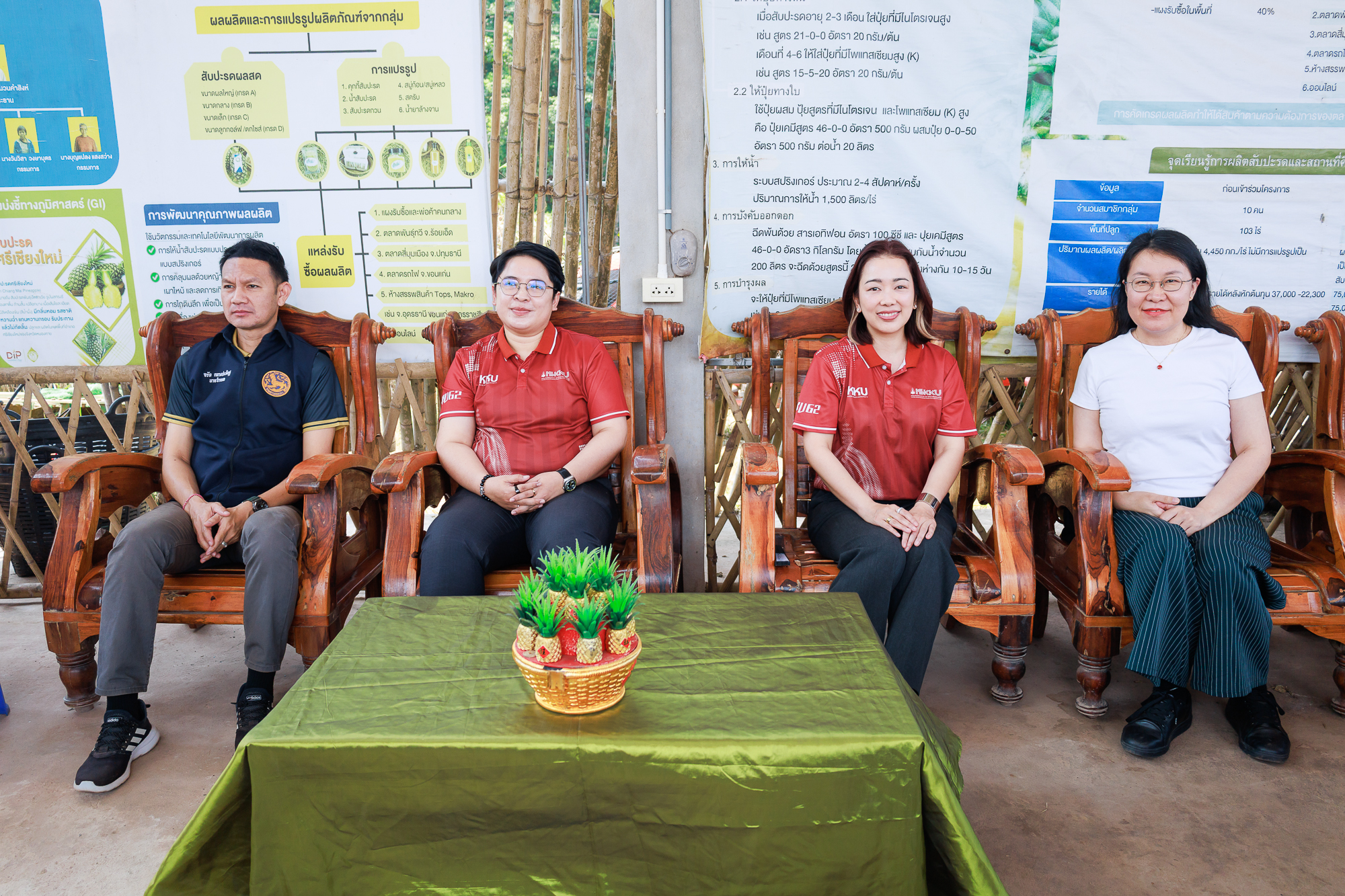
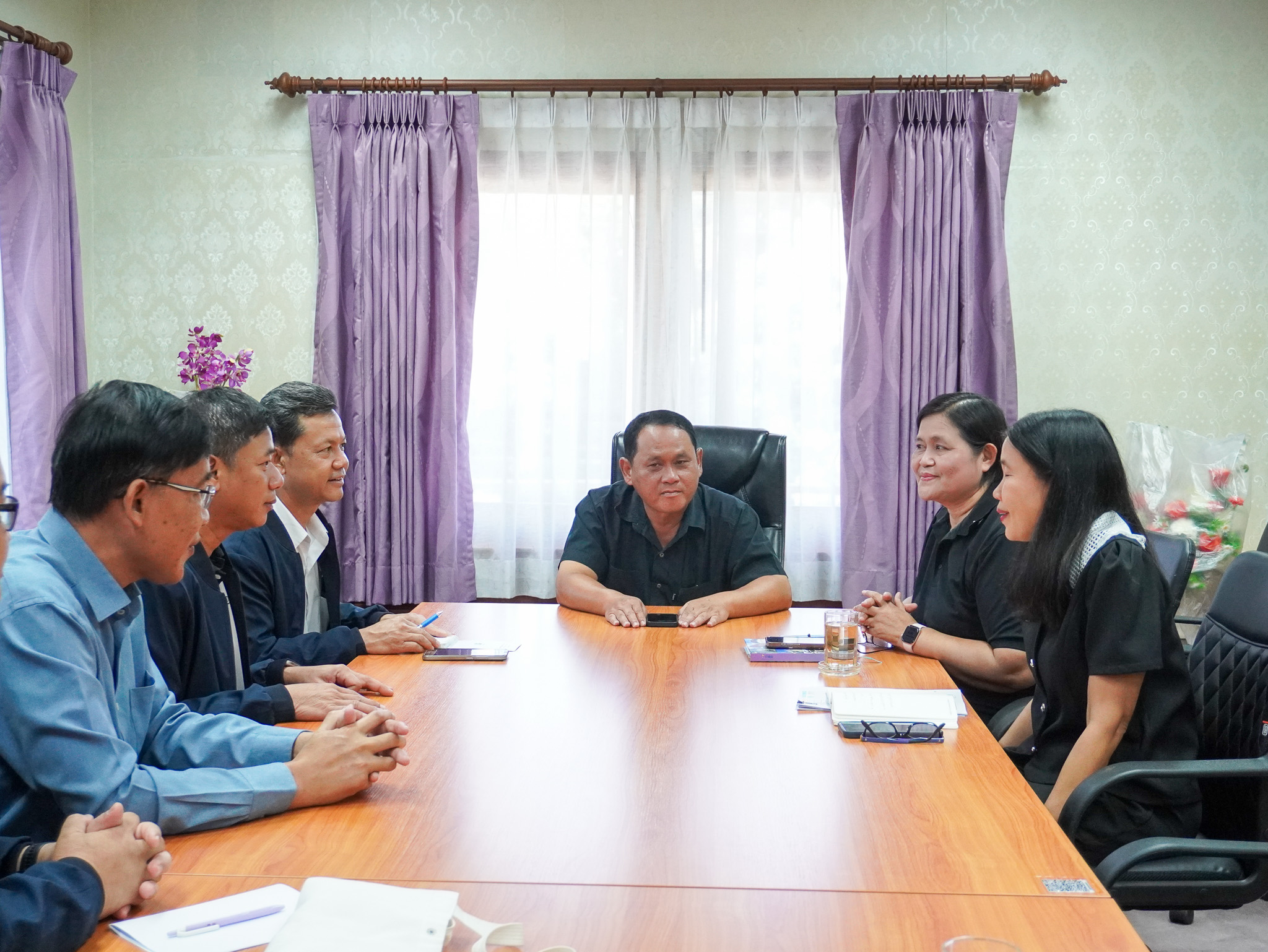
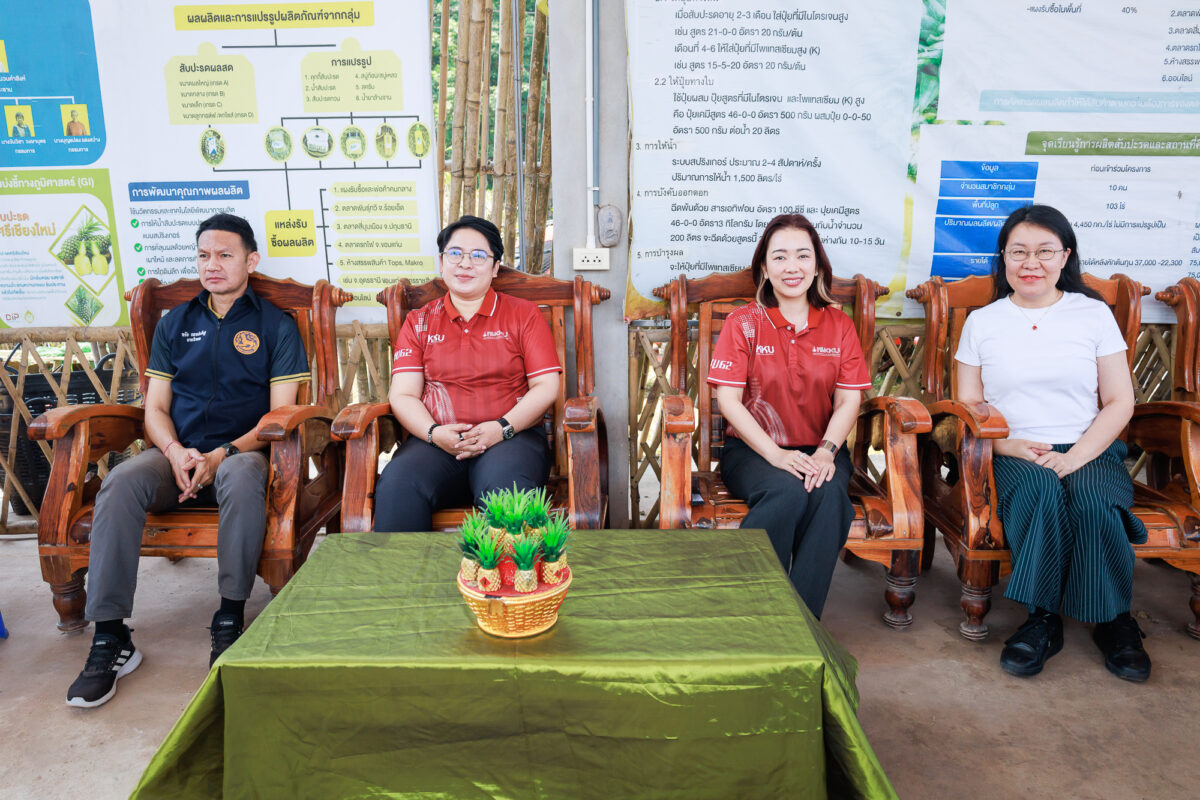
The event was attended by distinguished guests, including Assistant Professor Suntaree Buchitchon, Ph.D., Dean of the Faculty of Interdisciplinary Studies; Associate Professor Wullapa Wongsinlatam, Ph.D., Vice Dean for Administration of the Faculty of Interdisciplinary Studies; Mr. Jaral Klangpradit, Si Chiang Mai District Chief; Mr. Anan Srihong, Si Chiang Mai District Agricultural Officer; and Ms. Saranya Tulaphan, Si Chiang Mai District Community Development Officer. They extended a warm welcome to Ms. Guohua Liu, Director of the Sustainable Energy and Environment Department at the Mekong Institute (MI), and a delegation of researchers from the five member countries of the Greater Mekong Subregion (GMS) network.
The project integrates innovative knowledge on product carbon footprint assessment with local context, specifically focusing on the production of Geographical Indication (GI) pineapple in Nong Khai Province. The goal is to enhance the community’s quality of life and promote a low-carbon economy.
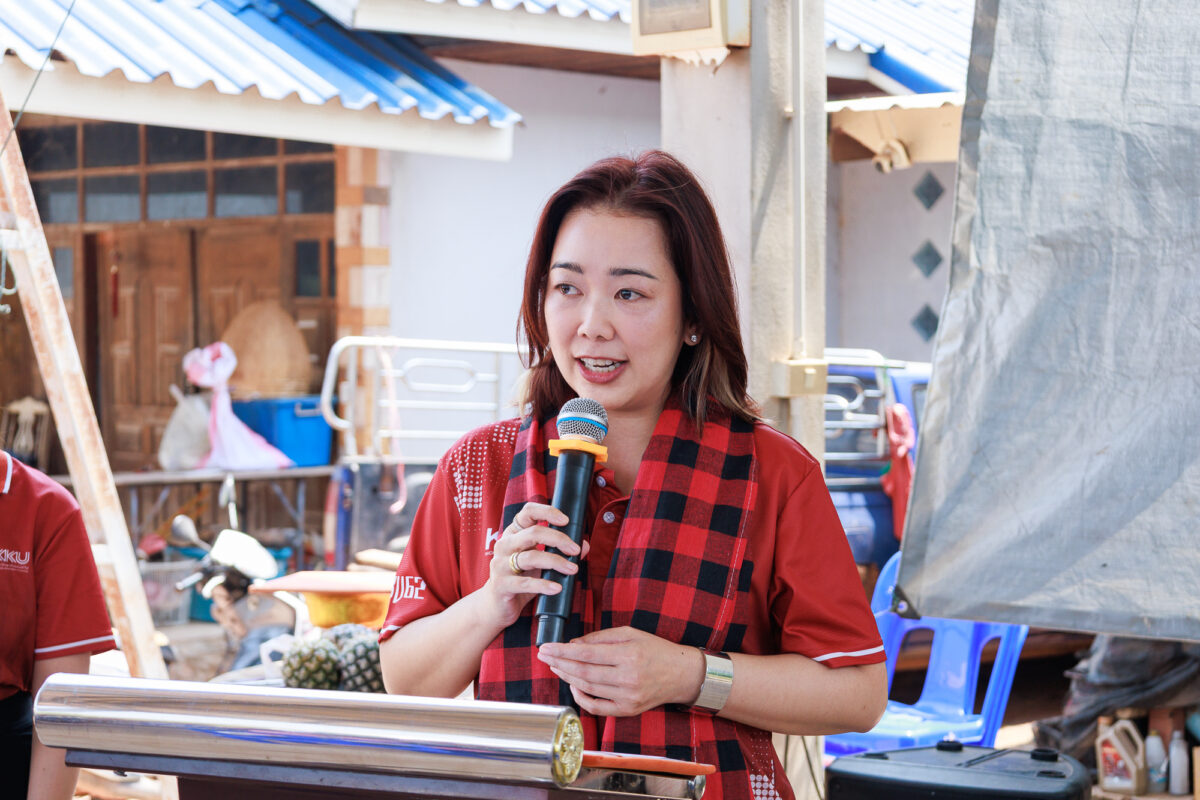
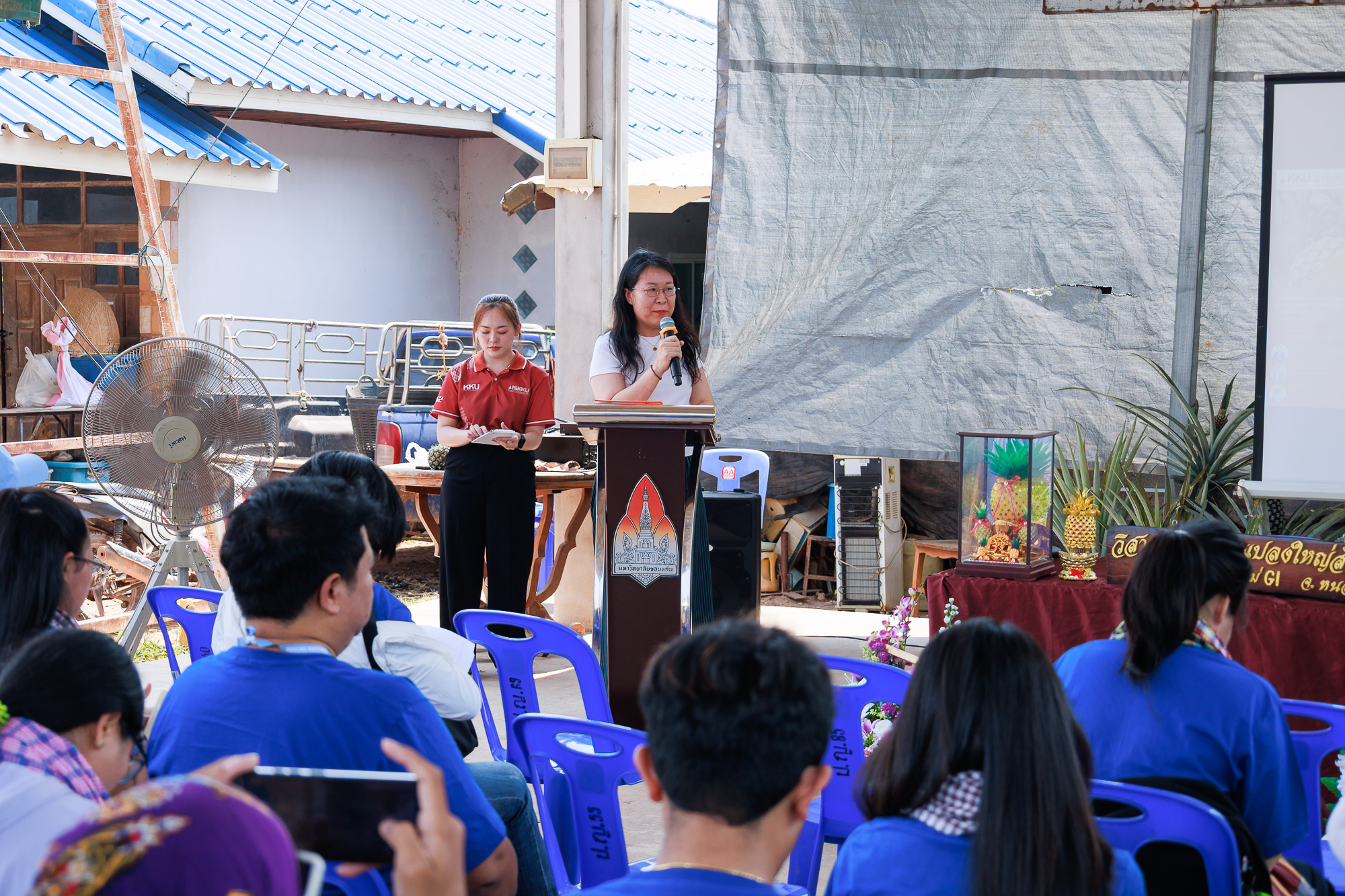
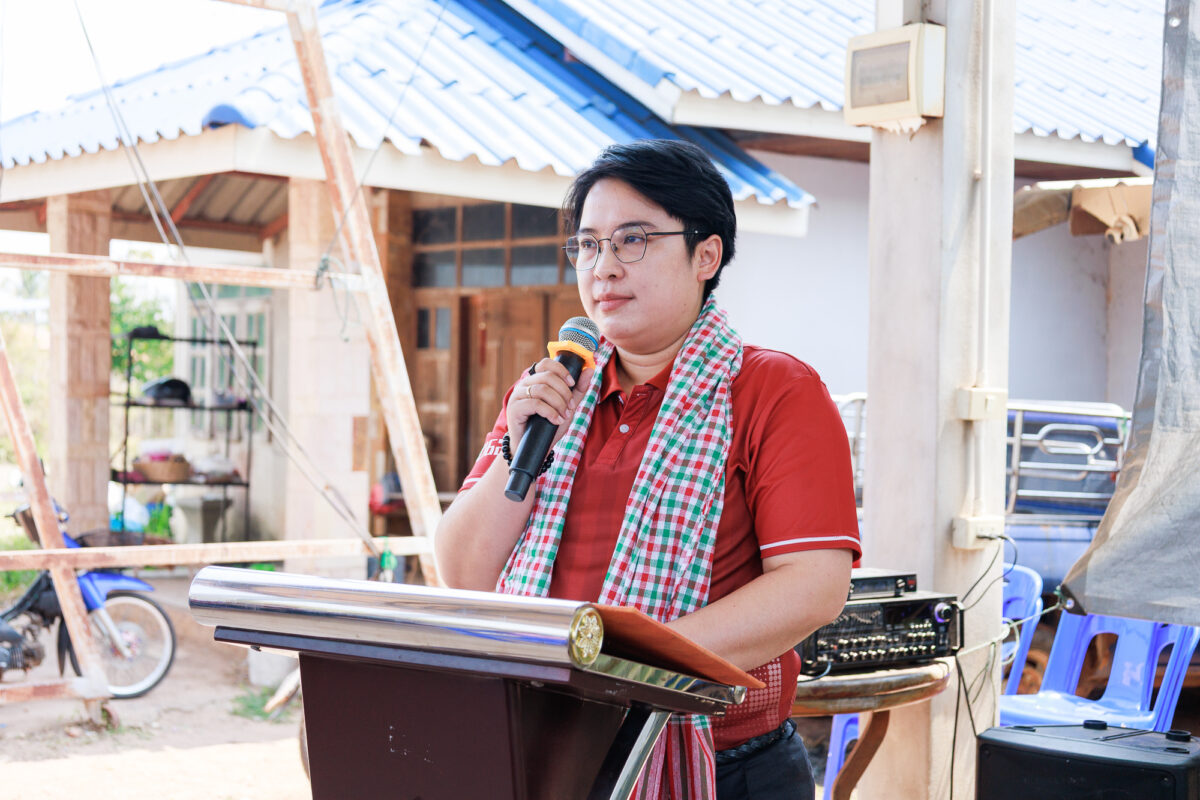
The theoretical session featured a lecture on “Establishing a Carbon Footprint Assessment System for Pineapple Production to Complete the Thailand Greenhouse Gas Management Organisation’s Verification Sheet”. This was delivered by Associate Professor Wullapa Wongsinlatam and Mr. Ayuwat Thanasate-angkool, a lecturer at the Faculty of Interdisciplinary Studies and a co-researcher on the project. The lecture focused on developing a social and legal innovation framework to encourage the adoption of carbon footprint product labels.
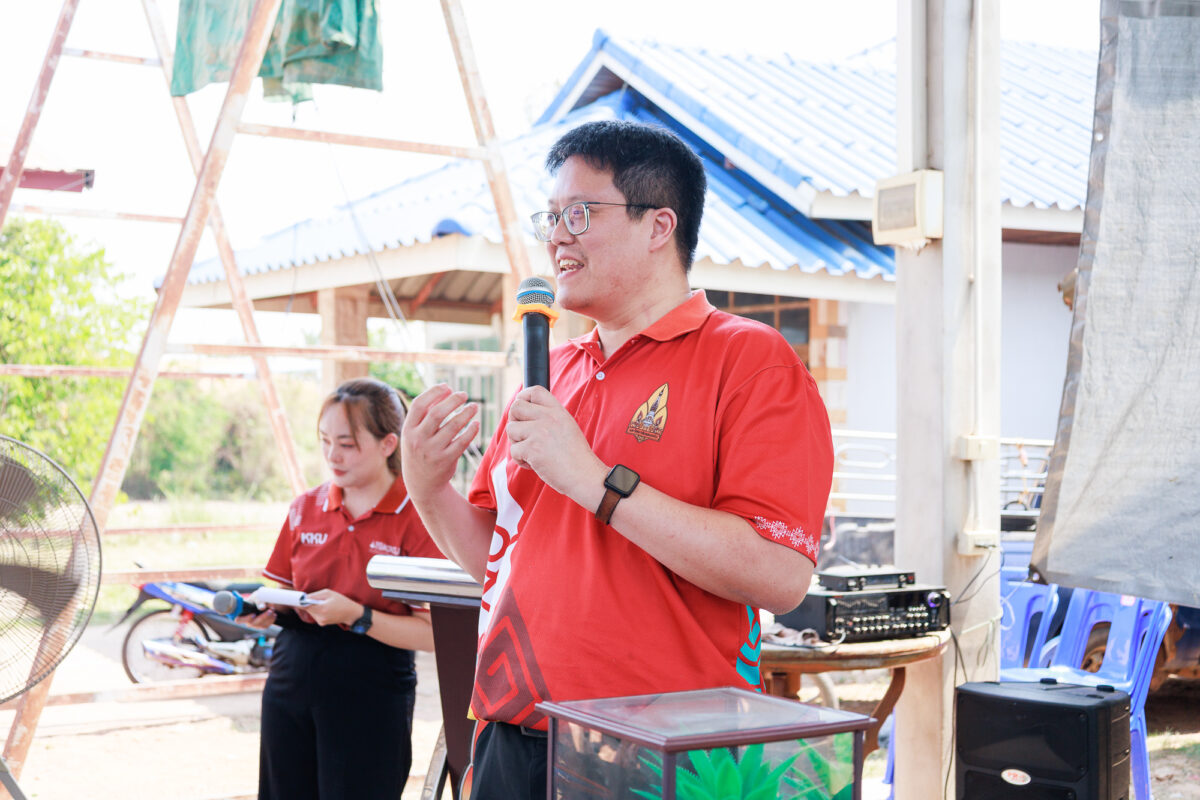
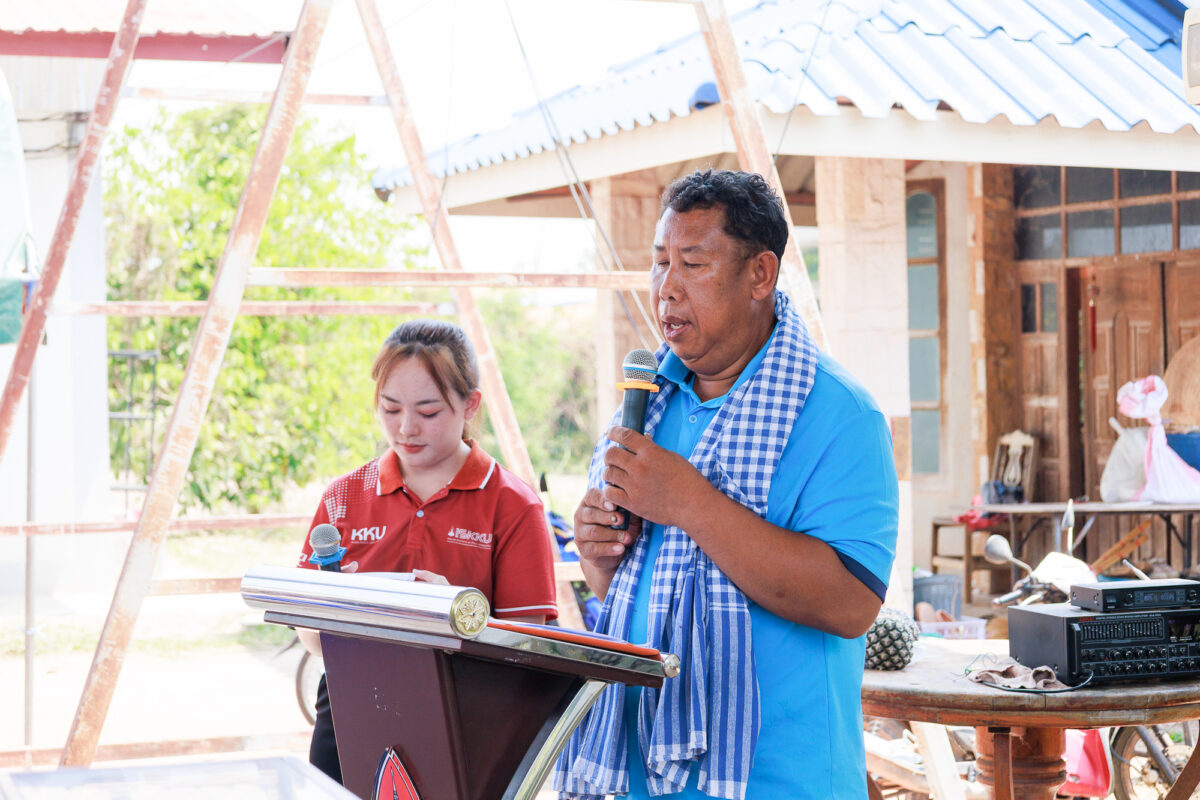
Participants also engaged in a hands-on workshop and field activities at the community enterprise’s learning centre, led by Mr. Praiwan Uttama, President of the Large-Plot Pineapple Community Enterprise.
Beyond integrating carbon footprint assessment innovation, the project fostered collaboration within the academic network and promoted Thai-Isan cultural exchange between the Mekong Institute, the Faculty of Interdisciplinary Studies, and the Si Chiang Mai community. This initiative aims to develop a model for national development across the GMS countries—Cambodia, Laos, Myanmar, Thailand, Vietnam, and Yunnan Province of China.
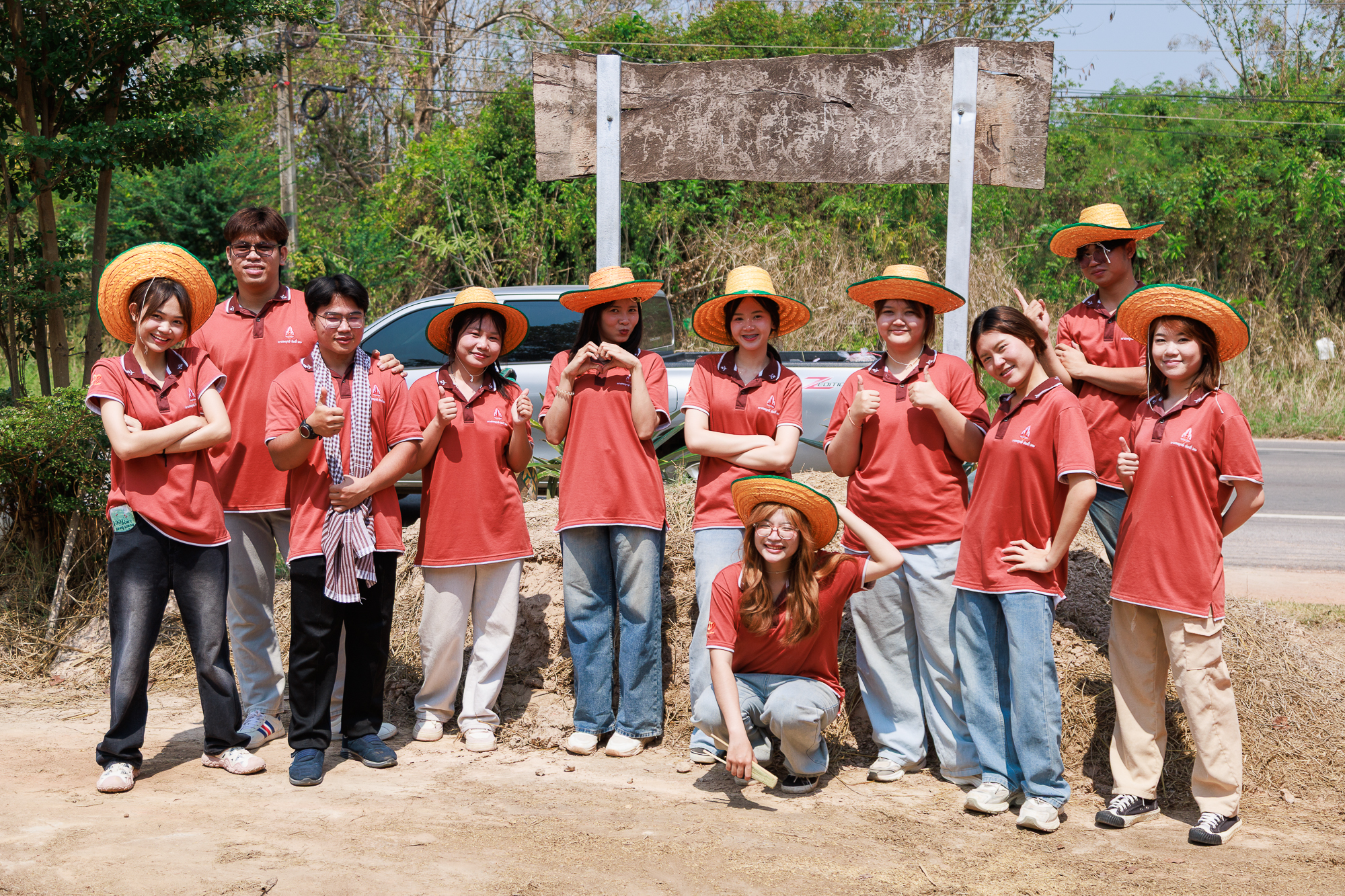
The project aligns with the Faculty of Interdisciplinary Studies’ vision to be “the hub of interdisciplinary learning and innovation in the GMS, dedicated to sustainably enhancing the quality of life in the region,” in line with Khon Kaen University’s dedication to social contribution. Furthermore, it supports student learning through a Living Lab model, allowing students from the Environmental Science and Natural Resources programme to gain practical field experience and essential skills.