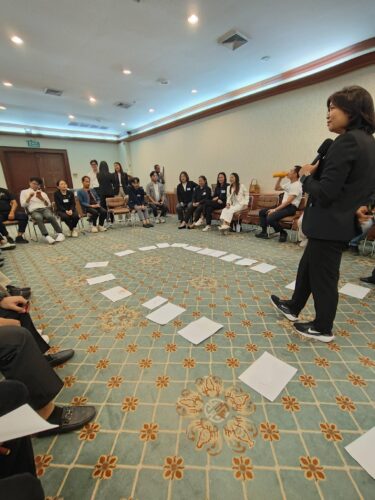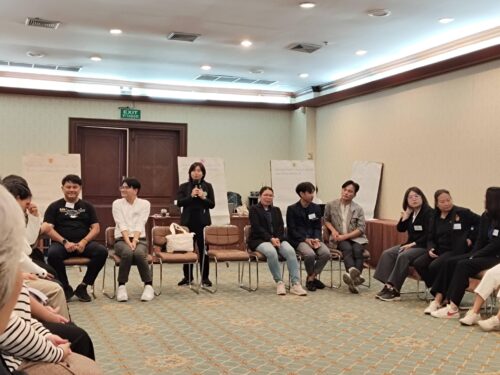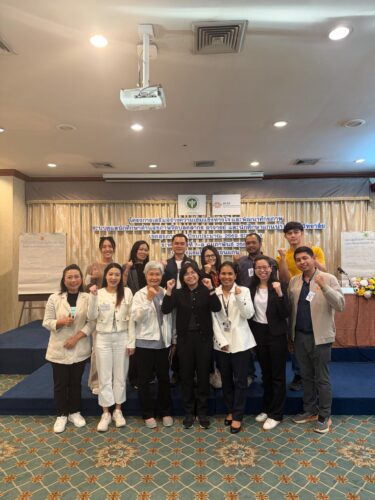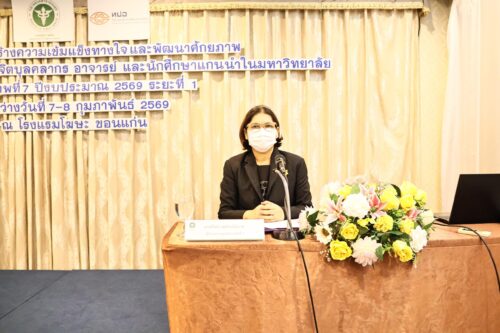

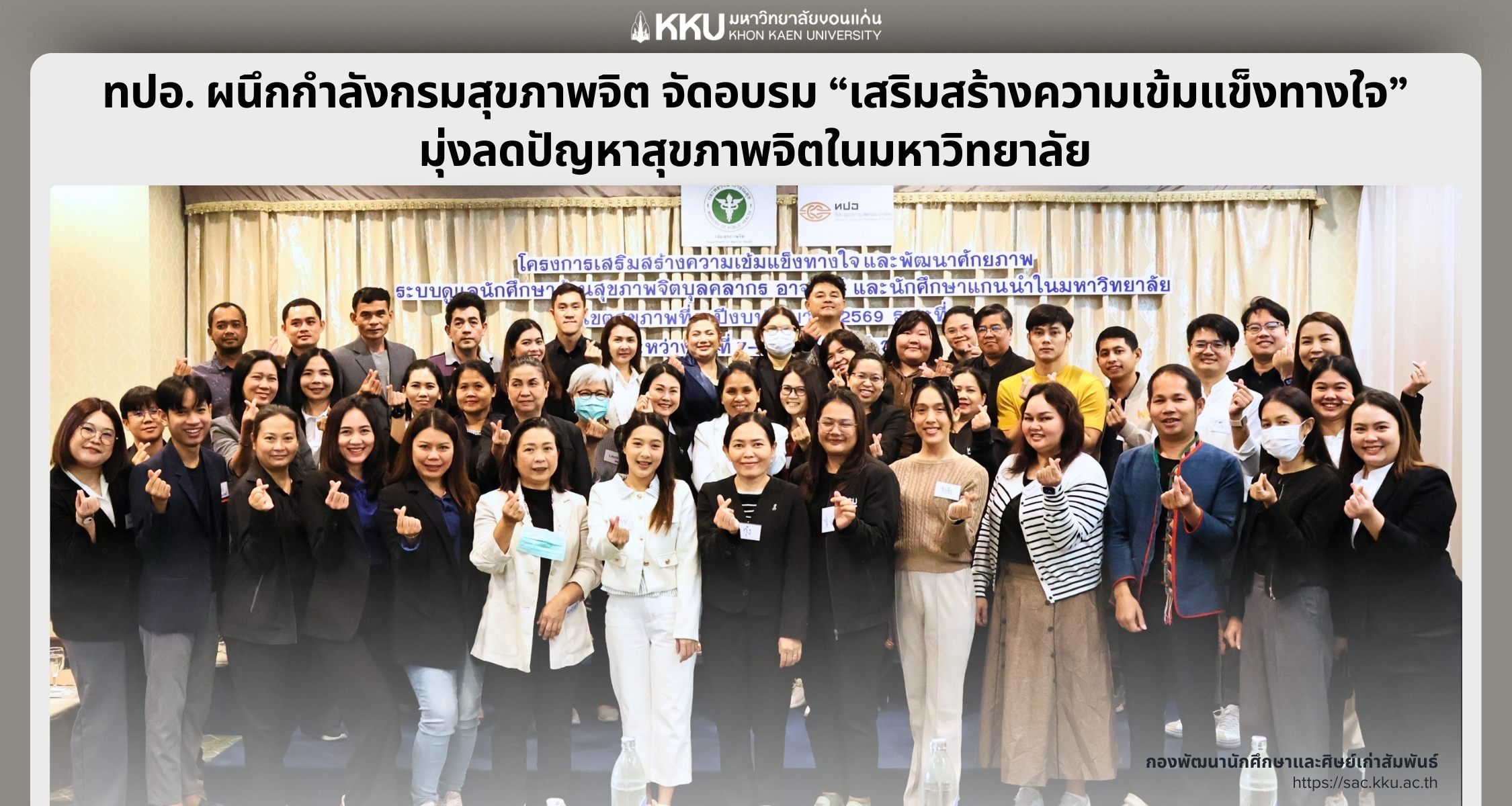
The Division of Student Development and Alumni Relations at Khon Kaen University dispatched representatives to join participants from seven higher education institutions in Health Region 7 at the workshop on “Strengthening Mental Resilience and Developing the Potential of the Student Mental Health Care System.” The event was co-organised by the Council of University Presidents of Thailand (CUPT), the Department of Mental Health, Ministry of Public Health, and the Mental Health Centre 7 Khon Kaen.
Held at the Khosä Hotel in Khon Kaen, the workshop aimed to establish practical guidelines for addressing mental health challenges in higher education. It sought to equip faculty and staff nationwide with the skills to manage the mental health crisis and rising suicide rates among students, while also building a robust network to connect student care with the public health system in a practical and sustainable manner.
Participation in this national collaborative project by KKU’s Division of Student Development and Alumni Relations marks a significant step in translating policy into practical application. The current mental health situation among students demands urgent attention. Many students enter university with pre-existing psychological vulnerabilities, which are often exacerbated by the pressures of academic life and adjustment, leading to more severe problems.
The workshop was structured around a clear three-stage strategy:
- Detection & Screening: Promoting the use of standardised screening tools to quickly and accurately identify at-risk students.
- Referral System Development: Establishing clear referral pathways between universities and hospitals to ensure students receive expert care, supported by a sustainable reimbursement system.
- Crisis Action Plan: Preparing for emergency situations, such as self-harm attempts, through well-rehearsed action plans to minimise harm.
A core principle emphasised was the importance of being a good listener. Active Listening creates a safe space for students to express their pent-up emotions, comparable to releasing air from an overinflated balloon, helping them regain composure and the strength to move forward. The training also stressed the importance of confidentiality to build trust and the creation of a Peer Support network to encourage students to look out for one another.
The event’s activities included lectures, practical workshops, and collaborative planning sessions. Key topics covered were the use of standardised screening tools, establishing clear referral pathways between universities and hospitals, developing Active Listening skills, and creating Peer Support networks. The programme concluded with a rehearsal of a mental health crisis action plan for educational institutions.
KKU’s involvement in this initiative, under the partnership of the CUPT and the Department of Mental Health, is a crucial step in adapting national policy for operational use. It aims to enhance the university’s student support system, ensuring it is effective and fully integrated with the public health network.